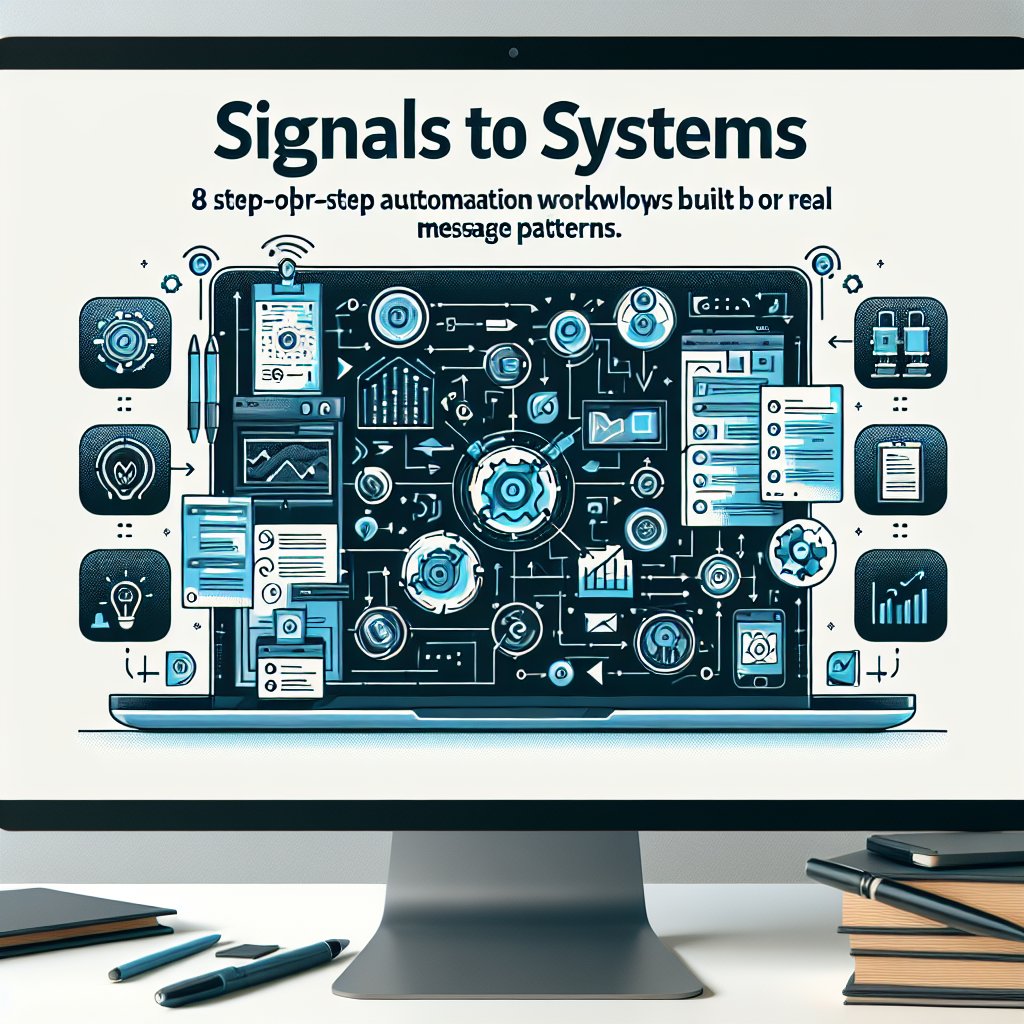
Most automation projects fail because they start with tools instead of signals. This post shows eight real scenarios you can implement step by step by turning everyday message patterns into reliable workflows that run 24/7.
When people say they want “use cases,” what they often mean is: show me what to automate first, what data I actually need, and how to roll it out without breaking my team’s day. The fastest way to get there is to stop brainstorming and start observing. Your best automations are already hiding in your message history: repeated questions, repeated delays, repeated handoffs, and repeated tasks that feel “small” but happen hundreds of times per month.
This article focuses on practical, messaging-first workflows you can implement step by step. Each scenario starts with a real message pattern (a signal), then converts it into an operational system with clear triggers, fields, routing, and success metrics. Platforms like Staffono.ai are built for this kind of work because they provide AI employees that can handle customer communication, bookings, and sales across WhatsApp, Instagram, Telegram, Facebook Messenger, and web chat, around the clock.
How to convert a message into a workflow
Before the scenarios, use this simple structure. It keeps you from building “smart chat” that still requires humans to finish everything.
- Signal: the message pattern you see repeatedly (question, request, complaint, or intent).
- Outcome: what “done” looks like (booking created, invoice sent, ticket closed, lead qualified).
- Data fields: the minimum info needed to complete the outcome.
- Decision rules: how you route, escalate, or choose next steps.
- System actions: what gets created or updated (CRM, calendar, spreadsheet, helpdesk).
- Fallback: what happens when the AI is unsure or the customer goes off-script.
- Metrics: what you measure to confirm it’s working.
Now, eight workflows you can implement step by step.
Workflow 1: Instant price and availability quotes for services
Real signal
“How much is it?” “Do you have slots today?” “Can I book for Friday?”
Outcome
Customer receives an accurate quote and available time options, then confirms a booking or requests a callback.
Step-by-step implementation
- Define your services catalog: service name, duration, price rules (fixed, from, depends on options), and prerequisites.
- List the minimum fields: service type, location (if relevant), preferred day/time, name, phone or messenger handle.
- Build a clarification sequence: if service requires options (for example, “small/medium/large”), ask one question at a time.
- Connect availability: pull open time slots from your calendar or booking system, then present 3-5 options.
- Confirm and create booking: once the user selects a slot, create the booking and send confirmation plus policies (late fee, cancellation window).
- Fallback: if the request is unusual, route to a human with the captured fields and chat context.
With Staffono.ai, an AI employee can run this flow across WhatsApp and Instagram DMs at night and on weekends, capturing the same fields your team would collect and reducing missed bookings.
What to measure
- Quote-to-booking conversion rate
- Average time to confirmation
- Percent of conversations resolved without human involvement
Workflow 2: Lead qualification that ends with a scheduled call
Real signal
“Can you send details?” “We’re evaluating options.” “Do you work with companies like ours?”
Outcome
Lead is scored, routed, and either booked into a sales call or placed into a nurture sequence.
Step-by-step implementation
- Define qualification fields: industry, company size, budget range, timeline, decision role, key need.
- Create a short question set: 3-5 questions max before offering scheduling. Keep it conversational.
- Apply scoring rules: for example, budget fit + timeline + decision-maker presence.
- Offer next step: high-score leads get a calendar link with available slots; mid-score get a product overview and follow-up; low-score get resources.
- Write to CRM: create lead, log answers, set owner, and create a task if escalation is needed.
- Fallback: if the lead asks technical questions, collect specifics and assign to a sales engineer.
Staffono.ai is useful here because you can keep qualification consistent across every channel, even when inquiries arrive in bursts. The AI employee can also keep the chat moving, preventing “we’ll get back to you” delays that kill conversion.
What to measure
- Lead-to-meeting rate by channel
- No-show rate (after automated reminders)
- Sales response time (first meaningful reply)
Workflow 3: Order status and shipping updates without ticket volume
Real signal
“Where is my order?” “Tracking isn’t updating.” “Can I change delivery time?”
Outcome
Customer receives live status, tracking link, and options for changes within policy.
Step-by-step implementation
- Collect identifiers: order number, phone/email, or last name and postcode.
- Fetch status: query your e-commerce or shipping provider data.
- Translate status: convert internal codes into plain language and set expectations (“in transit, expected Wednesday”).
- Offer actions: change address (if allowed), reschedule delivery, initiate return, or contact carrier.
- Escalate exceptions: if status is stuck or delivery failed, create a support ticket with all details.
This is one of the highest ROI workflows because it reduces repetitive tickets. With Staffono.ai running 24/7, customers can get answers instantly, which lowers churn and chargeback risk.
What to measure
- Deflected “where is my order” tickets
- Customer satisfaction after status interaction
- Return and redelivery rates
Workflow 4: Returns and exchanges that collect the right evidence
Real signal
“I need to return this.” “It arrived damaged.” “Wrong size.”
Outcome
Return is authorized (or declined) based on policy, label is sent, and inventory is updated.
Step-by-step implementation
- Policy gate: confirm purchase date, item condition, and return window.
- Collect structured details: reason, preferred resolution (refund/exchange), and photos if damaged.
- Automate label generation: create shipping label and send instructions.
- Create RMA record: write to your system and notify warehouse.
- Status updates: notify when received, inspected, and refunded or exchanged.
What to measure
- Time from request to label
- Policy compliance rate
- Refund cycle time
Workflow 5: Appointment reminders plus pre-visit intake
Real signal
“What should I bring?” “Can I reschedule?” “How do I prepare?”
Outcome
Attendance increases and staff arrive prepared because intake is completed before the visit.
Step-by-step implementation
- Trigger reminders: 24 hours and 2 hours before the appointment on the customer’s preferred channel.
- Include smart actions: confirm, reschedule, cancel, ask a question.
- Intake form via chat: collect key details (symptoms, preferences, project requirements) in 3-6 messages.
- Update internal notes: push intake summary to calendar event or CRM.
- Fallback: if the customer expresses urgency or risk, escalate to a human immediately.
Because Staffono.ai supports multiple messaging channels, you can meet customers where they already respond. That matters: reminders only work if they’re seen and acted on.
What to measure
- No-show rate
- Reschedule completion rate
- Time saved per appointment due to pre-intake
Workflow 6: Hiring inbox triage for high-volume roles
Real signal
“Is this job still open?” “What are the hours?” “I applied last week.”
Outcome
Candidates are screened, scheduled, and routed to the right recruiter without chaos.
Step-by-step implementation
- Define screening criteria: location, availability, experience, work authorization, salary expectations.
- Ask short screening questions: keep it friendly and fast, then request CV or profile link when needed.
- Automate scheduling: qualified candidates get interview slots; unqualified get a polite response and talent pool tag.
- Notify recruiters: send a summary with answers and links.
- Compliance: ensure consent for storing candidate data and set retention rules.
What to measure
- Time-to-first-touch for candidates
- Interview show rate
- Recruiter hours saved per week
Workflow 7: Invoice requests and payment follow-ups
Real signal
“Can you send an invoice?” “Where do I pay?” “I need a receipt.”
Outcome
Invoice is generated, sent, and followed up until paid, with clean accounting notes.
Step-by-step implementation
- Collect billing details: legal name, address, tax ID (if applicable), email for invoice copy.
- Generate invoice: create in your accounting system and send payment link.
- Automate reminders: gentle follow-ups at day 2, day 5, day 10, with an option to ask questions.
- Handle exceptions: partial payments, PO requirements, or bank transfer instructions routed to finance.
What to measure
- Days sales outstanding (DSO) change
- Invoice creation time
- Percent paid without human follow-up
Workflow 8: Multi-location routing for chains and franchises
Real signal
“Do you have this in my area?” “Which branch is open now?” “I need support at the downtown location.”
Outcome
Customer is routed to the correct location, hours and policies are accurate, and the branch receives the full context.
Step-by-step implementation
- Location directory: store addresses, hours, services, and contact details per branch.
- Detect intent: sales, support, booking, or complaint.
- Choose location: use the customer’s city, shared location pin, or postcode.
- Transfer context: send the branch a summary (name, need, preferred time, order number if relevant).
- Fallback: if the location is ambiguous, ask one clarifying question, not a list.
This is where a platform like Staffono.ai shines because it can standardize routing rules and service quality across all channels and locations, while still letting local teams handle edge cases.
What to measure
- Misrouted conversations
- Time to resolution by location
- Consistency of answers across branches
Implementation checklist: ship in days, not months
- Start with one workflow that has high volume and low complexity, then expand.
- Keep your first version narrow: fewer options, fewer branches, clearer outcomes.
- Design for escalation: automation should reduce load, not hide problems.
- Log every interaction: store fields and outcomes so you can improve prompts and rules.
- Review weekly: add missing questions, update policies, and refine routing.
Where to go next
If you can identify repeated message patterns, you already have a roadmap for automation. Pick one scenario from above, define the outcome and the minimum fields, then implement a conversational flow that captures data and completes the task end to end. If you want a faster path, Staffono.ai provides AI employees that can run these workflows across WhatsApp, Instagram, Telegram, Facebook Messenger, and web chat, with 24/7 coverage and practical business integrations. The best time to start is with the conversation you’re answering for the tenth time today.