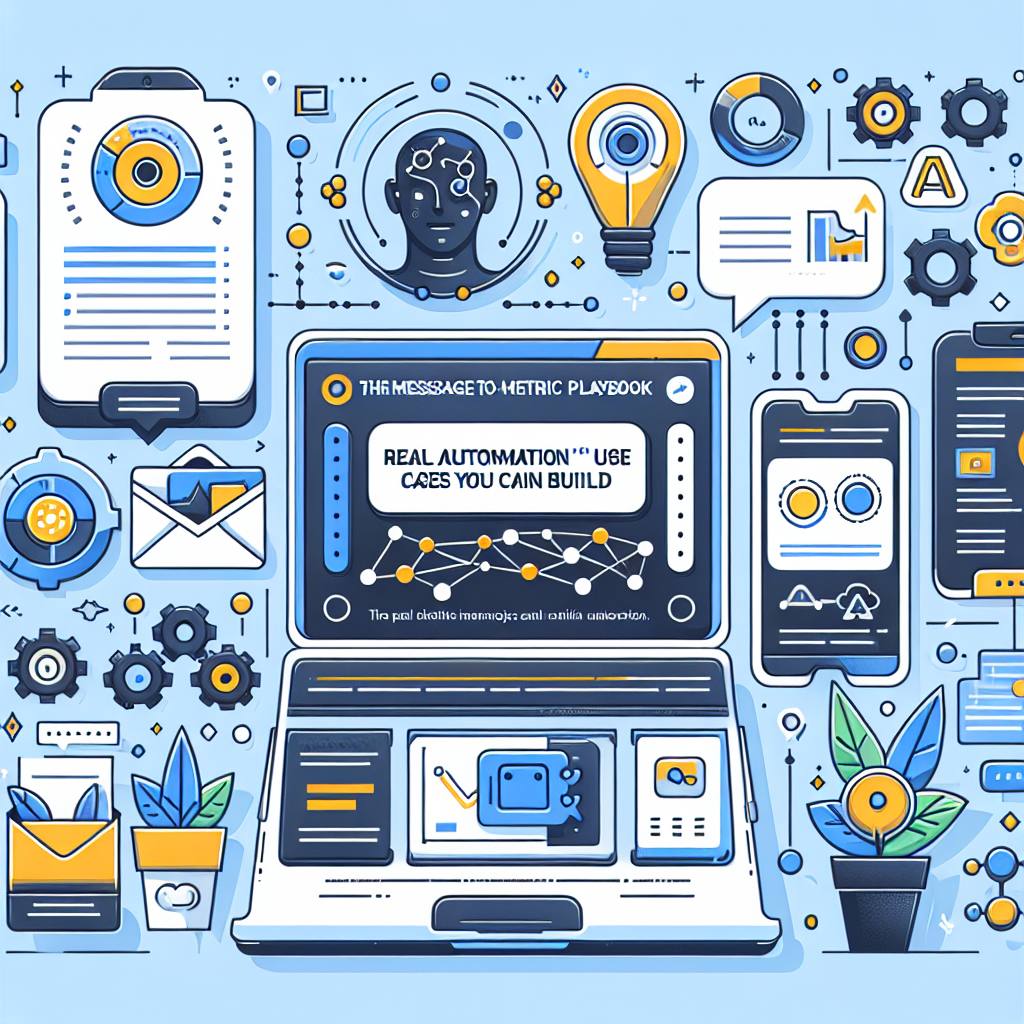
Most businesses do not need more messages, they need fewer manual steps after the message arrives. This guide breaks down real-world use cases into implementable workflows you can build step by step, across WhatsApp, Instagram, Telegram, Messenger, and web chat.
Every growing business hits the same wall: the inbox becomes the front door for everything. New leads ask questions, existing customers request changes, prospects want pricing, and operations gets pulled into scheduling, updates, refunds, and reminders. The hidden cost is not the messages, it is the manual work that follows each message: copying details into tools, asking follow-up questions, assigning tasks, and trying not to drop the ball.
This is where practical AI automation shines. Instead of “chatbots” that only answer FAQs, you can build workflows that capture intent, collect missing details, trigger actions, and keep the conversation moving until the request is completed. Staffono.ai (https://staffono.ai) is designed for exactly this: 24/7 AI employees that can communicate across WhatsApp, Instagram, Telegram, Facebook Messenger, and web chat, then drive outcomes like bookings, lead qualification, and handoffs to your team.
How to design use cases that actually work
Before the scenarios, align on a simple structure. The most successful workflows follow the same pattern, regardless of industry.
- Trigger: The message or event that starts the workflow (a question, a form submission, a missed call follow-up, a keyword like “price”).
- Intent: What the person is trying to accomplish (book, reschedule, get a quote, report an issue).
- Minimum data: The few details needed to complete the next step (date, location, product, budget, order number).
- Action: What your system should do (create a lead, reserve a slot, open a ticket, send a payment link).
- Fallback: When to route to a human and what context to include.
With that structure, you can implement workflows that reduce back-and-forth and shorten time-to-resolution.
Use case 1: Instant lead qualification and routing (without losing the human tone)
Scenario: A prospect messages you on Instagram or WhatsApp: “How much is it?” or “Do you work with companies like ours?” Your team replies later, asks the same questions, and the lead goes cold.
Step-by-step workflow
- Trigger: Incoming message containing pricing, quote, demo, or service keywords.
- Intent detection: Classify as “new lead” and identify the product or service line.
- Data capture: Ask 3 to 5 short questions in a conversational way. For example: business type, goal, timeline, budget range, preferred channel for follow-up.
- Qualification: Score the lead (hot, warm, low-fit) based on rules you define.
- Routing: Create a lead in your CRM, assign to the right rep based on region or category, and notify the rep with a summary.
- Next step: Offer two options: book a call, or receive a tailored summary and examples.
- Fallback: If the user has complex questions, route to a human with full chat context.
Staffono.ai can run this flow 24/7 across your messaging channels, ensuring every inquiry gets an immediate response and a structured qualification, not a generic script. The key is that the AI employee keeps the conversation natural while still collecting the fields your sales process needs.
Use case 2: “Self-serve scheduling” that prevents no-shows
Scenario: A customer wants to book a consultation, appointment, or service window. Your team checks availability manually, asks for times, confirms, then chases reminders.
Step-by-step workflow
- Trigger: Messages like “book”, “availability”, “appointment”, “reserve”.
- Intent detection: Identify appointment type and duration.
- Data capture: Collect required details: name, service type, location, preferred date range, any preparation notes.
- Availability check: Present a small set of available slots (for example, 3 options) to avoid decision overload.
- Confirmation: Confirm the slot, share calendar details, and set expectations (address, required documents, cancellation policy).
- Reminder sequence: Send reminders at sensible intervals (for example 24 hours and 2 hours before) and allow rescheduling via one message.
- No-show prevention: If the person does not confirm a reminder, prompt them to reschedule, and free the slot if needed.
This workflow is powerful because it turns “messaging” into “completed booking.” With Staffono.ai, an AI employee can handle the entire loop in WhatsApp or web chat, including rescheduling and confirmations, while your team only steps in for exceptions.
Use case 3: Quote-to-invoice automation for service businesses
Scenario: A customer asks for a quote. Your team asks questions, creates a quote in a separate tool, sends a PDF, then follows up for payment.
Step-by-step workflow
- Trigger: “How much for…”, “quote”, “estimate”, “pricing”.
- Scope builder: Ask structured questions: size, quantity, location, preferred materials, urgency, photos if relevant.
- Rule-based pricing: Provide a ballpark range if appropriate, then confirm details for an exact quote.
- Quote creation: Generate a standardized quote summary and send it in-message (not only as an attachment).
- Approval micro-commitment: Ask for a simple confirmation: “Should I reserve a slot and send the invoice link?”
- Payment step: Send an invoice or payment link and confirm once paid.
- Handoff to ops: Create a job/task with all collected details and customer chat history.
In many businesses, the quote process is where leads disappear. A well-built workflow keeps momentum by reducing delays and eliminating unclear next steps. Staffono.ai helps by keeping the conversation active, collecting photos and requirements, and pushing the request forward until it becomes scheduled work.
Use case 4: Customer support triage that closes the loop
Scenario: Support is overwhelmed. Simple requests like “Where is my order?” and “How do I reset my password?” mix with urgent issues. Customers repeat themselves because context is missing.
Step-by-step workflow
- Trigger: Any incoming support message, plus missed response thresholds (for example, if no human reply in 10 minutes).
- Intent detection: Categorize: order status, billing, technical issue, complaint, return.
- Identity and lookup: Ask for order number, email, or phone. Confirm identity with a lightweight check.
- Instant resolution: For known cases, provide a direct answer, steps, or status update.
- Ticket creation: For complex issues, open a ticket with category, priority, and a concise summary of the conversation.
- Expectation setting: Share an ETA and what information the team may need next.
- Closure: After resolution, confirm outcome and collect feedback in one question.
The win here is not just deflection. It is consistency: every issue gets categorized, documented, and either resolved or handed off with full context. Staffono.ai can act as your first-line AI employee, handling repetitive cases and escalating the rest cleanly.
Use case 5: Re-engagement of silent leads with value, not spam
Scenario: You have leads that asked questions but never booked. Manual follow-ups feel awkward, and generic sequences get ignored.
Step-by-step workflow
- Trigger: Lead inactivity for a defined period (for example, 48 hours after a quote, or 7 days after first contact).
- Context-aware message: Reference the exact topic they discussed (service type, desired outcome) and offer a helpful next step.
- Two-option prompt: Make it easy to respond: “Want to see available times this week, or should I send a quick cost breakdown?”
- Objection capture: If they hesitate, ask why (timing, budget, decision-maker, comparison shopping).
- Routing: If the objection is high-stakes, route to a human with a summary and suggested response.
- Exit gracefully: If not interested, confirm and offer a way to return later without pressure.
This is where an always-on AI employee helps your brand. Staffono.ai can follow up politely at the right time, tailored to the conversation, and convert “maybe later” into a clear next step.
Implementation checklist: ship one workflow in a week
- Pick one high-volume request: Booking, quote, order status, or pricing inquiries.
- Define minimum data: The smallest set of fields needed to complete step one.
- Write the conversation path: Opening question, 3 to 5 data prompts, confirmation message, and fallback path.
- Decide handoff rules: What counts as “needs a human” and where to notify them.
- Measure two metrics: Time to first response and completion rate (booking made, ticket created, quote delivered).
Once you have one workflow working, reuse the structure for the next. The compounding effect is huge: fewer interruptions, faster resolution, and more revenue captured from the same inbound demand.
What to automate first (and what to avoid)
Start with workflows where the user’s goal is clear and the steps are repeatable: booking, qualification, basic support, quoting, and follow-ups. Avoid automating edge cases first, like complex negotiations or rare policy exceptions. Build confidence with a narrow scope, then expand.
If you want a practical way to deploy these workflows across WhatsApp, Instagram, Telegram, Facebook Messenger, and web chat without stitching together dozens of tools, Staffono.ai (https://staffono.ai) is a strong starting point. Your AI employees can handle the conversations, collect the right details, and trigger the next operational step, while your team focuses on the work that truly needs humans. When you are ready, explore Staffono.ai and map one use case to a live workflow, then iterate from real conversations.