
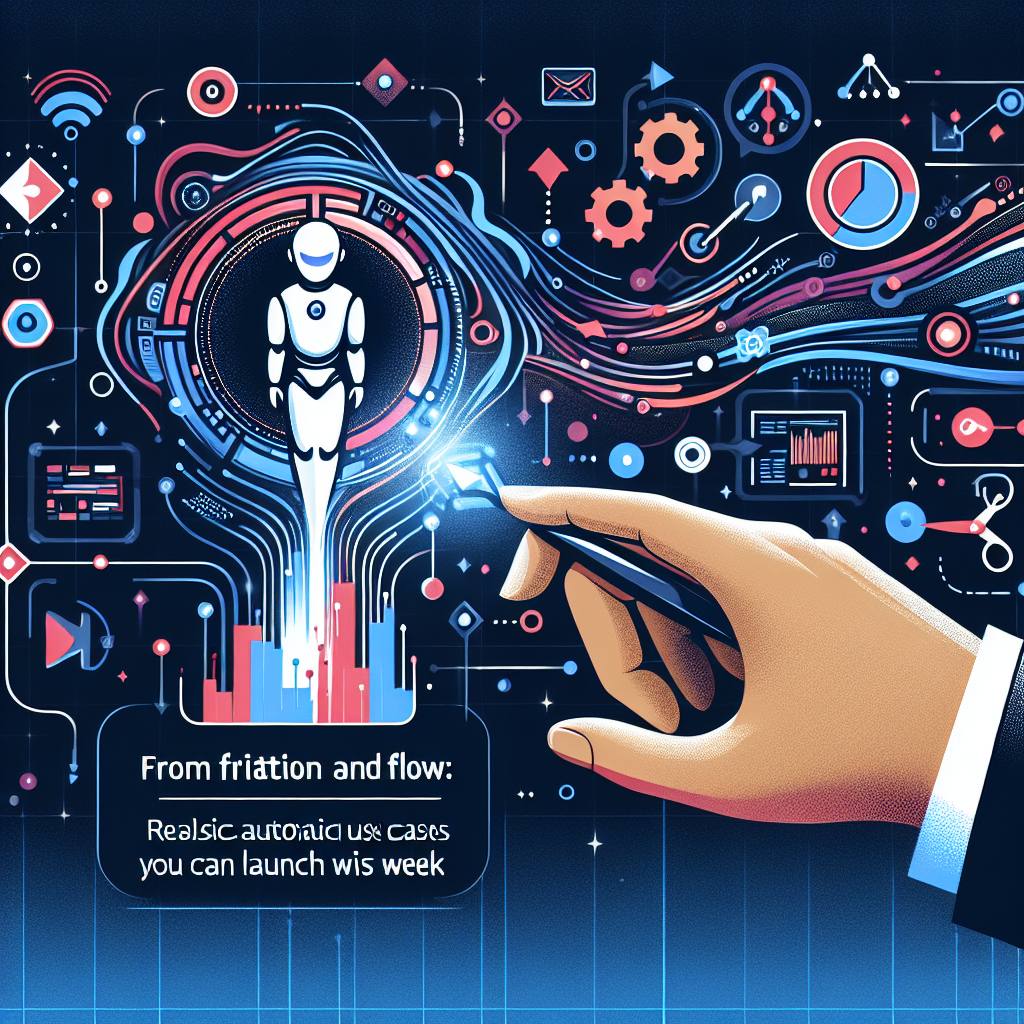
Most “use cases” sound great until you try to ship them with real tools, real data, and real customers. This guide focuses on practical scenarios and step-by-step workflows you can implement in days, not months, using messaging as the operating system for customer-facing work.
Teams do not fail at automation because they lack ideas. They fail because the “use case” is described as a dream state: perfect data, perfect handoffs, and customers who always answer in complete sentences. In the real world, customers message at midnight, sales reps forget to log notes, and operations gets pulled into exceptions all day long.
This article is a collection of realistic automation use cases you can implement step by step, designed for businesses that sell, book, and support through chat. Each workflow starts with a common friction point, then turns it into a repeatable process that an AI employee can run 24/7 across WhatsApp, Instagram, Telegram, Facebook Messenger, and web chat. Platforms like Staffono.ai (https://staffono.ai) are built for exactly this: turning ongoing conversations into reliable outcomes without adding headcount.
Before jumping into scenarios, choose use cases with three properties:
Once you have that, you can implement workflows that actually stick.
New leads arrive through Instagram DMs and WhatsApp. They ask “How much?” or “Do you work with my industry?” Your team replies late, and good prospects go cold.
Step A: Define qualification fields. Keep it minimal at first:
Step B: Write a short chat script that feels human. Use two questions first, not five. Example: “What are you looking to achieve?” and “When do you need it?”
Step C: Score and route. Create a simple rule:
Step D: Hand off with context. When a lead is hot, send the rep a summary: customer goal, constraints, and recommended next message.
Step E: Add follow-up automation. If the lead stops responding, send a gentle check-in after 2 hours, then again the next day with a useful resource (pricing guide, case study, availability).
Staffono.ai can run this end-to-end as an AI employee that qualifies leads in chat, captures the right fields consistently, and routes conversations to sales with a clean summary so humans spend time closing, not interrogating.
Your business books consultations, demos, classes, or appointments through messages. The “What time works?” loop eats hours, and customers churn when they cannot get a fast confirmation.
Step A: Decide your booking rules. Document:
Step B: Offer constrained choices. Instead of asking “When are you free?”, propose three times and one alternative: “Today 5:00, 6:30, or tomorrow 11:00. If none fit, tell me your preferred window.”
Step C: Collect pre-appointment details. Ask only what reduces no-shows:
Step D: Confirm and remind. Send a confirmation message, then reminders at 24 hours and 2 hours. Include reschedule options inside the reminder.
Step E: Handle edge cases. Create paths for:
With Staffono.ai, booking can happen directly in WhatsApp, Instagram, Telegram, or web chat with the same rules, and your team only sees exceptions that truly need a human decision.
Customers request a quote in chat. Your team asks for details, prepares a quote, then forgets to follow up. Even when the customer says “Yes,” payment collection is slow.
Step A: Create a quote intake checklist. Examples:
Step B: Standardize quote templates. Build 3 to 5 packages with add-ons so the AI can provide a fast estimate or pre-quote range.
Step C: Confirm assumptions. Before sending the quote: “To confirm, this includes X and excludes Y. Is that correct?”
Step D: Send quote plus a decision path. Give three buttons or short replies: “Approve,” “Change something,” “Ask a question.”
Step E: Move to payment. When approved, send the invoice or payment link and a short explanation of next steps. If unpaid after a set time, follow up with a friendly reminder and offer help.
Staffono.ai fits well here because it keeps the conversation structured: it gathers details, generates consistent quote summaries, and nudges deals forward without sounding robotic.
After a customer buys, they ask setup questions repeatedly. Your team answers the same “How do I start?” messages all day, and customers who do not activate quickly churn.
Step A: Map the first-week milestones. Example milestones:
Step B: Build an onboarding chat sequence. Use short daily nudges: “Want to set up X now? It takes 2 minutes.”
Step C: Add a “stuck” detector. If the customer replies with “doesn’t work,” “error,” or “can’t,” the AI asks for a screenshot and context, then either resolves or escalates with a clean ticket summary.
Step D: Close the loop. After a fix, ask “Did that solve it?” and log the outcome. This creates a feedback loop for improving your knowledge base.
This is where a 24/7 AI employee is valuable: customers do onboarding when they have time, not when your team is online. Staffono.ai can support that behavior and keep activation moving.
Subscriptions and retainers renew monthly or quarterly. Customers forget, payment fails, or they quietly disengage. Manual renewal chasing feels awkward and inconsistent.
Step A: Segment customers by renewal risk.
Step B: Create a renewal conversation that leads with value. Example: “Your plan renews next week. Want a quick check-in to make sure you are getting the most from it?”
Step C: Automate payment-failure recovery. If payment fails, provide:
Step D: Offer the right alternative. If the customer hesitates, propose a downgrade, pause, or smaller package rather than losing them completely.
Step E: Capture churn reasons. When a customer cancels, ask one question: “What was the main reason?” Then tag and report it monthly.
Staffono.ai can maintain a consistent tone and timing, and it can escalate critical accounts to a human with context so your retention efforts are targeted.
The biggest trap is trying to automate everything at once. Start with one workflow, ship it, then expand. The second trap is ignoring exceptions. Every use case needs an “I can’t do that, but I can connect you” path that preserves customer trust.
If you want a practical way to launch these workflows across WhatsApp, Instagram, Telegram, Facebook Messenger, and web chat with consistent logic and clean handoffs, Staffono.ai (https://staffono.ai) is designed for exactly that. You can start with one AI employee handling a single scenario, measure outcomes, and then scale to multiple workflows as your message volume grows.
Pick one friction point from your inbox today, implement one step-by-step workflow this week, and let the results guide the next automation you deploy.