
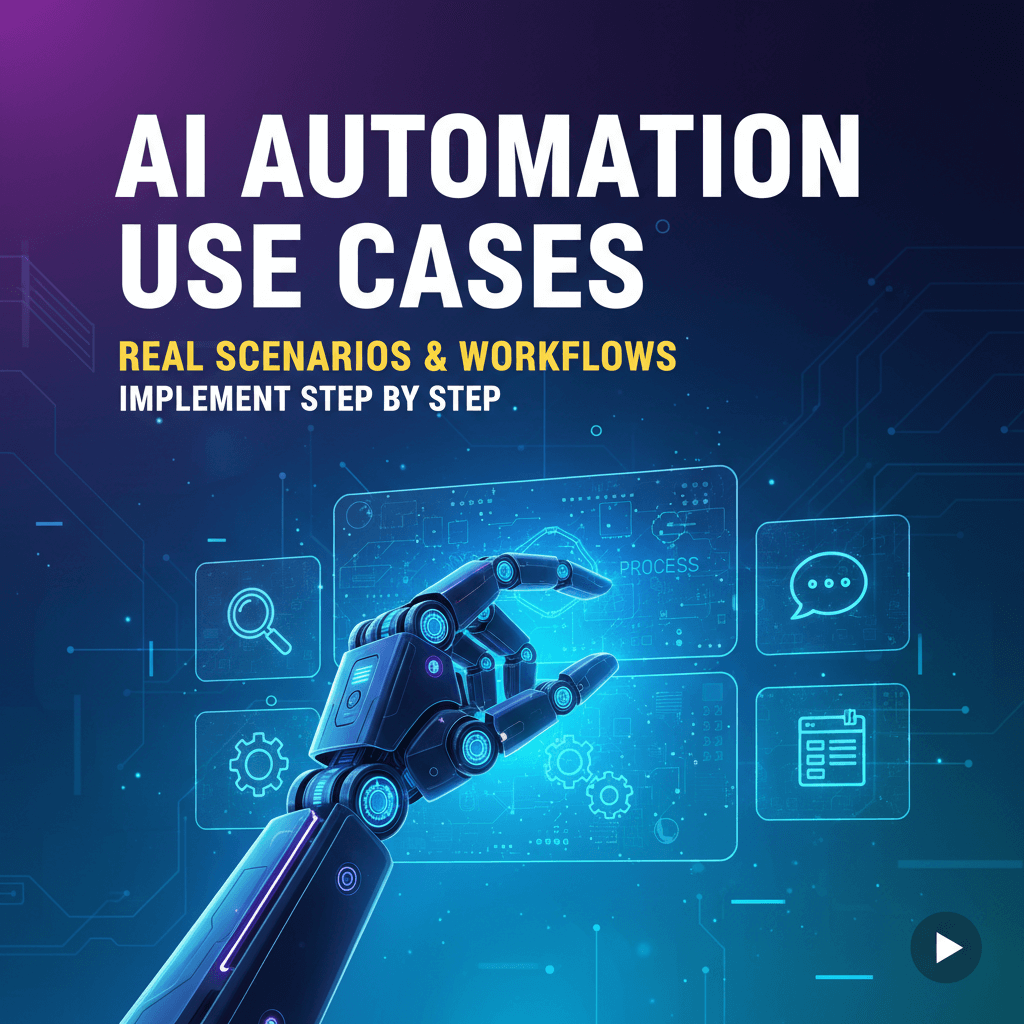
Most businesses do not need a massive transformation to see ROI from automation. They need small, repeatable workflows that start with a message and end with a finished task. This guide shows real scenarios and step-by-step implementations you can deploy quickly across your messaging channels.
Automation is often sold as a big, company-wide initiative. In practice, the fastest wins come from micro-automations: small workflows that remove one bottleneck, one repetitive question, or one manual handoff at a time. The best part is that these workflows are usually triggered by customer messages you already receive every day on WhatsApp, Instagram, Telegram, Facebook Messenger, or web chat.
Below are practical scenarios you can implement step by step, with clear inputs, decisions, and outcomes. Each workflow is designed to be measurable, safe to roll out, and easy to improve. Platforms like Staffono.ai are built for exactly this style of deployment, using 24/7 AI employees to handle conversations and connect them to real operational actions like bookings, lead qualification, and updates.
Choose workflows that are frequent, predictable, and tied to a business metric. A simple filter:
Once you have one use case, build it end-to-end before adding more. Micro-automations compound quickly.
Best for: salons, clinics, trainers, home services, rentals.
Goal: turn availability questions into confirmed bookings with minimal staff involvement.
Practical example: A customer on Instagram asks, “Can I get a haircut at 6?” The AI employee replies with available times, confirms the stylist and service length, creates the appointment, and sends a confirmation with address and cancellation policy.
How Staffono.ai fits: Staffono.ai can run this flow across multiple channels, keep the conversation natural, and handle bookings around the clock, especially valuable when customers message outside office hours. You can start simple (collect details and propose slots) and then connect deeper as you mature.
Best for: B2B services, agencies, software, real estate, high-ticket products.
Goal: respond instantly, qualify consistently, and route only high-intent leads to sales.
Practical example: A visitor on web chat asks, “Do you build Shopify stores?” The AI asks 3 questions (products, timeline, budget), summarizes the project, and if qualified, schedules a call and pushes the details into the CRM.
Operational tip: Keep qualification questions short and progressive. One question per message often converts better than a form.
How Staffono.ai fits: With Staffono.ai, your AI employee can qualify leads on WhatsApp and web chat the same way, ensuring consistent intake, faster response times, and fewer missed opportunities.
Best for: ecommerce, local delivery, DTC brands, restaurants.
Goal: reduce “Where is my order?” volume and improve customer confidence.
Practical example: A customer messages on WhatsApp: “My tracking hasn’t updated.” The AI retrieves the carrier status, explains the likely scan delay, provides ETA, and offers escalation if no update in 24 hours.
Metric to track: Ticket deflection rate (how many conversations resolved without a human) and repeat contact rate.
Best for: home repair, cleaning, logistics, custom manufacturing, event services.
Goal: turn “How much?” messages into accurate quotes or quote ranges quickly.
Practical example: A customer on Facebook Messenger asks for a moving quote. The AI asks pickup/drop-off floors, elevator availability, and item list, then gives a price range and schedules a confirmation call.
How Staffono.ai fits: Staffono.ai can standardize quote intake across channels, capture photos and details, and deliver consistent responses while protecting your team from back-and-forth messaging.
Best for: any business with repeat customers.
Goal: increase reviews, reduce churn, and capture issues before they become public complaints.
Practical example: After a cleaning appointment, the AI asks, “Was everything perfect today?” If yes, it requests a Google review. If no, it asks what went wrong and creates a ticket for a manager.
Metric to track: Review conversion rate and negative-feedback containment (issues resolved privately).
When you are ready to move from “answering messages” to “finishing tasks,” Staffono.ai is a practical place to start. You can deploy an AI employee that works 24/7 across your messaging channels, implement one micro-automation, and expand once you see reliable results in bookings, lead conversion, and support load reduction.