
Shipping is only half the job. The other half is proving that an update improved real customer outcomes, without guessing or relying on vanity metrics. This post shows how to design product updates with measurable success criteria, communicate them clearly, and track adoption across messaging-first customer journeys.
Product updates are often treated as a publishing task: write release notes, post a banner, send an email, and move on. But customers do not experience updates as “notes.” They experience them as friction removed, steps reduced, and outcomes reached faster. If you cannot prove those outcomes improved, every announcement becomes a hope-based exercise.
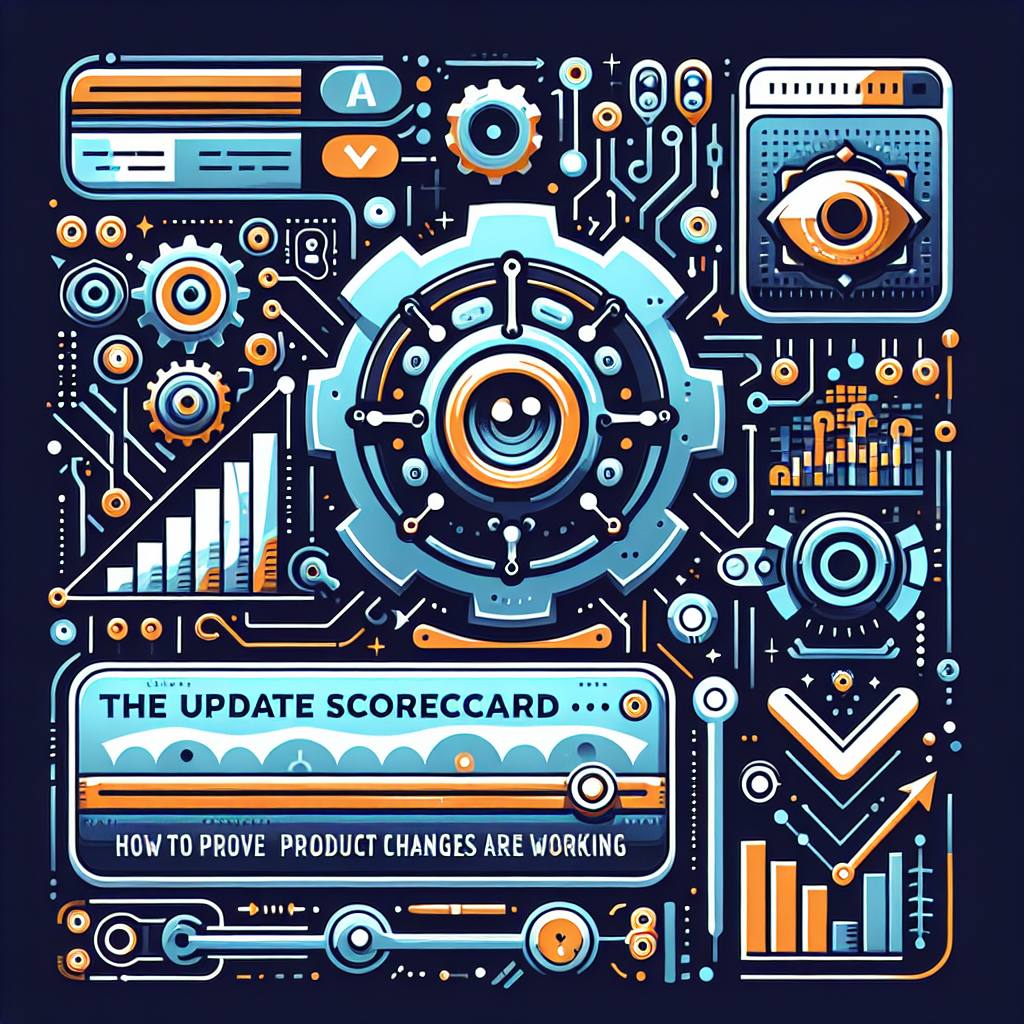
This is where an update scorecard changes the game. It is a lightweight system that connects what changed to why it matters, how you will measure success, and what you will do if adoption stalls. It also keeps internal teams aligned, so Sales, Support, and Product do not tell three different stories about the same release.
Even good improvements can land poorly when the communication is detached from customer reality. Common failure patterns include:
Feature-first messaging that explains what shipped, but not what it enables.
One-size-fits-all announcements that ignore different user roles and levels of maturity.
No success definition, so the team celebrates shipping rather than adoption.
Hidden workflow impact, where a small UI change silently breaks habits or training materials.
The scorecard approach fixes this by forcing clarity before launch, and accountability after launch.
A useful scorecard is not a dashboard with 40 charts. It is a short template that fits on one page and travels with the release from planning to post-launch review.
Start with the job customers are trying to complete, not the component you built. For example:
“Book an appointment in under 60 seconds from WhatsApp.”
“Qualify inbound leads consistently across Instagram DMs and web chat.”
“Reduce ‘where is my order’ tickets by answering status questions instantly.”
Notice how these are not feature descriptions. They are outcomes customers will recognize.
Turn the update into a statement you can validate:
“If we add saved reply templates with variables, then first response time will drop by 20% for teams handling more than 50 chats per day.”
“If we streamline the checkout flow, then completion rate will increase from 2.4% to 3.0% for mobile users.”
This step prevents vague claims like “improves usability,” and it tells you what to track.
Keep it simple and balanced:
Adoption metric: Are people using the new capability? Example: % of active accounts that enabled the new routing rule.
Outcome metric: Did it improve the job? Example: time-to-booking, lead-to-meeting rate, support ticket volume.
Confidence metric: Are we sure the change caused the result? Example: A/B test lift, cohort comparison, or correlation with usage intensity.
If you use Staffono.ai to handle multi-channel conversations, you already have a natural place to measure outcomes: response time, conversation-to-booking conversion, lead qualification rates, and common questions handled automatically across WhatsApp, Instagram, Telegram, Facebook Messenger, and web chat. This makes it easier to tie “what changed” to “what improved” in a way stakeholders trust.
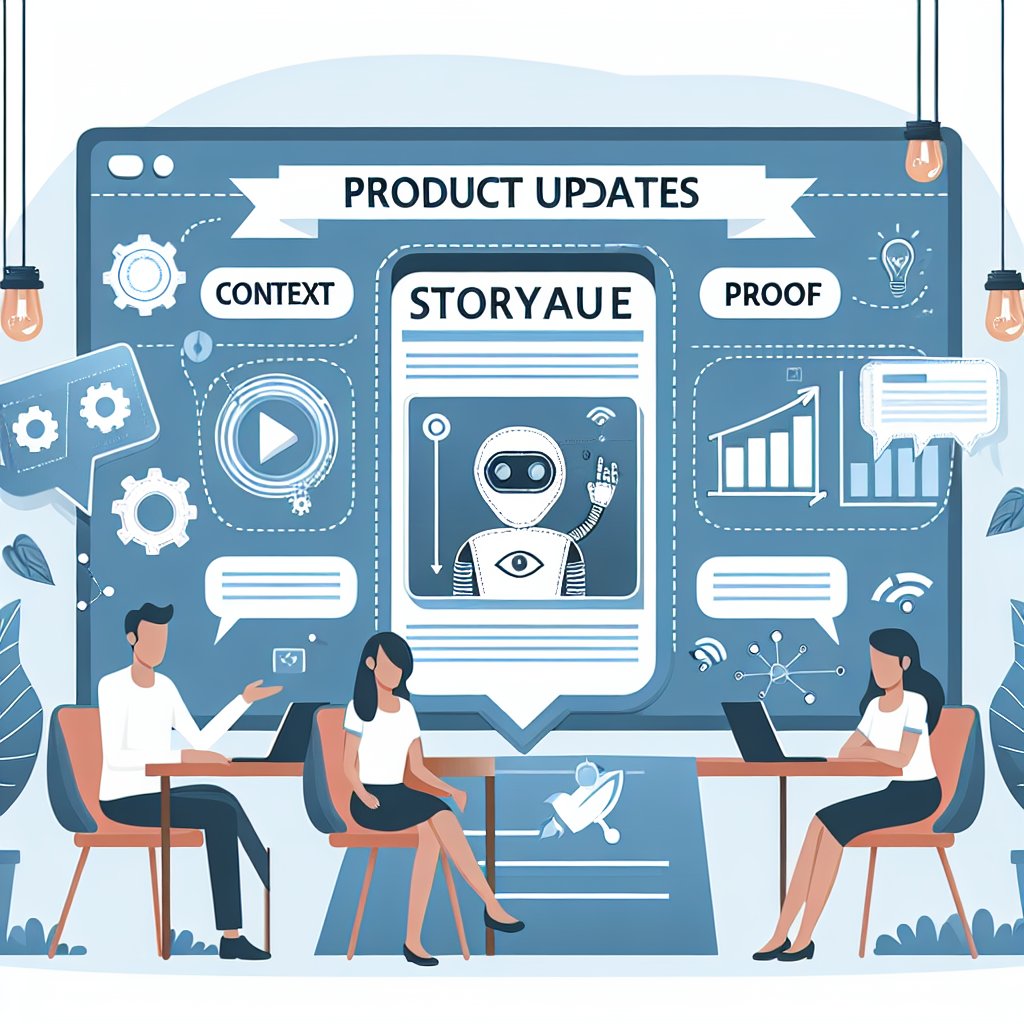
Customers rarely read long announcements. They scan, decide if it affects them, and move on. Structure your update message so the value is obvious in seconds.
What changed: one sentence, concrete.
Why it matters: one sentence, outcome-focused.
What to do next: one sentence, clear action or “no action needed.”
Example for a booking workflow:
What changed: You can now confirm appointments directly from the chat thread.
Why it matters: Customers complete booking without leaving WhatsApp, reducing drop-off.
What to do next: Enable “in-chat confirmation” in Settings and test with your next five leads.
If your business relies on chat-based acquisition, this format is especially effective because users are already in a conversational mindset. Platforms like Staffono.ai can even deliver these update messages inside the same channels where customers interact with your team, so the announcement appears in context rather than buried in email.
One reason announcements fail is that they treat all changes as equally important. Instead, segment by impact level:
Behavior change: anything that alters steps, labels, permissions, or defaults. Requires guidance.
New capability: optional power for specific users. Requires examples and a quick-start.
Quality improvement: performance, reliability, bug fixes. Requires trust-building, not tutorials.
Then segment by audience: admins vs agents, new users vs power users, and high-volume customers vs occasional users. Your scorecard will tell you which cohorts matter most for adoption and outcomes.
Scenario: You add a guided intake form inside chat to qualify leads.
Hypothesis: Standardizing intake will increase qualified leads by 15% and reduce back-and-forth messages by 25%.
Adoption: % of conversations where the guided intake is triggered.
Outcome: qualified lead rate, time-to-qualification.
Confidence: compare cohorts where intake is used vs not used, controlling for channel.
Communication: Show one screenshot or a short GIF, then provide 3 sample question sets for different industries (real estate, clinics, service businesses). If you use Staffono.ai, you can implement these question flows as AI employee playbooks that run 24/7, ensuring every lead gets the same high-quality intake no matter which channel they came from.
Scenario: You introduce smarter routing based on intent (sales vs support) and language.
Hypothesis: Intent-based routing will reduce first response time by 30% and increase booking rate by 10%.
Adoption: % of inbound chats processed by the new router.
Outcome: first response time, conversion to booking, CSAT.
Confidence: time-series comparison, plus a holdout group for a week.
Communication: Provide a simple mapping table of “customer intent” to “team owner,” then a checklist to validate it. If you run messaging operations with Staffono.ai, routing can be automated at the AI layer, so the customer experiences instant handling even when your human team is offline.
Within 7 to 21 days, run a review using the same scorecard. Keep it focused:
Did adoption reach the target? If not, where did users drop?
Did the outcome metric move? If not, was the hypothesis wrong, or did usage remain shallow?
What did Support hear repeatedly? What objections did Sales hear?
What is the next action: iterate, educate, revert, or re-segment?
One of the fastest ways to diagnose adoption issues is to analyze real conversations. With Staffono.ai, teams can review chat logs and intent tags across WhatsApp, Instagram, and web chat to see exactly where users got confused, what questions spiked after the release, and which explanations actually resolved the issue.
Long tutorials are not always necessary. For workflow changes, small guidance embedded in the moment works better:
A one-line tooltip that appears only on first use.
A checklist that disappears once completed.
A short example message the user can copy and send.
An in-chat walkthrough triggered when a user asks “how do I…?”
This is a natural fit for messaging-based businesses. When customers ask questions in WhatsApp or Instagram, an AI employee can respond instantly with the correct, updated steps. Staffono.ai is designed for exactly this kind of always-on operational communication, helping you reduce confusion after changes and protect customer experience during rollouts.
The best product updates do not just ship. They land, get used, and measurably improve outcomes. An update scorecard keeps you honest about why you built something, how customers will benefit, and what success looks like in numbers. It also makes announcements clearer, because you are no longer explaining features in isolation, you are explaining progress toward a job customers care about.
If you want updates to translate into faster responses, higher booking rates, and more consistent lead handling across WhatsApp, Instagram, Telegram, Facebook Messenger, and web chat, consider using Staffono.ai (https://staffono.ai) to automate the front line with AI employees. When your communication layer is instrumented and always available, it becomes much easier to announce changes in context, guide customers through new workflows, and prove the impact with real conversation outcomes.