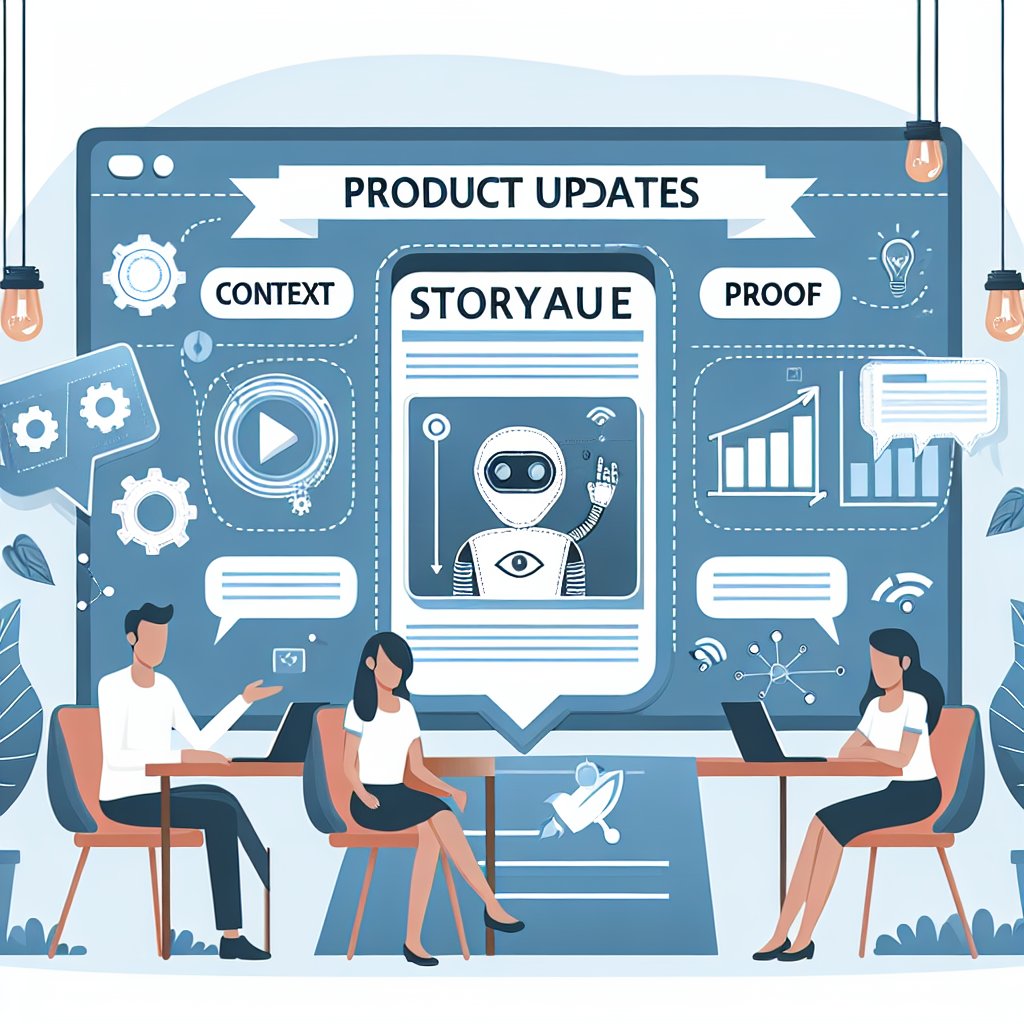

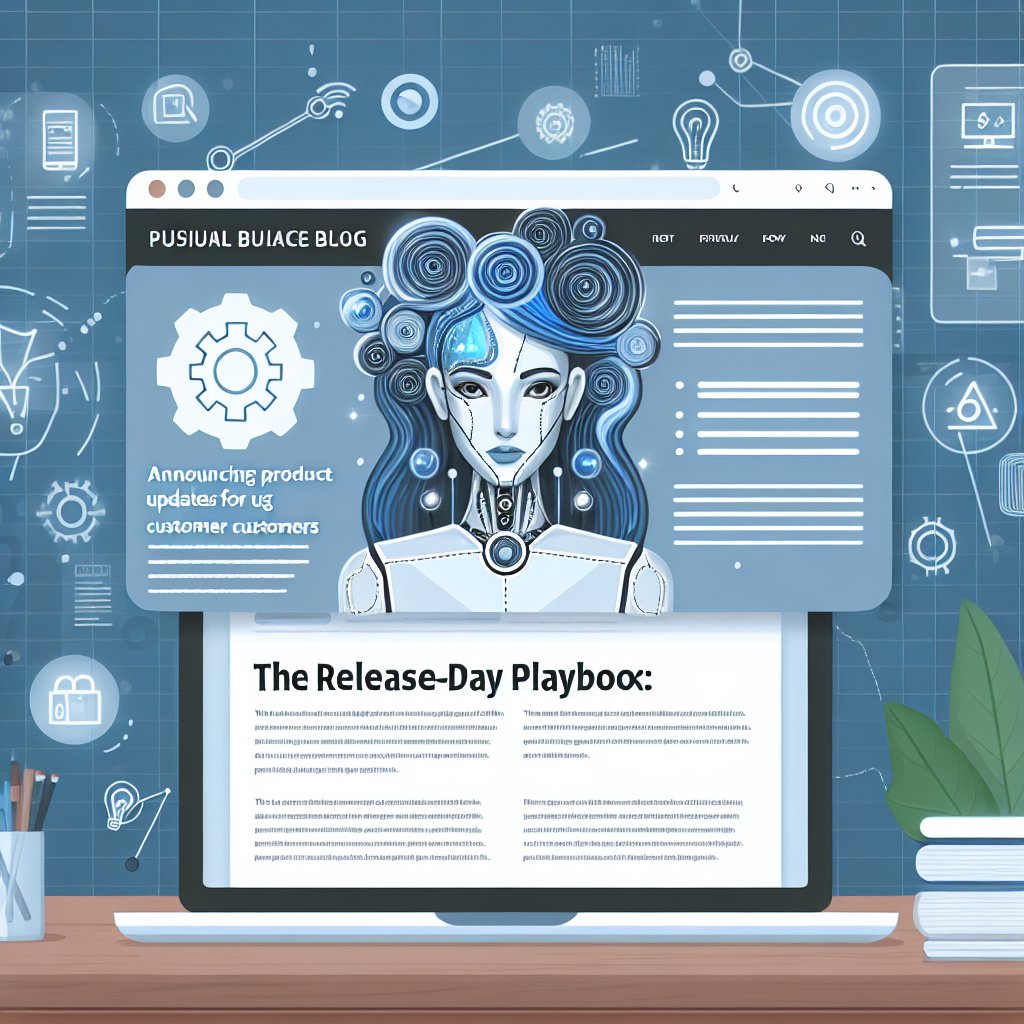
Product updates are not just what you ship, they are what customers hear, understand, and adopt. This playbook explains how to announce announcements, improvements, and new features with clarity, confidence, and measurable outcomes, including practical examples and a repeatable workflow.
Product updates are often treated like a finish line: the code is shipped, the changelog is posted, and the team moves on. But customers experience updates as an interruption to habits, a change to expectations, and sometimes a risk to their day-to-day operations. That is why the real work starts at release day, when you translate what changed and why into messages people can understand, trust, and act on.
This article is a release-day playbook for announcements, improvements, and new features. It focuses on what to say, where to say it, how to reduce confusion, and how to convert attention into adoption. Along the way, you will see practical examples and a simple system you can reuse for every release.
Most product updates fall into three buckets, and each bucket needs a different message shape.
Why this matters: customers interpret risk differently. Announcements can trigger fear (What does this mean for me?). Improvements can be overlooked (Nice, but do I need to do anything?). New features can overwhelm (Do I have time to learn this?). Your release messaging should match that emotional reality.
Engineering notes are not customer notes. People do not want to parse refactors or database migrations. They want to know what changes in their workflow and what they get in return.
Use this conversion formula:
A reliable test is to ask: “Can a non-technical user explain this update to a coworker in one sentence?” If not, simplify.
Customers accept change when they can place it into a story that makes sense. The “why” should be framed around their goals: less manual work, fewer mistakes, faster response times, better compliance, better conversion rates.
Three strong “why” patterns you can reuse:
When you must mention internal reasons (security, infrastructure, vendor changes), translate them into what customers gain: reduced downtime, better data protection, or fewer delivery issues.
A product update should end with a clear next step. Even “no action required” is a next step. This is where many updates fail: they describe change but do not guide action.
Use one of these calls-to-action inside the update itself:
Clarity here reduces support tickets and increases adoption because people are not left guessing.
Customers do not live in your product dashboard. They live in email, chat, and the daily tools they already use. The same update should be adapted into different formats, each with a distinct purpose.
If your business communicates with customers heavily through messaging channels, consider treating WhatsApp, Instagram DMs, Telegram, and web chat as first-class release channels. This is where platforms like Staffono.ai are especially relevant: Staffono’s AI employees can proactively notify customers about relevant updates in the channels they already use, answer follow-up questions instantly, and route complex cases to humans when needed.
Scenario: you improved response time and added better message status visibility. This is valuable, but many users will not notice unless you connect it to their daily pain.
What changed: Message delivery is now more reliable, and you can see delivery status with clearer timestamps.
Why: When you are handling many conversations, uncertainty creates extra follow-ups and duplicated work. This update reduces “Did my message send?” moments and helps teams coordinate without guesswork.
What to do: No action required. If you want to verify, open any conversation and check the updated status indicator.
Support note: If you see a delay, refresh once. Status updates can take a few seconds during carrier throttling.
Now add a channel twist: in messaging-heavy businesses, customers may ask “Is the system down?” the moment they see a delay. With Staffono.ai, an AI employee can monitor incoming “delivery issue” messages, respond with a consistent explanation, and share the exact troubleshooting steps, reducing escalations and keeping human agents focused.
Scenario: you launch a new automation that qualifies leads based on conversation content and then schedules bookings. This is exciting, but it needs safe onboarding.
What changed: You can now automatically qualify inbound leads and propose booking times based on the customer’s answers.
Why: Speed wins. Faster qualification means fewer lost leads and fewer manual back-and-forth messages.
What to do: Start with one channel and one offer. Enable the workflow, review the suggested questions, and test with internal chats before going live.
What to expect: You will see a qualification summary after each conversation and a booking suggestion when intent is detected.
This is also where a solution like STAFFONO.AI becomes a practical fit: its AI employees can handle lead qualification and bookings across WhatsApp, Instagram, Telegram, Facebook Messenger, and web chat 24/7, while your team retains control over rules, handoff conditions, and tone. When you announce a feature like this, you can pair the update with a real workflow customers can adopt immediately.
The fastest way to reduce support load is to anticipate the top questions and answer them inside the update. A simple FAQ block can prevent dozens of tickets.
For messaging-first products, include one more: “What should I tell my customers?” Provide a short, copy-paste response that frontline teams can use.
Shipping is not success. Adoption is success. Choose one primary metric per update type:
Then instrument the communication itself: open rate, click-through, in-app prompt engagement, and support volume after release. If support spikes, it is usually a messaging gap, not a product gap.
If you use Staffono.ai to communicate and support customers through chat channels, you gain an additional measurement layer: you can track which update messages triggered questions, what the questions were, how quickly they were resolved, and where human handoff was required. That data becomes your next release’s playbook.
Consistency builds trust. Here is a lightweight checklist you can reuse:
The best product updates do not just inform. They protect customer confidence. They show that change is intentional, that the team understands real workflows, and that there is a path from “new” to “normal.”
If your organization is scaling and you need product updates to land cleanly across messaging channels, support queues, and sales conversations, it helps to have automation that can carry the load. With Staffono.ai, you can deploy AI employees that communicate updates, answer questions instantly, qualify leads sparked by new capabilities, and book demos or appointments around the clock. That turns release day into a growth lever, not a stress test.