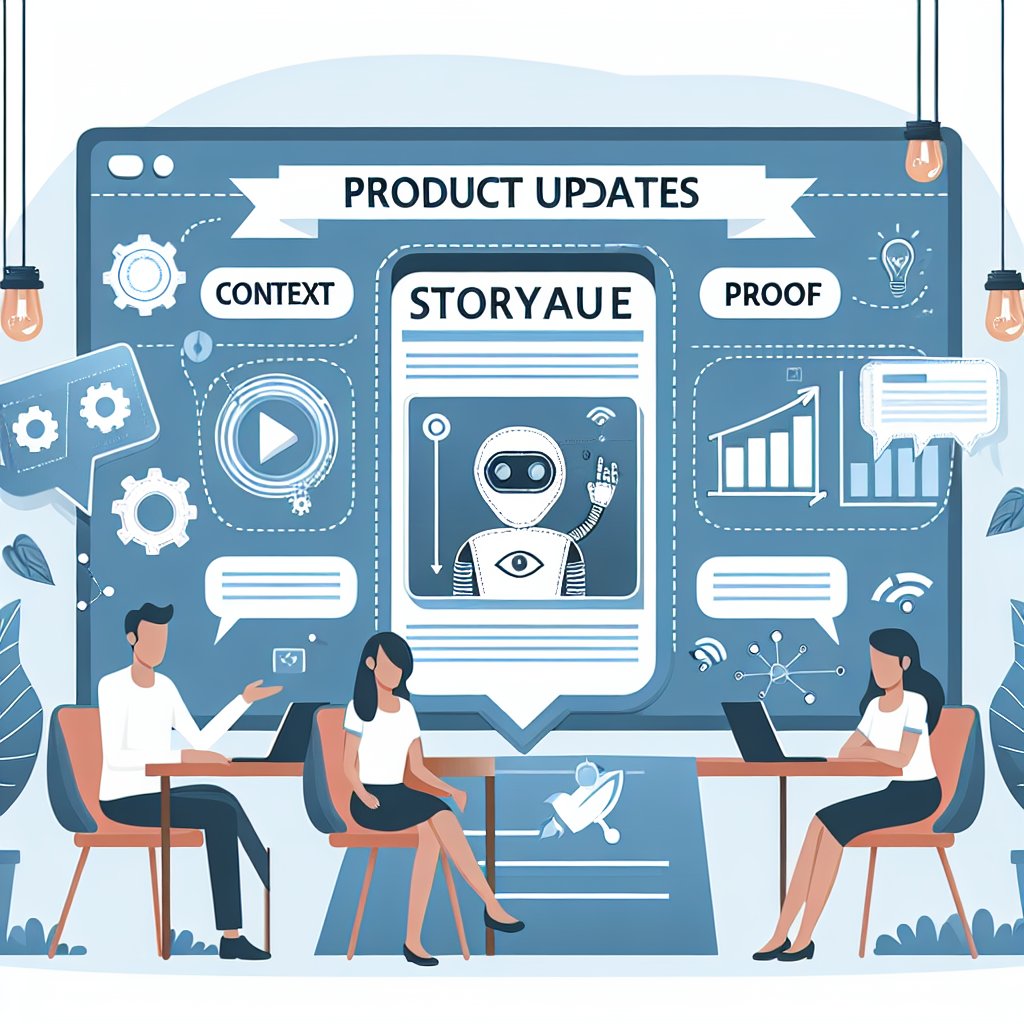

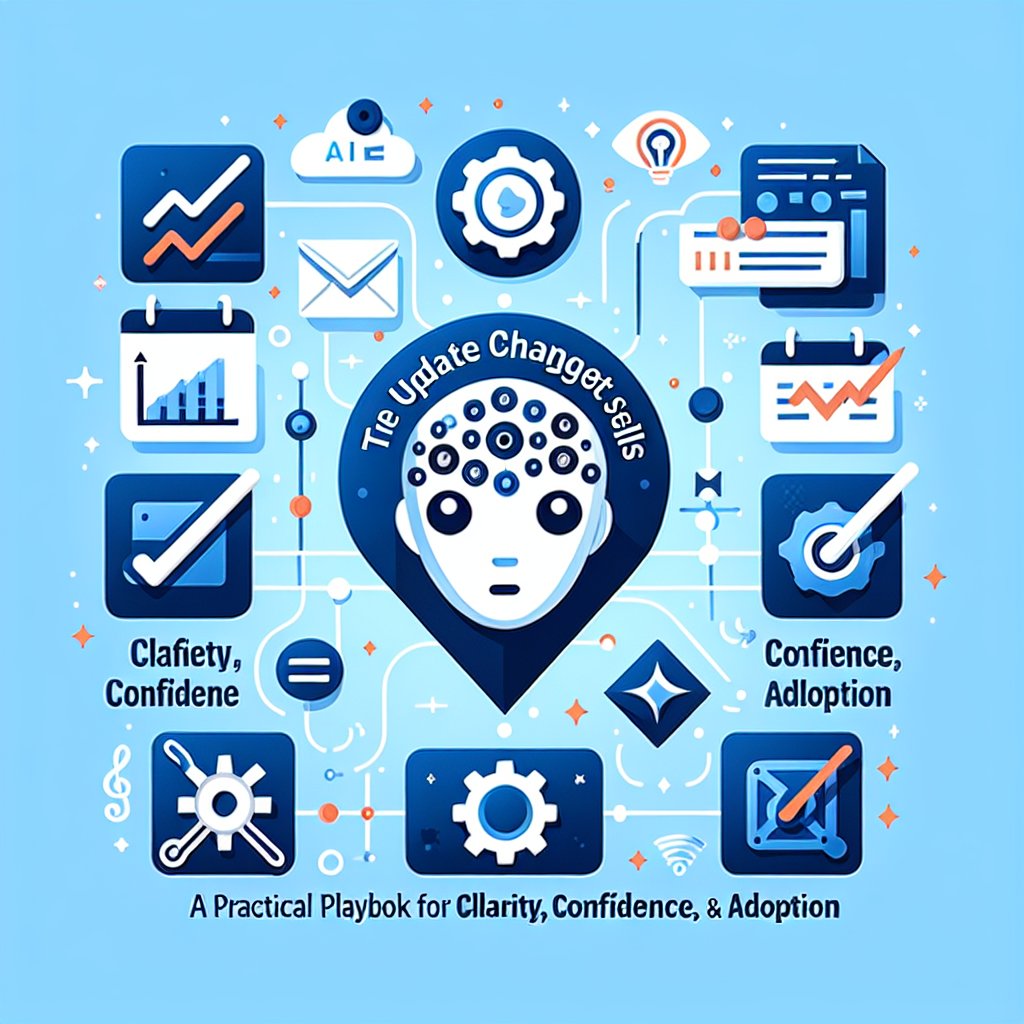
Most product updates fail for one reason: users cannot quickly tell what changed, why it matters, and what to do next. This playbook shows how to package announcements, improvements, and new features into a changelog that drives trust, reduces support tickets, and increases adoption.
Product updates are often treated as a routine publishing task: ship code, post release notes, move on. But customers experience updates as risk. Will this break my workflow? Do I need to retrain my team? Is this change worth the time? When your update communication does not answer those questions fast, users delay adoption, support tickets rise, and your best features go unused.
This article is a practical playbook for writing product updates that are easy to understand and easy to act on. It focuses on announcements, improvements, and new features, what changed and why, but with an extra layer most teams miss: how to package the information so customers feel confident, not overwhelmed.
Before you write anything, define the job of the update. A strong product update message does not just inform, it guides decisions. In practice, it should do three things within the first minute of reading:
When you design the message around these three outcomes, you naturally avoid the most common release note problems: vague marketing language, long technical lists, and missing next steps.
Use one consistent template across all update types. Consistency reduces cognitive load for customers, and it makes your internal release process faster.
Be precise. Name the feature or behavior and describe the observable difference. Avoid “We improved performance” without context. Instead: “Search results load in under 1 second for most accounts, down from 3 to 5 seconds previously.”
Link the change to a customer problem or a measurable goal. The best “why” statements reference real friction: confusion, manual steps, missed leads, compliance risk, slow response times, or inconsistent reporting.
Not every update is for everyone. Call out the primary audience: admins, sales teams, support agents, operators, or specific industries. This helps readers self-select and prevents the “this is not relevant” reaction.
Provide a short workflow. If a user needs to toggle a setting, show where. If behavior changes by default, explain what they will see the next time they log in.
Set expectations about rollout timing, compatibility, and any temporary limitations. If there is a migration, a new permission, or a renamed menu item, say it clearly.
Below are practical rewrites you can use as patterns.
Weak: “We are expanding our messaging capabilities.”
Stronger: “WhatsApp and Instagram conversations now appear in one unified inbox. We built this to reduce context switching for teams that respond to leads across multiple channels. Sales reps can reply faster, keep history in one place, and avoid duplicate follow-ups. To use it, connect your accounts in Settings, then assign conversations by team or location.”
If your business runs messaging-led growth, this type of update matters because it directly affects response time and conversion. Platforms like Staffono.ai build around this reality by letting AI employees handle conversations across WhatsApp, Instagram, Telegram, Facebook Messenger, and web chat, so the value of channel expansions is immediately tied to operational outcomes.
Weak: “We improved lead qualification.”
Stronger: “Lead qualification now uses a two-step question flow (intent, timeline) before assigning a lead to sales. We changed this because teams reported too many unqualified chats being routed as ‘hot.’ The new flow reduces false positives and gives reps a cleaner queue. If you want the previous behavior, admins can switch to ‘single-question qualification’ in Routing.”
Weak: “Introducing automations.”
Stronger: “You can now create an automated follow-up sequence for unanswered chats. We added this because missed replies were a top reason leads went cold after hours. The system sends a helpful message after 10 minutes, then offers booking options after 2 hours. Turn it on under Automations, choose your channels, and set quiet hours to match your business schedule.”
This is also where AI automation becomes a force multiplier. If you already use AI employees through Staffono.ai, a follow-up sequence is not only a reminder, it can be a fully handled conversation that qualifies, answers FAQs, and books appointments while your team sleeps.
Customers trust updates more when the “why” is specific. These are the categories that consistently resonate and reduce pushback:
When you explain changes in these terms, your update becomes a business memo, not a technical dump.
Breaking changes are sometimes unavoidable. The difference between “painful” and “manageable” is preparation and language.
Show what users used to do and what they should do now. A short table or two paragraphs can prevent dozens of tickets.
If possible, provide a grace period, a compatibility mode, or a migration tool. If not possible, state the deadline early and repeat it.
Customers accept disruption when they understand the alternative: security exposure, unreliable data, duplicated work, or lost leads.
Give admins a short list to confirm after rollout, such as “Confirm permissions,” “Test one booking flow,” “Verify notification rules.”
For messaging-heavy teams, a breaking change often shows up first in customer conversations. If your operations depend on fast replies, consider using an AI layer like Staffono.ai to keep responses consistent during transitions. Even if your team is busy adapting to UI or workflow changes, an AI employee can continue answering common questions, capturing lead details, and routing bookings.
Even great release notes fail if customers never see them. Publish the same update in different formats based on urgency and impact.
Pick a single “source of truth” page and link to it everywhere. This prevents version drift.
Shipping is not the finish line. A product update is successful when customers adopt it and outcomes improve. Track:
If you run messaging-led growth, you can tie updates directly to conversion metrics. For example, after enabling 24/7 automated replies, you can compare after-hours lead capture before and after. Staffono.ai users often measure impact through faster first response, more qualified leads, and more bookings completed without human intervention.
You do not need a large team to do this well. Create a repeatable workflow:
This keeps your announcements crisp and prevents last-minute confusion.
Customers do not separate your product from your communication. The way you announce improvements and new features shapes whether users feel confident investing time in your platform. When you consistently explain what changed and why, customers adopt faster, support teams stay calmer, and your roadmap creates momentum instead of noise.
If your updates involve messaging, lead handling, bookings, or around-the-clock responsiveness, it is worth pairing product improvements with operational automation. Staffono.ai helps teams turn product change into measurable results by using AI employees to respond 24/7 across WhatsApp, Instagram, Telegram, Facebook Messenger, and web chat, capturing details, qualifying leads, and booking appointments while your team focuses on higher-value work. Explore how Staffono.ai can support your next rollout and keep customer conversations smooth even as your product evolves.