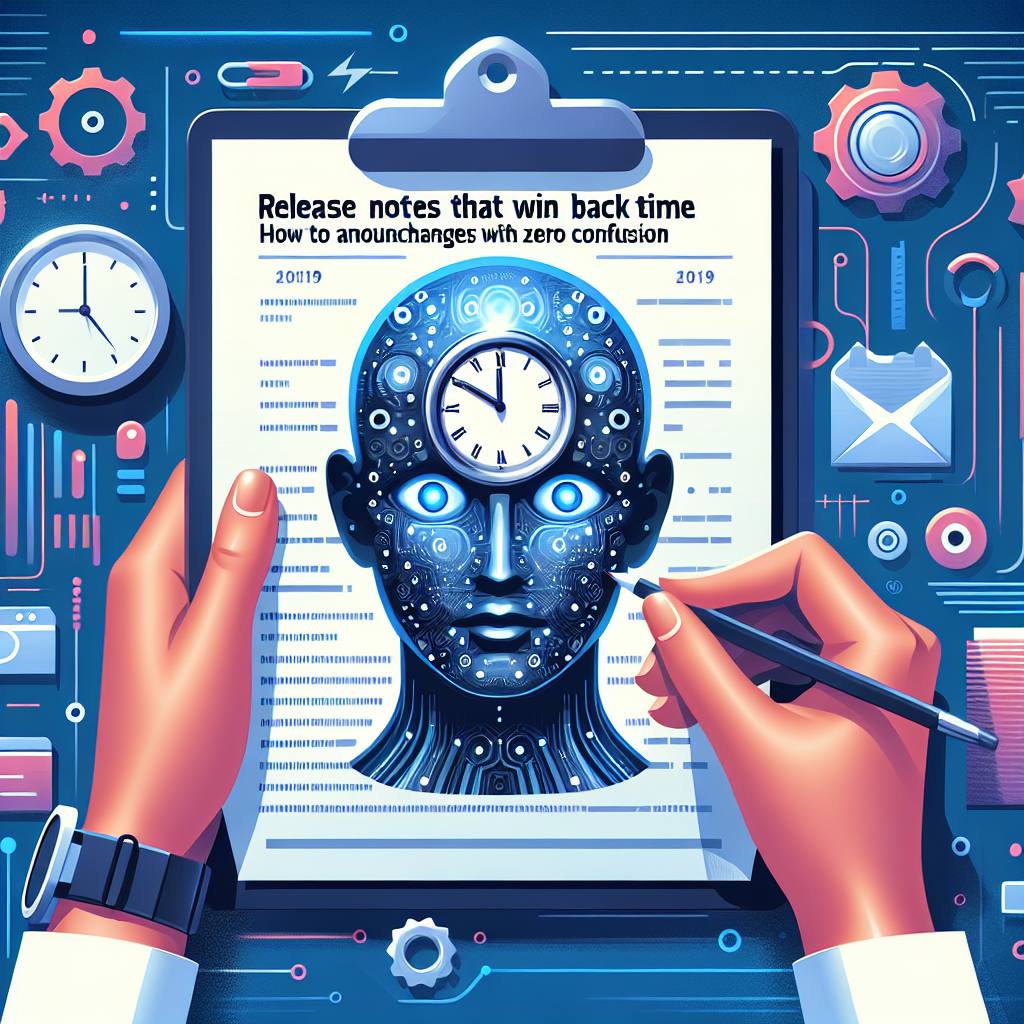


Product updates are not just news, they are change-management. When you explain what changed, why it changed, and what customers should do next, you reduce uncertainty and speed up adoption. This post shows a practical, repeatable way to ship announcements that drive the right behavior across every channel.
Most teams treat product updates like a broadcast: publish a note, post a link, and move on. Customers often experience it differently. An update is a disruption to a workflow, a new decision to make, and sometimes a small trust test: “Will this make my day easier, or will it break something I rely on?”
That is why the best product update communication looks less like a changelog and more like change-management. It anticipates confusion, protects habits that matter, and points customers to the next best action. Done well, announcements become a growth lever: feature adoption rises, support volume drops, and sales conversations become smoother because buyers see momentum and clarity.
Below is a practical playbook for announcements, improvements, and new features: what changed and why, plus how to distribute updates so customers actually understand and act on them. You will also see where an AI automation platform like Staffono.ai can remove the manual work of answering repeat questions and guiding users across WhatsApp, Instagram, Telegram, Facebook Messenger, and web chat.
Customers rarely ask for a list of changes. They need orientation. The moment you ship an update, your users implicitly ask:
If your announcement answers these questions up front, customers feel in control. If it does not, they will seek control elsewhere: support tickets, account managers, or worse, they will ignore the update and keep old workarounds.
You can standardize your product updates without making them boring. Use a consistent structure and vary the details.
Instead of “New dashboard filters,” lead with the result: “Find the right records in seconds with saved filters.” Outcomes help customers self-qualify: they instantly know whether to keep reading.
Describe the change as the customer experiences it. Keep it concrete. If it is a UI change, mention the new location. If it is a workflow change, describe the new steps.
Customers do not need internal debates, but they do need the reason. Strong “why” statements are about customer value and safety:
Avoid vague language like “various improvements.” If you cannot explain why, the change may not be ready to announce.
Adoption happens when the first action is easy. Add a “Do this next” instruction:
This is where many updates fail: they describe the change but do not guide the first click.
Change-management is also about reassurance. If only some users are affected, say so. If key behaviors remain the same, confirm it. Examples:
Not all updates deserve the same framing. Use the right intent.
Announcements include upcoming deprecations, policy changes, pricing adjustments, or scheduled maintenance. The goal is predictability. Include:
Example: “Starting May 1, API tokens created before 2024 must be regenerated. This protects accounts from older token formats. Regenerate in Developer Settings. If you do nothing, your integration will stop sending data on May 1.”
Improvements are easiest to ignore because they sound optional. Make them tangible:
Even if you cannot share exact metrics, name the scenario it improves: “This helps when your team processes end-of-day batches.”
For new features, customers need a quick mental model. Provide:
Example: “Use Smart Routing when you receive inquiries across multiple channels and need to assign them by topic or urgency. Start with two routes: ‘Sales’ and ‘Support.’ Add more after a week of data.”
Imagine you ship a change to your booking flow.
“We updated the booking form and improved validation.”
“Fewer booking errors at checkout: we now confirm phone numbers before a reservation is created. You will see a one-time verification step when a customer enters a new number. We made this change because incorrect numbers were causing missed confirmations and last-minute no-shows. Next step: if you use printed receipts, update the footer text to mention ‘Phone verification may be required.’ Existing customers with verified numbers will not see any extra steps.”
This version reduces surprise, explains the benefit, and tells the business what to do.
Even a perfect update post fails if it is only published in one place. Match channels to urgency and user behavior:
This is where automation matters. When you announce a change across WhatsApp, Instagram DMs, Telegram, Messenger, and web chat, the same questions arrive repeatedly: “Do I need to update anything?”, “Where is the setting?”, “Is this available on my plan?”
Staffono.ai can act as a 24/7 AI employee that answers these questions consistently across channels, links users to the exact steps, and escalates edge cases to your team with context. Instead of your support agents rewriting the same explanation all week, Staffono helps standardize answers while keeping the conversation natural.
Add a short FAQ under each major update. Keep it honest and practical:
If you already use chat or messaging support, you can turn this FAQ into an automated response flow. With Staffono.ai, you can publish the update summary and FAQ as a reusable knowledge snippet so the AI employee can answer instantly and consistently, even at night or during product launch spikes.
Shipping is not the finish line. Define success signals based on the type of update:
Also track communication performance:
Messaging channels are especially valuable because they reveal misunderstanding quickly. If you see the same question repeatedly, your announcement needs a clearer “next step” or a better “what is unchanged” reassurance.
Put the essentials in the announcement, and link to deeper documentation. People want clarity, not volume.
If a change requires action, treat it like an announcement with a timeline. Trust is fragile when customers feel surprised.
Support can handle questions, but you can prevent many of them. Build answers into the announcement and automate the repeatable parts. A platform like Staffono.ai is built for this: it can deliver consistent guidance across WhatsApp and other channels while your team focuses on unusual cases.
The long-term advantage is not one perfect post. It is a repeatable system: a consistent structure, clear distribution, and feedback loops from real conversations. Each update becomes an opportunity to strengthen customer confidence.
If your team is shipping fast and your inbox is paying the price, consider using Staffono.ai to automate the customer-facing side of product change. With 24/7 AI employees that can explain what changed, guide the next step, and route complex requests to the right person, you can keep customers informed across every messaging channel without adding headcount, and turn product momentum into measurable adoption.