
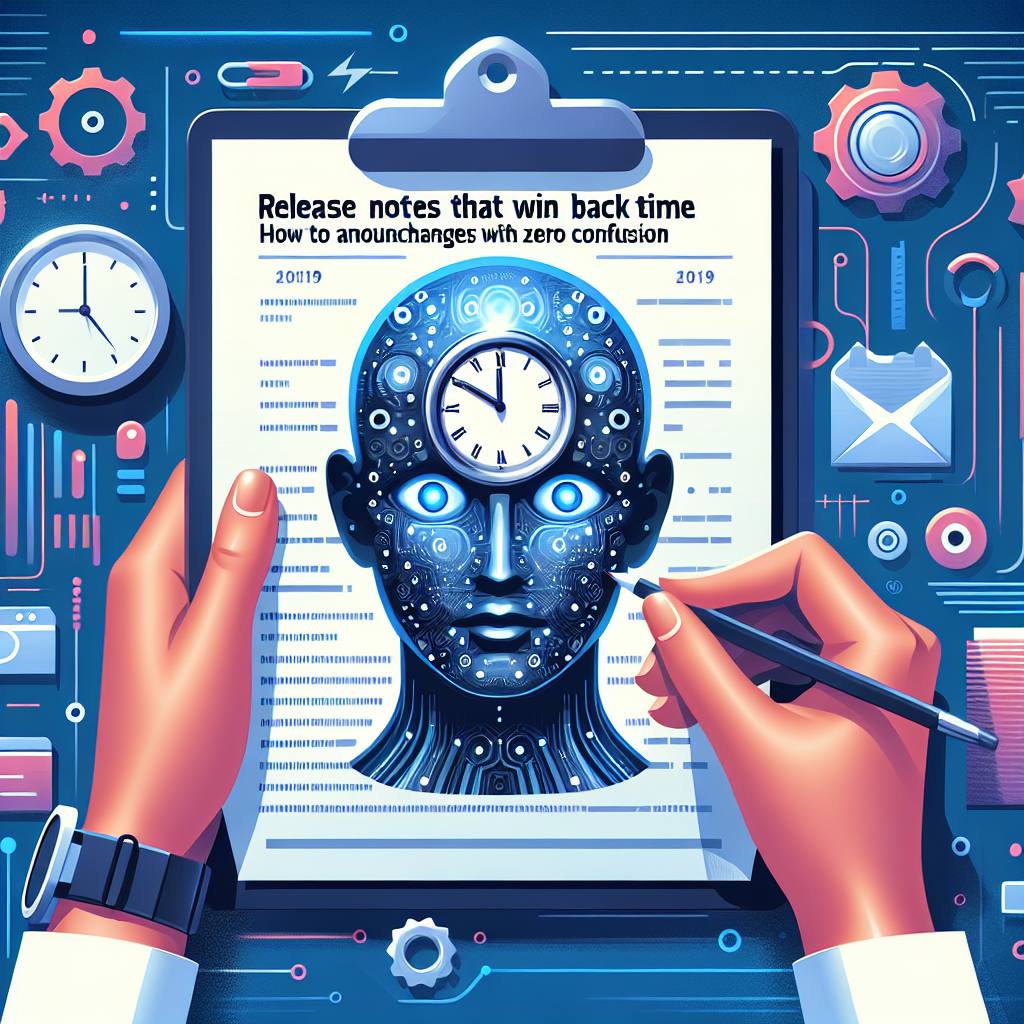
Product updates fail when they create questions faster than they create value. This guide shows how to announce improvements and new features so customers instantly understand what changed, why it matters, and what to do next, without generating a wave of support tickets.
Most product updates are written like a receipt: a list of changes that proves work happened. But customers do not read updates to validate effort. They read updates to protect their time, avoid surprises, and decide whether they need to change anything in their day-to-day workflow.
When an announcement is unclear, the cost is immediate: more “What does this mean?” messages, more hand-holding, and lower adoption. When it is clear, the payoff is compounding: fewer tickets, faster activation of new features, and stronger trust that your product is stable and improving with intention.
This article breaks down a practical, repeatable approach to product update communication: announcements, improvements, and new features, what changed and why. You will also see how Staffono.ai (https://staffono.ai) can automate the distribution and follow-up across WhatsApp, Instagram, Telegram, Facebook Messenger, and web chat, so the update reaches customers in the channel they actually use, with consistent answers 24/7.
Confusion usually comes from a mismatch between how teams build and how customers operate. Internally, you think in terms of components, sprints, and architecture. Externally, customers think in terms of outcomes: “Will this break my process?” and “Will this make me faster?”
Common reasons updates underperform:
Prevention is not about writing longer posts. It is about writing “complete” posts: clear what changed, clear why, clear who is affected, and clear what to do next.
Use this structure whether you are shipping a major feature or a small improvement. It keeps the announcement short while still answering the questions that trigger back-and-forth.
Lead with a single sentence that states the customer benefit in plain language. Example: “You can now confirm bookings directly from WhatsApp, without switching to the dashboard.” This is more meaningful than “Introduced Booking Confirmations v2.”
Describe what the user will actually see. Focus on UI, workflow steps, defaults, and behavior changes.
Avoid internal terminology. If you must use it, define it once.
The “why” is where trust is built. Customers accept change when they see the intent. A good “why” includes:
Even a short sentence helps: “We moved invoice settings to Billing so teams can find them faster and reduce misconfigured tax fields.”
Be explicit. Many customers scan updates to learn whether they are impacted.
One link to a short guide, one screenshot or GIF if needed, and a way to ask questions. This is where many teams lose time: if you do not provide the help path, customers will create their own by pinging your team.
Staffono.ai can reduce this load by acting as a 24/7 AI employee that answers common questions about the update across messaging channels. Instead of customers waiting for business hours, they can ask, “Where did the setting go?” in WhatsApp and get an instant, accurate response pulled from your approved help content.
Not every update deserves the same depth. Tailor the detail based on risk and novelty.
These are high-trust moments. Lead with clarity and timelines.
Example: “Starting May 1, we will require two-factor authentication for all admin accounts to reduce unauthorized access.”
Improvements should be concrete. “Better” is not actionable.
These updates are great for reactivation: customers who churned from friction may return if they see the pain is gone.
New features require enablement, not just awareness.
For example, if you add an automation rule builder, include a ready-made template customers can copy.
Below is a simplified before-and-after to show how “what changed and why” improves adoption.
“We updated notifications to improve user experience.”
“You can now choose which booking notifications you receive per channel (WhatsApp, Instagram, web chat). We made this change because teams told us mixed-channel alerts created noise and missed priority requests. To set your preferences, go to Settings - Notifications. Admins can apply defaults for the whole team.”
Notice what happened: the update now reduces questions, helps users self-serve, and makes the benefit obvious.
Even a perfect announcement fails if customers never see it. Distribution should match behavior. Many users live in messaging apps more than email. If your customers book, ask questions, or negotiate in WhatsApp or Instagram DMs, that is where updates should land, in a respectful, opt-in way.
This is a strong fit for Staffono.ai: you can automate product update outreach and follow-up as conversational flows. For example:
Instead of your team repeating the same explanation 50 times, Staffono handles the repetitive questions while your team focuses on real edge cases.
“Shipped” is not the finish line. Use a simple measurement plan tied to the update type:
Also track communication quality signals:
If you use Staffono.ai across messaging, you can quantify which questions are being asked about each update and where customers get stuck. That turns product updates into a feedback loop, without forcing customers to fill out a survey.
When you follow this consistently, customers stop treating updates as interruptions and start treating them as improvements they can trust.
Product updates should reduce work, not create it. The best announcements respect attention, explain the reasoning, and guide the next step so users can keep moving. If you want to make that experience consistent across WhatsApp, Instagram, Telegram, Facebook Messenger, and web chat, Staffono.ai (https://staffono.ai) can help you automate update messaging, answer questions instantly, and route high-intent conversations to the right person. That way, each release creates momentum instead of noise.