

Product updates are not just a list of tweaks, they are behavior change for your users. Learn how to announce new features, improvements, and fixes in a way that preserves trust, reduces support load, and turns every release into measurable adoption.
Most teams think product updates fail or succeed based on what shipped. In reality, they succeed based on what users do next. A new feature that is technically brilliant can still create frustration if it interrupts habits, changes labels, or silently alters workflows. The best product update communication respects a simple truth: every release is a behavior change request.
This post is a practical guide to announcing updates with clarity and intent. You will learn what to say, why it matters, and how to structure announcements so customers quickly understand what changed, who it is for, and what to do now. Along the way, you will also see how platforms like Staffono.ai can help you operationalize updates across messaging channels so customers are informed, guided, and supported 24/7.
Changelogs are necessary, but they are rarely sufficient. Users do not evaluate updates as “features” and “fixes.” They evaluate them as:
When an update announcement only lists changes, users must do the translation work themselves. That creates uncertainty, and uncertainty creates support tickets, churn risk, and delayed adoption.
A better approach is to frame every update as a decision pathway: what changed, why you did it, what stays the same, and what action the user should take (if any).
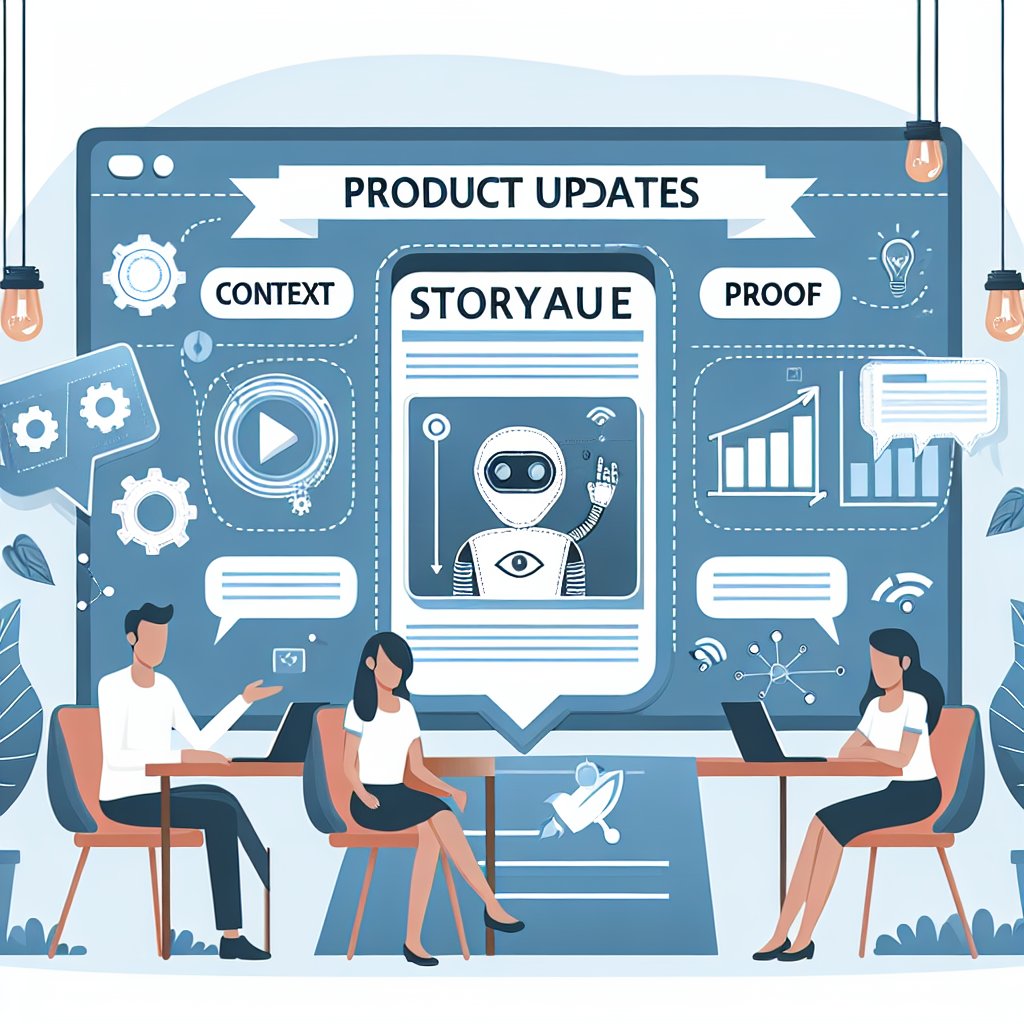
For announcements, improvements, and new features, use a consistent structure that can fit in an email, a help center post, a WhatsApp message, or an in-app modal.
Describe the user problem or scenario in one or two sentences. Example: “Teams told us that sorting inbound leads across channels was taking too long.”
State the change in plain language. Avoid internal terms. If an element is renamed, say so explicitly.
Explain who benefits and how daily workflow improves. If there is a tradeoff, acknowledge it.
Tell users exactly what to do next. If nothing is required, say “No action needed.”
Link to a short guide, video, or FAQ. Offer a way to ask questions fast.
This structure seems basic, but it reduces confusion because it mirrors how people process change. It also gives your team reusable components for release notes, customer success scripts, and support macros.
Not all updates deserve the same treatment. Users interpret “new” differently than “improved” and very differently than “fixed.” Match your messaging to the type of update.
Announcements trigger risk perception. Users worry about surprises, lock-in, or lost access. Your goal is to reduce anxiety and show predictability.
Example: If you are deprecating an older integration, do not only say it is “sunsetting.” Explain the replacement, the benefits, and a migration checklist.
Improvements are easiest to undervalue because they are often invisible when done right. Your goal is to make the benefit tangible.
Example: “Filtering conversations now remembers your last selection, so you do not have to reapply it every time you switch channels.”
New features create opportunity but also choice overload. Your goal is to guide first use and prevent “I will try it later” procrastination.
Example: “Start by routing VIP customers to a priority queue, then measure response time over the next week.”
The “why” is where trust is built, but it must be framed correctly. Avoid long explanations that read like excuses. Instead, connect changes to one of these user-facing reasons:
When you state the “why,” add a proof point whenever possible. It can be a metric, a user quote, or a short scenario. Even “based on feedback from teams handling 1,000+ conversations per week” is more credible than “we listened to our users” with no detail.
Context: Many users were missing a key setting because it was buried.
Change: “Notification preferences moved from Settings > Account to Settings > Notifications.”
Impact: “You can now update alert rules in one place, which reduces missed messages.”
Action: “No action needed, your existing preferences are unchanged.”
Support: “See the 30-second guide for where to find it.”
Context: Teams managing inbound leads across WhatsApp and Instagram needed faster qualification.
Change: “You can now add a qualifying question step before booking.”
Impact: “Sales teams spend less time on low-intent chats and more time on ready-to-buy conversations.”
Action: “Create one qualifying question, then route ‘high intent’ to your sales inbox.”
Support: “Use the template in the help center.”
Users do not all read email. Some only notice in-app messages. Others primarily interact via messaging. If your product touches conversations, bookings, or sales, the fastest path to adoption is often a message at the moment of need.
This is where Staffono.ai becomes particularly useful. Because Staffono.ai provides 24/7 AI employees across WhatsApp, Instagram, Telegram, Facebook Messenger, and web chat, you can turn updates into guided micro-conversations instead of passive announcements. For example, when a user asks “How do I change my booking rules?” your AI employee can answer using the latest release information, link the correct help article, and confirm the steps in the user’s language.
To avoid channel overload, use a tiered distribution plan:
Segmenting matters. If only administrators are affected, do not broadcast to everyone. If only WhatsApp users benefit, tailor the message to that audience.
Shipping is not the finish line. Adoption is. Define one or two metrics per update that indicate real usage:
Then connect these metrics to your announcement strategy. If activation is low, the feature may be hard to find, the value may be unclear, or the first-use path may be too long.
With Staffono.ai, teams can also measure update comprehension through conversation analytics: what questions spike after a release, which channels drive the most confusion, and which explanations lead to successful completion. That feedback loop helps you refine both the product and the messaging in the next cycle.
When you treat product updates as behavior change, your communication becomes calmer, clearer, and more effective. Users feel informed rather than surprised. Support teams spend less time translating changes. Product teams get cleaner feedback because questions are specific, not confused.
If you want to make this repeatable, consider pairing your release process with an always-on communication layer. With Staffono.ai, you can deploy AI employees that answer update-related questions instantly across the channels your customers already use, guide them through new workflows, and route complex cases to your team with full context. When your next release goes live, you can spend less time firefighting and more time building.