
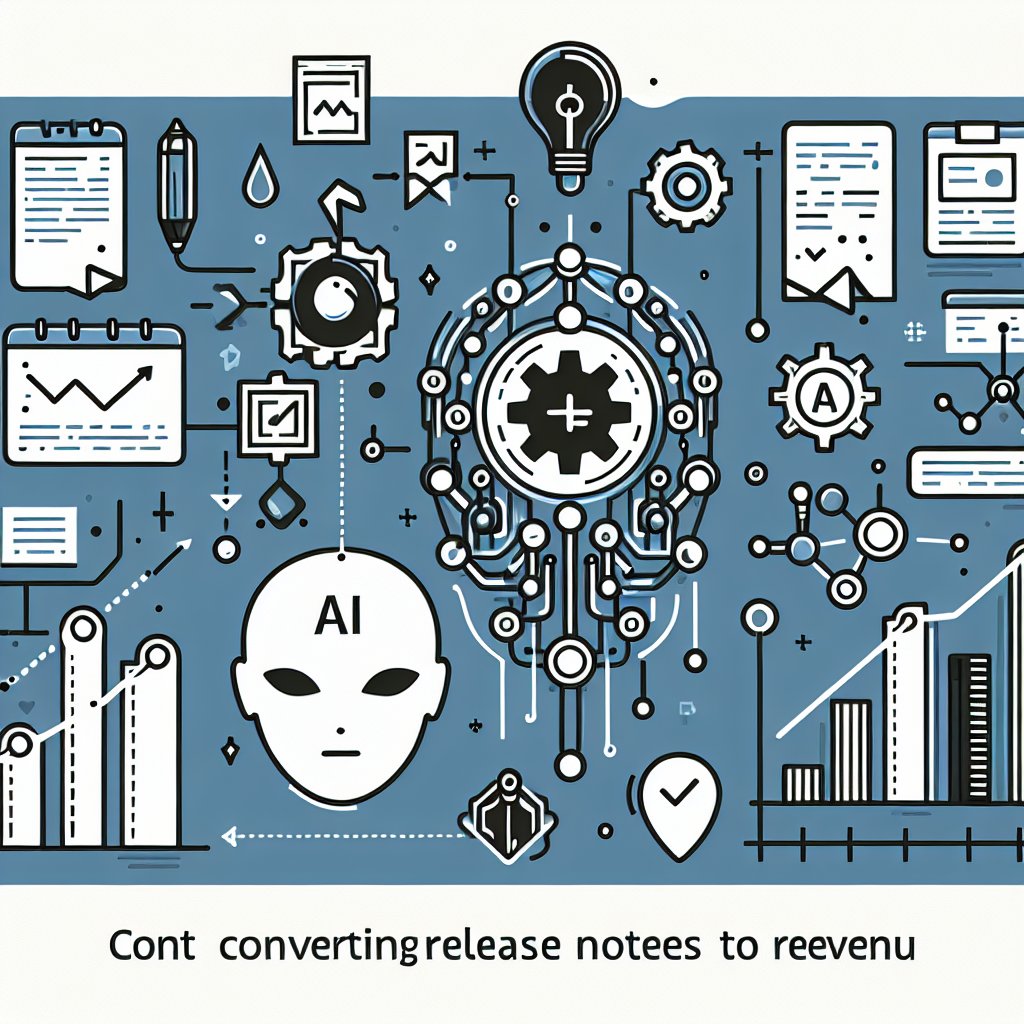
Product updates are not just documentation, they are a growth lever. This guide shows how to announce improvements and new features in a way that reduces confusion, increases adoption, and creates measurable revenue impact.
Most teams treat product updates like housekeeping: ship the change, post the notes, move on. But customers do not experience updates as “notes.” They experience risk, curiosity, and friction. If they do not understand what changed and why it matters to them, the update becomes background noise or, worse, a reason to churn.
A high-performing product update does three things at once: it announces what changed, explains why it changed, and tells each customer segment what to do next. When you do that consistently, your updates stop being a cost center and start behaving like a conversion channel.
Even strong products struggle with announcements because the problem is rarely the feature. It is the communication design around the feature.
The fix is a repeatable update format that ties changes to customer value, then distributes the message in the channels customers actually use.
Think of an update as a mini sales page for existing customers. Not hype, but clarity. A practical structure looks like this:
Open with the pain you addressed, not the internal project name. For example: “Responding to leads across multiple messaging apps was causing missed follow-ups and inconsistent answers.” If the user recognizes themselves, they keep reading.
Keep it concrete. Avoid vague statements like “improved performance.” Say what the user can now do that they could not do before, or what is now easier.
“Why” builds trust. It also reduces speculation. Good reasons include: customer feedback patterns, reliability issues, compliance needs, or enabling a future capability.
Use one metric, one before-and-after workflow, or one short example. Proof beats paragraphs.
Every update should include an action path: try it, enable it, configure it, or ignore it safely. If there is a setting change, say where it is and what the default is.
Not all updates are equal. Each type needs a different emphasis to keep customers confident.
Announcements are about predictability. Customers want timelines, impact, and alternatives.
If you operate across messaging channels, announcements should also be available where customers ask questions. Many businesses now use Staffono.ai (https://staffono.ai) to keep communication consistent across WhatsApp, Instagram, Telegram, Facebook Messenger, and web chat, so the same update explanation is delivered 24/7 without gaps.
Improvements are about credibility. Users may not notice them unless you frame the outcome.
New features are about adoption. If users do not activate them, they do not exist.
Customer problem: Leads arrive in different apps, and teams miss follow-ups after business hours.
What changed: “We added unified lead capture rules that automatically tag, qualify, and route new conversations from WhatsApp and Instagram into your pipeline.”
Why: “We saw customers losing deals due to inconsistent first responses and manual copy-paste.”
Proof: “Early users reduced missed first replies by 38% in the first week.”
Next step: “Enable ‘Auto-qualification’ in Settings, choose your qualifying questions, and test it with one channel first.”
This is also where an AI automation platform can make the update tangible. With Staffono.ai, businesses can deploy AI employees that respond instantly, qualify leads with consistent questions, and book meetings across multiple channels, so the “why” becomes a measurable outcome, not a promise.
Customer problem: Customers ask about availability, but human agents take time to confirm, causing drop-off.
What changed: “You can now offer real-time booking via chat with dynamic time slots and automated confirmations.”
Why: “We built it to reduce the delay between intent and confirmation.”
Proof: “Teams using chat-based booking saw higher completion rates, especially on mobile.”
Next step: “Connect your calendar, set your working hours, and publish the booking link in your chat greeting.”
Customers do not read updates in one place. A strong distribution plan uses layered depth, so each person gets the right amount of detail.
If you operate in conversational channels, consider how updates are explained when users ask, “Did something change?” Staffono.ai can act as a consistent frontline responder, answering update questions, linking to the right guide, and escalating edge cases to your team with full context. That reduces support load while improving confidence.
Shipping is not the finish line. Measuring adoption and understanding tells you whether your message landed.
One practical tactic: write the release note first, then decide what to build. If you cannot explain the benefit clearly, users will not feel it either.
Consistency beats intensity. A lightweight monthly rhythm keeps customers informed without overwhelming them.
This rhythm also benefits from automation. When your update goes live, Staffono.ai can deliver a short, role-specific summary in the messaging channel a customer prefers, then guide them through enabling the change, all while your human team focuses on complex cases.
Customers do not reward you for shipping changes. They reward you when changes make their work easier, faster, or more profitable, and when you explain those changes with respect for their time. The best product updates feel like a helpful briefing: clear context, minimal jargon, proof of value, and one obvious next step.
If you want your announcements, improvements, and new features to translate into adoption and measurable outcomes, consider building your update distribution into the same conversational workflows where customers already engage. Staffono.ai (https://staffono.ai) can help you communicate updates across WhatsApp, Instagram, Telegram, Facebook Messenger, and web chat, answer questions instantly, and drive customers to the next action, so your release notes do more than inform, they convert.