

Most product updates fail for a simple reason: they describe changes, but they do not help customers decide what to do next. This guide shows how to structure announcements, improvements, and new features so users understand what changed, why it changed, and how to get value fast.
Product updates are not just documentation. They are a growth lever. Every announcement either increases confidence and adoption, or it creates confusion, support tickets, and silent churn. The difference is rarely the size of the feature. It is the quality of the explanation and the distribution strategy behind it.
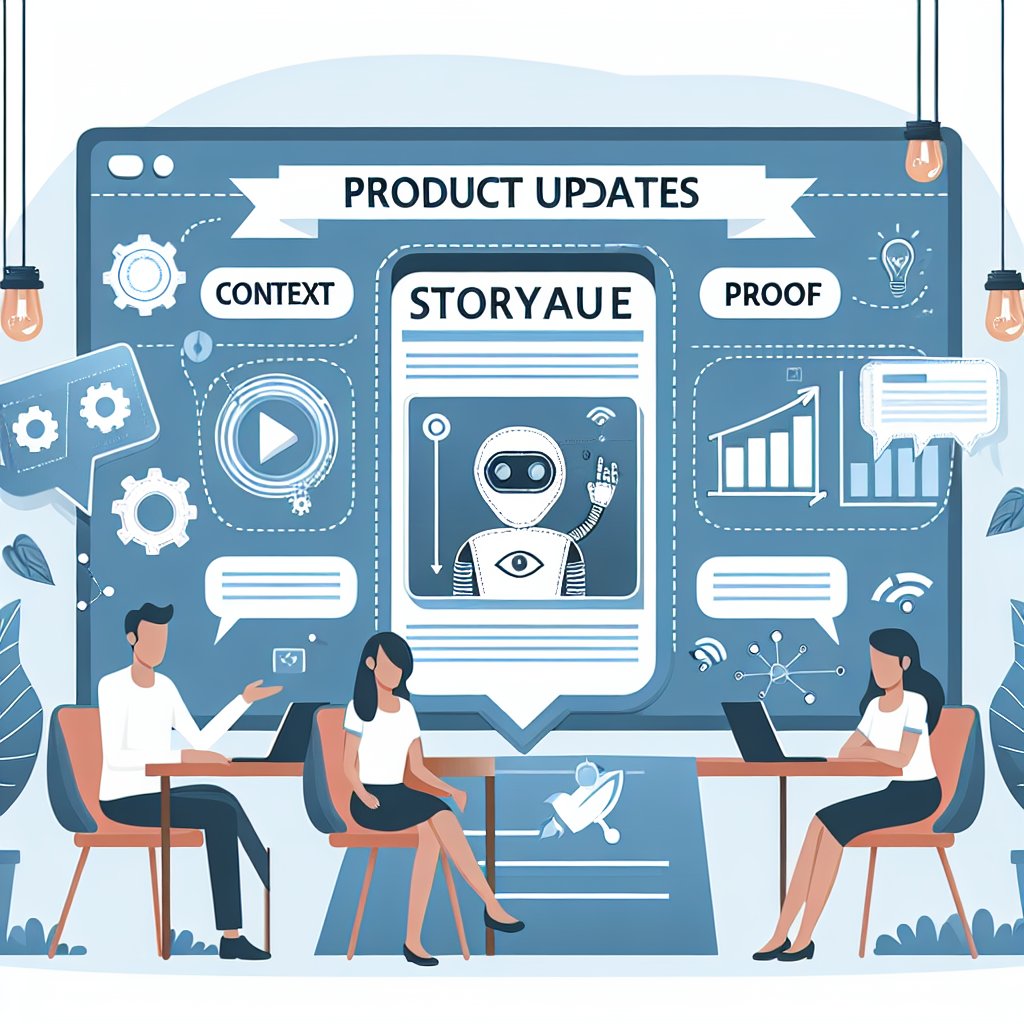
A strong update answers three questions in the user’s language: what changed, why it changed, and what to do now. It respects the customer’s time, anticipates their workflow, and makes the next step obvious. When you treat updates as an engine (a repeatable system with inputs, formats, channels, and measurement), you stop “shipping and hoping” and start shipping and converting.
Customers ignore release notes when they feel like internal changelogs. Long lists of tweaks are meaningful to product teams, but not to users who are trying to complete a task. When a user cannot quickly map the change to a result, they close the message.
The cost shows up in three places:
Messaging-first businesses feel this more intensely because customer expectations are immediate. If a feature changes how booking, pricing, or messaging works, you will hear about it right away, often on WhatsApp or Instagram before anyone checks email. This is where platforms like Staffono.ai can help operationalize product communication by handling high-volume questions and routing edge cases to humans, 24/7, across the channels your customers already use.
A product update that drives adoption is structured like a decision aid, not a diary entry. Use this anatomy as a consistent template.
Lead with the user benefit in one sentence. Examples:
Then explain what changed. This keeps the reader oriented and reduces the cognitive load.
Customers do not need your entire roadmap debate. They need the primary reason. Pick one:
If the change was driven by customer feedback, say so and name the pattern, not individual accounts: “Many teams told us…”
Every update should end with an immediate next step:
When updates include an action, you can measure adoption directly instead of guessing.
Segment by role and urgency:
Users are more likely to read when they know it is relevant to them.
Not all updates deserve the same treatment. Announcing them with the wrong framing is a common reason users feel misled.
Improvements should emphasize reduced friction. Use before-and-after language:
Keep this short. Improvements are credibility builders, but they rarely require a long explanation.
New features need a mini story: problem, new capability, and a concrete scenario. For example, if you add multi-channel messaging analytics, the scenario could be: “You can compare response time across WhatsApp and web chat and spot where leads drop.”
Include one realistic example that matches your audience. A clinic’s booking flow, a real estate agent’s lead response, or an e-commerce store’s order questions are all relatable. If your product supports messaging operations, show the moment where speed matters.
Outcome: “Bookings are now confirmed faster, with fewer back-and-forth messages.”
What changed: “We added a single confirmation screen that summarizes date, time, and contact details.”
Why: “We saw that most booking errors came from missing details in the final step.”
Do this next: “Try creating a new booking and review the confirmation summary before sending.”
Who it affects: “Front-desk teams and anyone scheduling appointments.”
Outcome: “Customers get answers faster, even outside business hours.”
What changed: “Automated replies now recognize more question types and suggest the best next action.”
Why: “Support queues spike at night and on weekends, and we want to reduce wait time.”
Do this next: “Review the top 10 customer questions and confirm the recommended answers.”
This is also a natural point to mention tools that can operationalize it. With Staffono.ai, teams can deploy AI employees that handle customer communication and bookings across WhatsApp, Instagram, Telegram, Facebook Messenger, and web chat, so the update is experienced as real improvement, not just a note in a changelog.
Even the best update fails if users never see it. Use a multi-channel approach, but tailor the message length to the channel.
If your customers primarily interact via messaging, treat WhatsApp or Instagram as first-class release channels. Staffono.ai can help you deliver update messages consistently and respond instantly when users reply with questions like “Where do I find this?” or “Does this affect my current setup?”
Track adoption like a product experiment. Pick a small set of metrics tied to the update type:
Also track qualitative signals. What questions show up in chat? Which parts are misunderstood? Feed those back into a follow-up micro-update that clarifies the confusing step.
Consistency beats brilliance. Build a lightweight process that your team can repeat:
For messaging-heavy businesses, automation can make this sustainable. Staffono.ai can act as an always-on frontline that answers repetitive update questions, guides users to the right setting, and escalates complex cases to your team with conversation context, reducing the hidden cost of shipping changes.
The best teams treat product updates as part of customer success. Every release is an opportunity to reduce friction, increase trust, and create a clear reason for users to return. When you consistently communicate what changed, why it changed, and what to do next, your product feels easier and your users feel supported.
If you want to make product communication and follow-up effortless across channels, Staffono.ai can help. With AI employees available 24/7 on WhatsApp, Instagram, Telegram, Facebook Messenger, and web chat, you can announce updates where customers actually pay attention, answer questions instantly, and guide users to adopt new features without adding workload to your team.