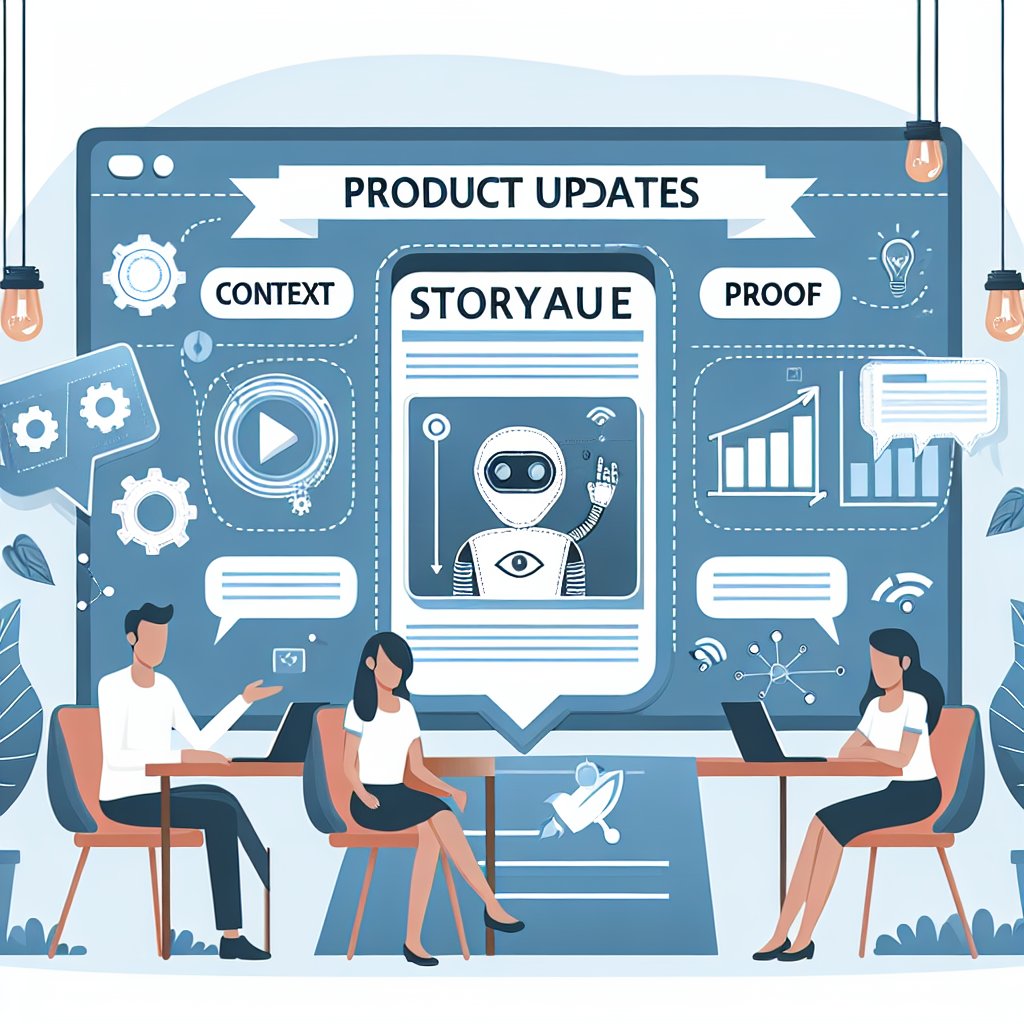


Product updates fail when they describe code instead of customer impact. This guide shows how to announce changes in a way that reduces confusion, accelerates adoption, and turns improvements into measurable business outcomes.
Most product updates are written as if the reader shipped the code. They list what changed, link a ticket, and move on. The problem is not that customers dislike change. It is that they cannot quickly answer three questions: what does this mean for me, what do I need to do next, and why should I care right now.
A strong product update is not a diary entry. It is an operational message that protects trust, reduces support load, and drives usage. When you treat updates as a customer-facing workflow, the “what changed” becomes only one part of a clear narrative: who it affects, what improves, what action is required, and how to get help fast.
Before writing a single line, decide who the update is for. Many teams publish one generic announcement and hope it works for everyone. In reality, your audience usually falls into distinct groups with different concerns.
Write one “core” update, then adapt the same change into short variants per segment. This is where an AI messaging layer can help. For example, Staffono.ai (https://staffono.ai) can deliver tailored update messages across WhatsApp, Instagram, Telegram, Facebook Messenger, and web chat, so an admin receives governance details while a frontline user gets a two-sentence “here is what’s better” summary.
Customers scan. Your structure should make scanning successful. A practical format is:
This structure works for major releases and small improvements because it is outcome-driven. It also prevents the most common mistake: announcing a feature without any guidance on how to use it.
“We are always improving” is not a reason. “To deliver a better experience” is not a reason. A strong “why” connects the change to a real constraint or a real customer problem.
When you can, cite inputs. “Based on 137 support conversations about X” or “requested by teams in retail and clinics.” You do not need to overshare, just show that change is purposeful, not random.
Even the best update will be ignored if it arrives at the wrong time. Instead of one big blast, plan a sequence that respects attention.
Businesses that communicate with customers primarily through chat need a chat-native approach. Staffono.ai can automate this sequence across messaging channels, ensuring users receive the right message at the right step, and that replies like “how do I enable this?” are handled instantly with guided instructions or escalated to a human when needed.
One underrated goal of product updates is reducing repetitive support tickets. Every announcement should anticipate the top five “what about…” questions.
This is especially important for improvements that change behavior. For example, if you adjusted notification rules to reduce spam, say exactly what triggers a notification now and what no longer does. Clarity prevents frustration.
Imagine you changed how bookings are confirmed in your platform. The old flow required a manual confirmation click; the new flow confirms automatically if the user meets certain criteria. Here is how an audience-first update might look in principle:
That last line is where chat automation becomes powerful. If you publish updates via email only, users must hunt for help. If you publish them in messaging channels, you can turn the announcement into a guided experience. With Staffono.ai, your AI employee can answer follow-up questions, share screenshots or steps, and even help users complete configuration changes in real time.
Product updates should have success criteria. Otherwise you will never know whether the announcement worked, or whether the feature itself is the issue.
Messaging channels provide unusually rich feedback because users respond in plain language. If you route update announcements through Staffono.ai, you can tag and summarize user replies automatically, then feed those insights back into product decisions. Over time, your “product updates” become a closed loop: announce, observe, clarify, and iterate.
Teams often treat release notes as a one-time post. You can get much more value by repackaging the same change for different contexts:
This is not “more content.” It is the same content shaped to the moment of use. The key is consistency: the benefit and the “why” should match across every channel.
A practical rule: if a customer reads only the first paragraph, they should still understand what improved and what to do next.
If your customers live in chat, your updates should live there too. A modern approach is to make updates conversational: publish a short announcement, then let users ask questions naturally. This reduces friction and increases adoption because help is immediate.
Staffono.ai (https://staffono.ai) is built for exactly this kind of operational communication. Its 24/7 AI employees can announce updates across WhatsApp, Instagram, Telegram, Facebook Messenger, and web chat, answer common questions, route complex cases to your team, and even capture feedback in structured form. Instead of hoping users read a long changelog, you meet them in the channel they already use.
If you want your next announcement to do more than inform, and instead drive real usage and fewer support escalations, consider running your update communications through Staffono.ai and turning every “what changed?” message into a guided, measurable customer experience.