

Product updates are not a broadcast, they are a mini change management program for your customers. This guide shows how to announce improvements and new features with clarity, relevance, and a “why” that drives adoption instead of confusion.
“Product updates” often get treated like a routine: ship, post release notes, move on. But your customers do not experience updates as a routine. They experience change. Even a small UI tweak can disrupt habits, training materials, internal approvals, and support workflows. That is why the best product teams treat announcements, improvements, and new features as customer change management, not as a company news feed.
This post breaks down what to say, how to say it, and why it works. You will also see practical examples you can copy, plus ways to automate update communication across messaging channels using Staffono.ai (https://staffono.ai), especially when your customers live in WhatsApp, Instagram DMs, Telegram, Facebook Messenger, and web chat.
Most update posts focus on output: what you shipped. Customers care about outcomes: what gets easier, faster, safer, or more reliable. When teams skip the “why,” users fill in the blanks themselves, and they often assume the worst: “They changed it because they do not understand us,” or “Now I have to retrain my team.”
Strong update communication answers three questions in the customer’s language:
If you get these right, updates stop feeling like interruptions and start feeling like progress.
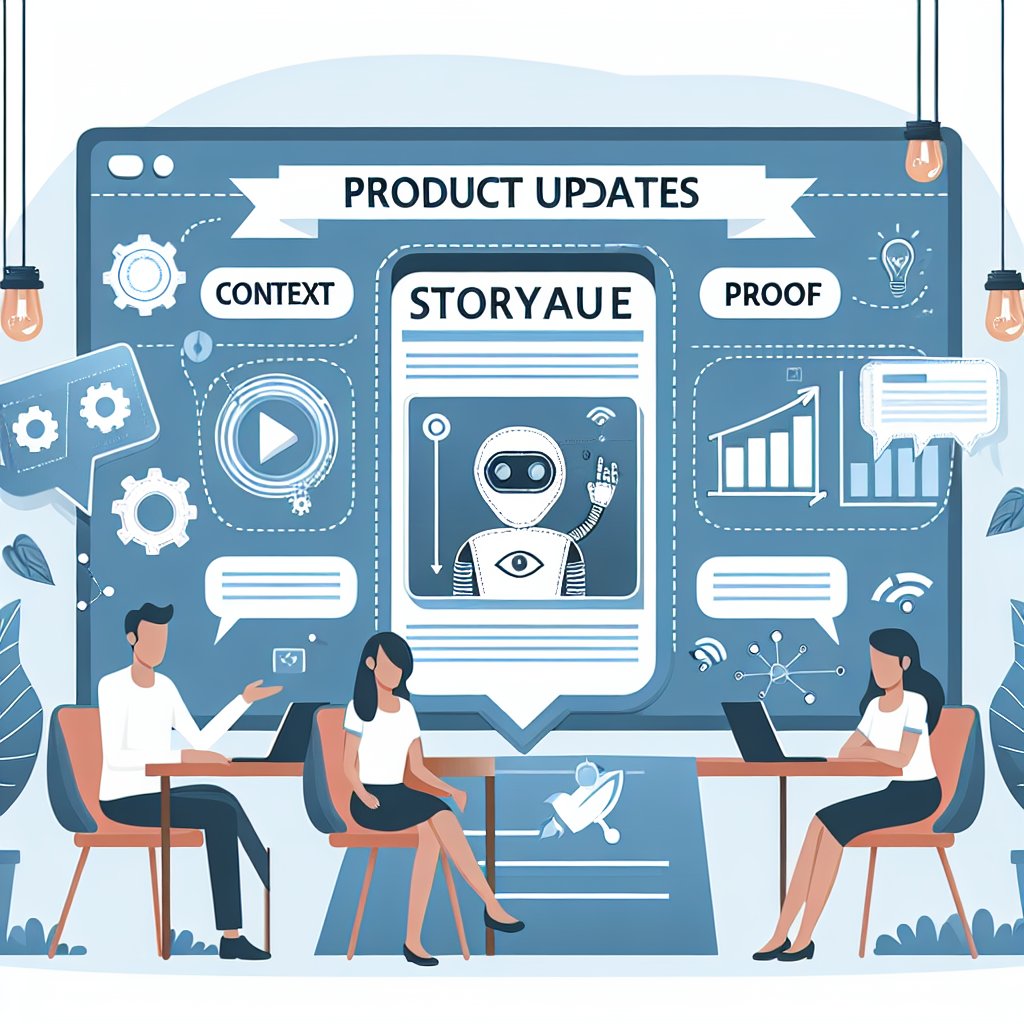
To keep announcements consistent, use a repeatable structure. One of the most effective is Context, Change, Consequence:
What was happening in the real world that made this worth changing? Mention a scenario, a pattern in support tickets, or a common workflow. Keep it customer-centered.
What exactly is different? Be specific, avoid vague statements like “improved performance.” If you have numbers, use them. If not, describe the practical effect.
What does the customer gain, and what do they need to do? This is where you remove uncertainty: “No action needed,” “Toggle it on,” or “Your admin should update permission X.”
This structure works for small tweaks and major launches because it respects the customer’s mental load.
Some teams avoid explaining “why” because they fear debate. In practice, the absence of “why” creates more debate, because customers speculate. The trick is to anchor the reason in observable reality, not internal priorities.
Here are safe, credible “why” patterns:
Notice what is missing: “We wanted,” “We decided,” “We felt.” The “why” should read like a field report from customer reality.
Below are three examples of update announcements, each focused on what changed and why, plus next steps.
Context: Many teams run morning message bursts, sending pricing, availability, and confirmation links to dozens of customers at once.
Change: We optimized message queueing and retries, reducing delivery delays during peak periods and preventing duplicate sends when a connection drops.
Consequence: Your customers receive responses faster, and your agents spend less time checking “did it send?” No action needed.
Context: As teams grow, not everyone should edit templates, view revenue reports, or access customer phone numbers.
Change: Role-based permissions now let admins control who can edit automations, view analytics, and manage integrations.
Consequence: Better governance with less risk. Admins can review roles in Settings, then assign permissions in under five minutes.
Context: Users told us they lost time switching between conversation history and booking details.
Change: Booking details now appear inside the chat sidebar, including date, status, and quick actions.
Consequence: Fewer clicks and faster confirmations. If you use saved replies, consider updating the confirmation template to include the new booking link token.
The pattern is consistent: scenario, specific change, clear next step. Customers can scan it and understand whether they need to care.
One of the biggest reasons updates get ignored is that they are sent to everyone the same way. Power users need different details than executives. Admins need different instructions than agents. A good product update system uses segmentation.
Consider segmenting by:
This is where Staffono.ai can be a practical advantage. Because Staffono.ai automates customer communication across WhatsApp, Instagram, Telegram, Facebook Messenger, and web chat, you can deliver the right update to the right segment in the channel they actually use. Instead of a single email that gets buried, you can trigger a targeted message when a user logs in, asks a related question, or hits a relevant workflow step.
Customers rarely reply to release notes, but they will reply to a question that feels personal: “Do you want to enable the new approval step?” or “Should we migrate your templates automatically?” The goal is to convert passive awareness into active adoption.
Try pairing each update with a lightweight interaction:
With Staffono.ai, these interactions can be automated by an AI employee that answers follow-up questions instantly, shares the right help article, and escalates edge cases to a human. This matters most right after a change, when support load spikes and customers want immediate clarity.
Not every update will be universally loved. Sometimes you remove an option, rename a concept, or enforce a new security requirement. Silence in these moments damages trust. Instead, acknowledge the tradeoff without over-apologizing.
A useful template:
This is not PR, it is operational empathy. It tells customers you are making decisions with their constraints in mind.
Before you publish, run through a quick checklist:
If you consistently ship updates with this discipline, customers start to trust that every announcement is worth reading.
As your product grows, the hard part is not writing one good post. The hard part is repeating the process across multiple channels, time zones, and customer types without adding manual work for your team. That is exactly where automation pays off.
Staffono.ai (https://staffono.ai) can help you operationalize product update communication by:
When updates become a managed process instead of a one-off post, adoption rises, support burden drops, and customers feel like they are being led through change rather than surprised by it. If you want your next release to land with clarity, not chaos, explore how Staffono.ai can act as your always-on AI employee for product communications at https://staffono.ai.