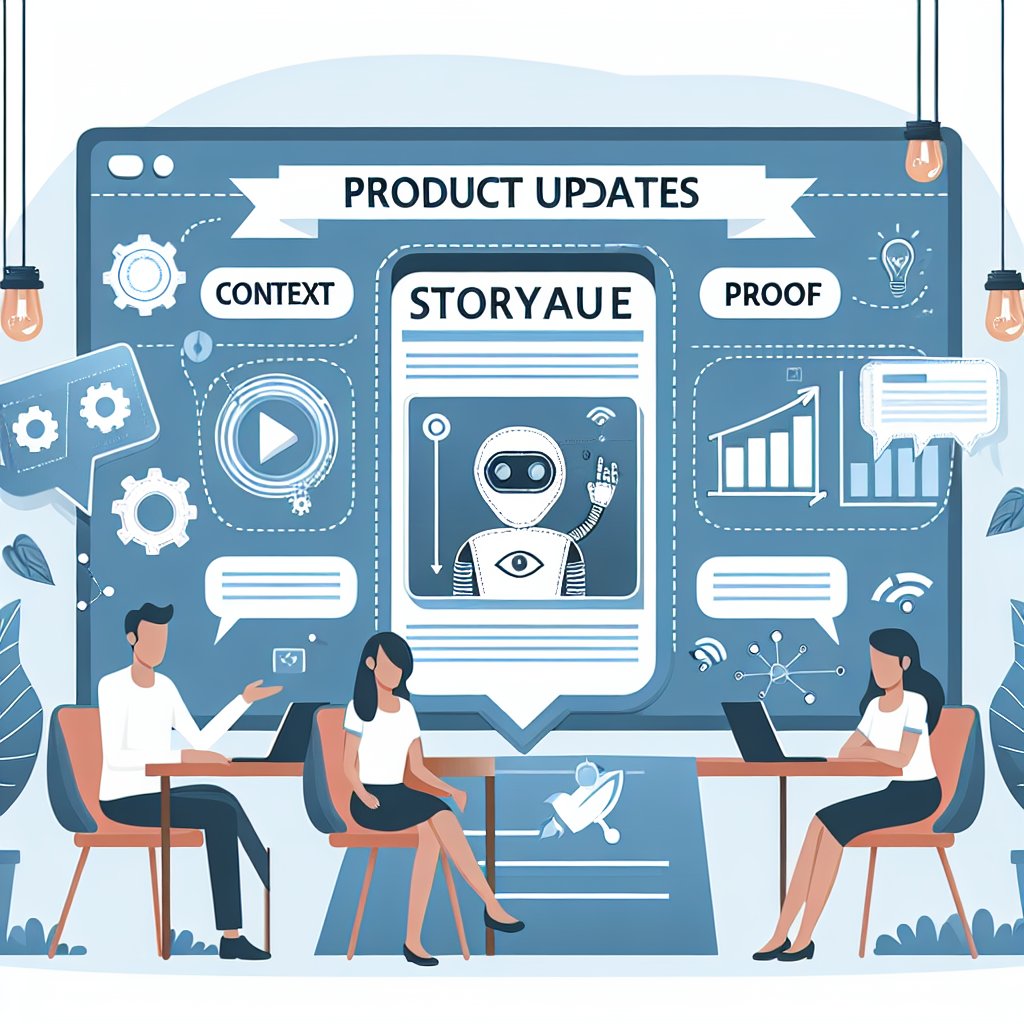


The best product updates do not just announce new features, they protect the routines customers rely on every day. This guide shows how to explain what changed and why, while reducing confusion, support load, and churn through a launch plan built around user habits.
Product updates are rarely “just” engineering milestones. To your customers, updates are interruptions to workflows they have rehearsed hundreds of times. That is why the most effective release communication is not louder, it is safer: it protects user routines, clarifies what changed, and explains why the change is worth the attention.
This post breaks down a practical approach to product updates that combines clear announcements, improvements, and new features into a routine-protecting launch plan. You will learn how to structure messages, choose the right channels, and measure whether your updates actually landed. Along the way, we will use examples you can borrow and show where messaging automation platforms like Staffono.ai can reduce manual work while keeping communication timely across WhatsApp, Instagram, Telegram, Facebook Messenger, and web chat.
Customers do not wake up excited about your new settings panel. They care about completing a task: booking, paying, tracking, messaging a client, exporting a report. When an update changes a familiar flow, even slightly, customers feel risk. If you anchor your update in the routine it touches, people instantly understand relevance.
Before writing a single line of release notes, map:
Then frame your update as protection or improvement of that routine. This shifts you from “we shipped X” to “you can now do Y faster or more reliably.”
Most product updates mix different types of change, but the communication should not treat them the same. Customers read differently depending on perceived risk.
New features create curiosity, but also uncertainty. Customers need a crisp value statement and a minimal path to try it. You should answer:
Example snippet: “You can now confirm appointments directly from chat. If you handle bookings in WhatsApp, this reduces back-and-forth and prevents no-shows. Open any conversation, tap ‘Book,’ choose a slot, and the customer receives an instant confirmation.”
Improvements are easiest to overlook, which is a missed adoption opportunity. Explain the before and after in routine terms and show the specific friction removed.
Example snippet: “Exporting invoices used to take 5 clicks. It now takes 2, and the file is generated in under 10 seconds for most accounts. If you send weekly reports, this saves time every cycle.”
Fixes feel like “maintenance,” but behavior changes can break habits. If something works differently, be explicit. People forgive change when you respect their time. Answer:
Example snippet: “Starting Monday, password reset links expire after 30 minutes instead of 24 hours for security. If your team shares reset emails internally, update your process to use the link immediately. Support can help if anyone gets locked out.”
If you want customers to actually read and act, keep the core message short and predictable. Here is a structure that works across email, in-app, and messaging:
That last line is a secret weapon. “What stays the same” reduces anxiety and support tickets because it signals you understand the customer’s existing workflow.
Not every update deserves a broadcast. Overuse of announcements trains customers to ignore you. Choose channels based on urgency and the risk of disruption.
This is where automation helps. Many teams struggle to deliver the same update consistently across WhatsApp, Instagram DMs, Telegram, Messenger, and web chat, especially when customers ask follow-up questions in real time. Staffono.ai can act as a 24/7 AI employee that distributes update messages, answers common questions, and routes edge cases to a human, so your launch does not become a support fire drill.
Below are examples of the same update written in two different ways. The second version is routine-first, so it reads like help, not news.
Weak: “We launched Smart Replies in the inbox.”
Routine-first: “When customers ask the same questions repeatedly, you can now answer in one tap using Smart Replies. This reduces response time during peak hours and keeps tone consistent across the team. Start by enabling Smart Replies for your top 10 FAQs.”
Weak: “Performance improvements to search.”
Routine-first: “Finding a customer record is now faster. Search results appear in under one second for most accounts, even with large contact lists. If you look up customers while chatting, you will feel the difference immediately.”
Weak: “We updated permissions.”
Routine-first: “If you assign roles to teammates, permissions now apply at the workspace level instead of per channel. This prevents accidental access when someone joins a new inbox. Review roles once, and your access rules will stay consistent.”
Most customers will not read your update the day it ships. They will discover it later when they hit a problem or try a new workflow. That means your product updates need a long shelf life.
Build a simple discovery system:
Conversational discovery is often overlooked. Many customers prefer to ask, “Did something change in booking confirmations?” rather than browse release notes. With Staffono.ai, you can deploy an AI assistant that recognizes update-related questions, pulls the correct explanation, and guides the user to the new flow, all while keeping your team out of repetitive support loops.
Traditional comms metrics are helpful but shallow. The real question is whether the update improved the routine you targeted. Pair your announcement with a small measurement plan:
Then adjust the messaging. If adoption is low but sentiment is positive, the issue is discoverability. If adoption is high but support spikes, the explanation is unclear or the workflow is brittle. If completion rates drop, you may have broken a routine and need a guided fallback.
Use this checklist to turn a release into a predictable process:
If you want to reduce manual coordination across channels, consider using STAFFONO.AI to automate update distribution and handle the inevitable “How do I do this now?” conversations. Because it supports WhatsApp, Instagram, Telegram, Facebook Messenger, and web chat, you can keep your messaging consistent wherever customers show up.
Product updates succeed when they feel like continuity, not disruption. The difference is rarely the feature itself, it is the way you communicate what changed and why. Protect routines, be explicit about impact, and make the next step easy.
If your team is shipping improvements quickly but struggling to keep customers informed across multiple messaging channels, Staffono.ai can help you operationalize product update communication with always-on AI employees that announce changes, answer questions instantly, and route complex cases to your team. That way, every release becomes a smoother experience for customers and a calmer day for your operators.