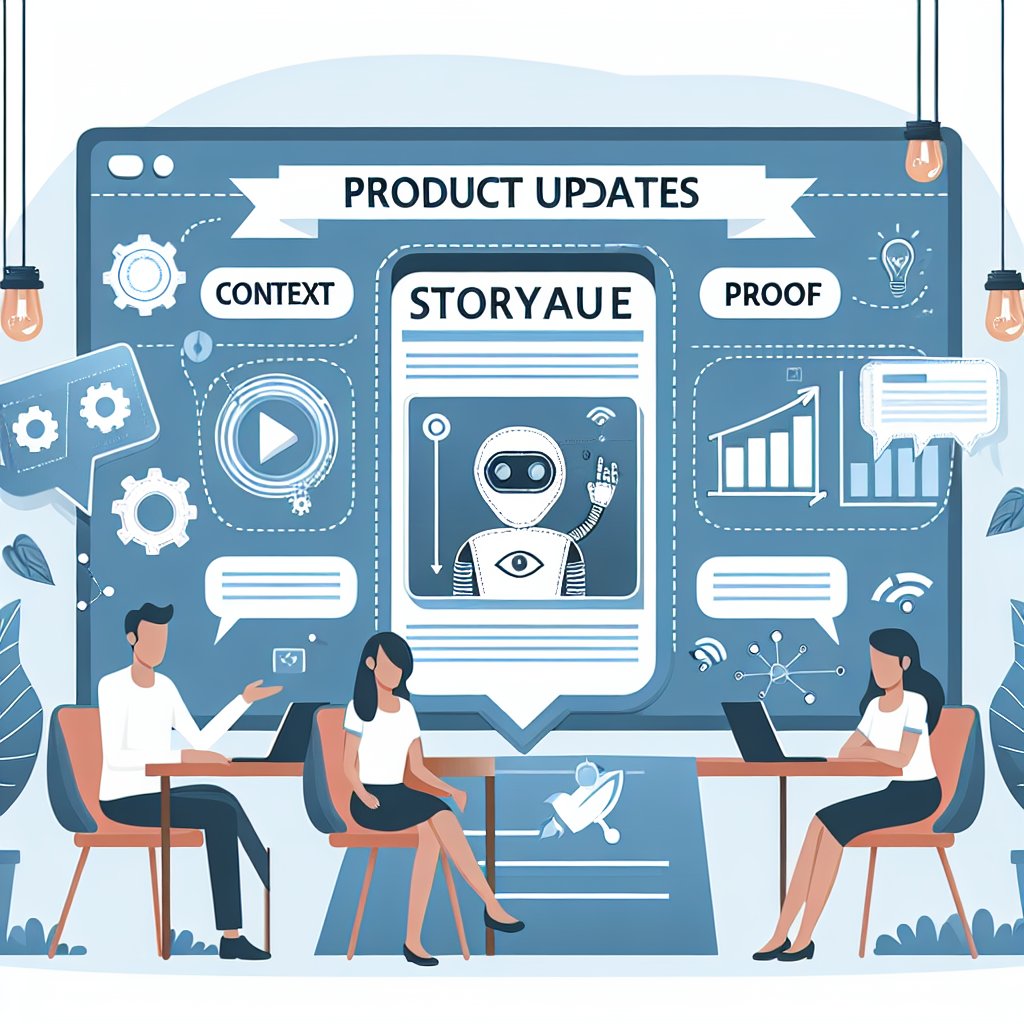

Most product updates fail not because the changes are bad, but because the communication is unclear, late, or disconnected from real customer workflows. This guide shows how to announce improvements and new features with a repeatable system that explains what changed and why, reduces support load, and increases adoption across messaging-first businesses.
Product updates are a promise to your customers: you are investing in their outcomes. But in many companies, updates land like random interruptions. Users notice a button moved, a workflow shifted, or a setting changed, and they are left to infer the reason. That gap between “what changed” and “why it changed” is where trust erodes, churn rises, and support tickets multiply.
A strong product update practice is less about writing release notes and more about building a communication system. The goal is to make every announcement feel like a helpful heads-up that respects customer routines, explains tradeoffs, and gives people a clear path to value. When you do this well, updates become a growth lever rather than a maintenance chore.
Below is a practical framework you can reuse every time you ship announcements, improvements, and new features. It is designed for SaaS teams, but it is especially effective for messaging-led businesses where customers interact across WhatsApp, Instagram, Telegram, Facebook Messenger, and web chat, and where small changes can ripple through sales and support operations.
Customers rarely complain that you shipped something new. They complain that the new thing arrived without context. The most common failure modes look like this:
The fix is to treat update communication like an operational process with inputs, templates, and distribution rules. That process should reliably answer: what changed, why it changed, who is affected, what to do next, and where to get help.
Every update, whether a tiny improvement or a major feature, can be communicated using the same scaffold. Keep it short, but complete.
Lead with the result customers will feel. For example: “Faster lead replies in WhatsApp,” “Fewer booking no-shows,” or “Clearer handoff between sales and support.” Outcomes anchor attention. Features are details.
In one or two sentences, describe the friction that triggered the change. Use concrete signals: support themes, drop-off points, time-to-first-response, conversion rates, error logs, or user feedback. This step proves you are listening and makes the change feel justified.
Avoid internal terminology. If you must mention a technical element, pair it with the practical meaning. Instead of “improved webhook retries,” say “messages are less likely to fail during high traffic, so conversations stay continuous.”
Customers want to know: is this for me, and do I need to do anything? Use clear labels such as “Admins,” “Agents,” “All users,” and “Optional.”
Give one simple action: enable a toggle, try a workflow, or watch a 60-second walkthrough. Adoption grows when the first step is obvious and small.
If the change is significant, mention how to get help and what happens if something goes wrong. People relax when they know you have a plan.
Different changes require different emphasis. Here are practical examples you can model.
Scenario: You improved message search so teams can find past customer conversations faster.
What changed and why (short format): “Search now finds conversations by phone number, name, and key phrases. We saw teams spending extra time scrolling through long threads during peak hours, so we optimized search to reduce handle time and speed up follow-ups.”
Next step: “Try searching with a phone number or a product keyword.”
This type of update should be brief, but still tied to a real workflow and metric.
Scenario: You launched a new lead qualification flow for Instagram DMs that tags intent and routes hot leads to sales.
What changed and why (expanded format): “You can now qualify Instagram DM leads automatically using intent tags like ‘pricing,’ ‘availability,’ and ‘book now.’ We built this after seeing high-intent questions sit unanswered during evenings and weekends, causing avoidable drop-offs. The new flow keeps replies consistent and ensures urgent leads reach the right person.”
Who is affected: “Sales managers and anyone handling Instagram leads.”
Action required: “Optional, enable in Settings and select routing rules.”
Next step: “Enable intent tags, then test with three common DM questions.”
Scenario: You changed how web chat embeds handle consent for analytics.
What changed and why (high clarity): “Web chat now asks for analytics consent before tracking session events. This aligns with privacy expectations and reduces compliance risk. If you rely on analytics dashboards, you may see fewer tracked sessions until users consent.”
Action required: “Admins should review the new consent text and update your privacy policy link.”
Support: “Contact support for recommended wording by region.”
For workflow shifts, clarity beats marketing language. Your job is to prevent surprises.
Even well-written updates fail when they reach the wrong audience. Segment your announcements by role and channel.
This is where messaging automation can make updates dramatically more effective. If your customers live in WhatsApp or Instagram, a short, role-targeted message can outperform a long email. Staffono.ai (https://staffono.ai) can help you deliver segmented update notifications and answer follow-up questions instantly through the channels your customers already use, reducing the “I missed the email” problem.
To explain “why,” you need raw material. Build a lightweight pre-release checklist that collects evidence and makes your narrative honest.
If you operate at high volume across multiple messaging channels, support readiness matters even more. Teams often underestimate the spike in “Where did this go?” questions. With Staffono, you can deploy an AI employee to handle common update questions 24/7, provide step-by-step guidance, and escalate edge cases to your team with full conversation context.
Small style choices influence adoption. Use these rules to make updates easier to understand and search.
Publishing is not the finish line. Adoption is. Track a few metrics per update to learn what communication patterns work for your audience.
Messaging engagement can be especially revealing. When users reply with questions, you are seeing friction in real time. Staffono.ai can automatically categorize inbound replies to update announcements, summarize recurring concerns, and feed those insights back to your product and support teams so the next update lands cleaner.
The highest-performing teams treat updates as a conversation, not a broadcast. They invite feedback, acknowledge what they changed based on customer input, and close the loop publicly. Over time, customers stop fearing updates because they recognize a pattern: changes arrive with context, guidance, and a clear benefit.
As you scale, consistency becomes the hardest part. Create one internal template, one segmentation map, and one measurement dashboard. Then run the same play every release. If your business serves customers through chat-heavy channels, consider making updates part of your messaging operations. Staffono.ai (https://staffono.ai) can help you automate update delivery, answer questions instantly across WhatsApp, Instagram, Telegram, Facebook Messenger, and web chat, and keep bookings and sales flowing while your product keeps improving.
When your update communication system is solid, “what changed and why” stops being a paragraph you write at the end of a sprint. It becomes a trust-building habit that compounds with every release.