

Most product updates fail not because the features are weak, but because the message is unclear, mistimed, or missing the “why.” This guide shows a repeatable system for announcing changes so customers understand them, adopt them faster, and trust your roadmap.
Product updates are one of the highest-leverage growth tools you already have. They can reduce churn, increase expansion, and turn passive users into power users. Yet most update announcements land with a thud: a long list of changes, a link to release notes, and no clear story about who it helps, how to use it, or what to do next.
The problem is rarely the product. It is the communication system around the product. If you treat announcements, improvements, and new features as separate blasts, you create noise. If you treat them as a monthly operating rhythm tied to customer outcomes, you create momentum.
Below is a practical, repeatable approach to answering the only questions users actually have: what changed, why it changed, and what I should do now.
When an update is hard to understand, customers do what humans do: they postpone learning it. That delay adds up in measurable ways:
To fix this, you do not need more copywriting tricks. You need a small system that consistently turns change into clarity.
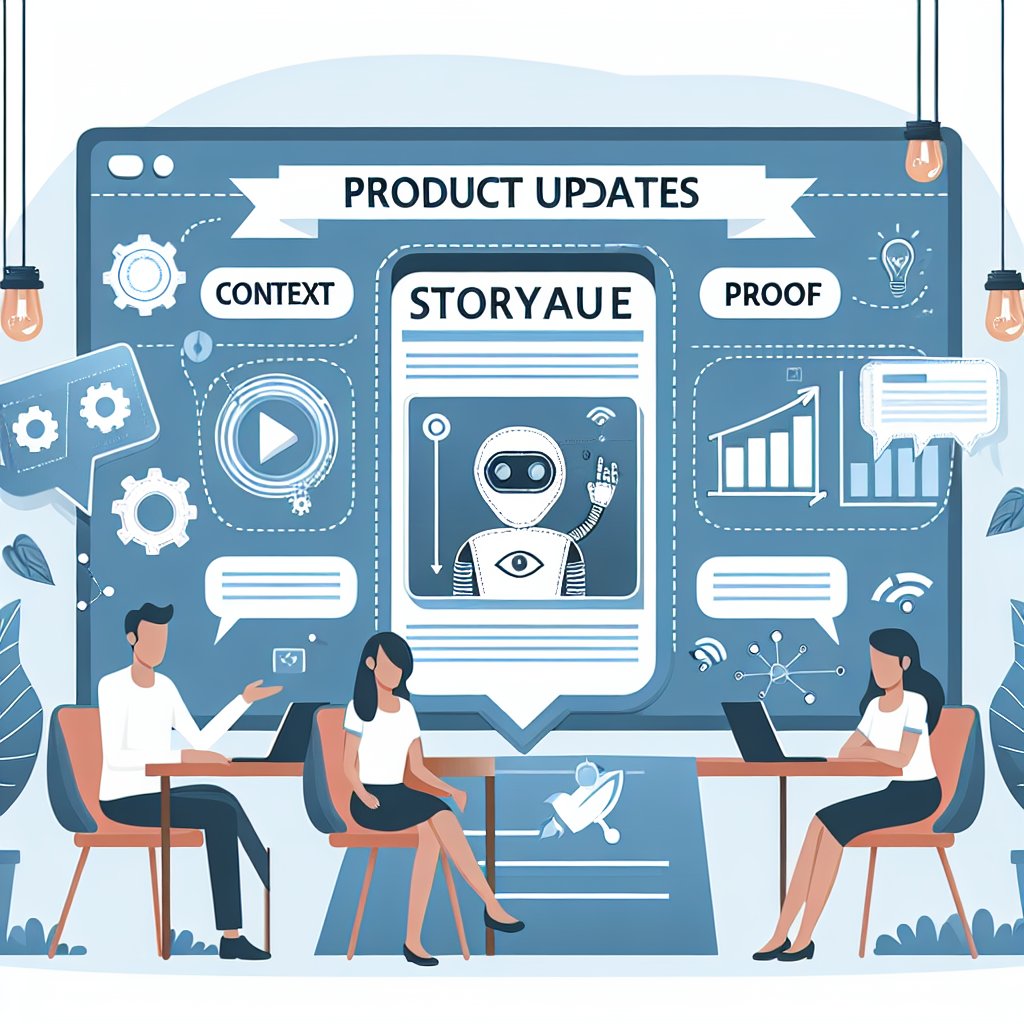
Every update, whether it is a major feature or a tiny improvement, can be communicated with the same stack. Use it across email, in-app messages, social posts, and your help center.
Start with the customer result, not the feature name. “Faster follow-up across WhatsApp and Instagram” beats “v2.8 Unified Routing.” Customers buy outcomes and remember outcomes.
Describe the behavior change using everyday terms. Avoid internal vocabulary. If the product now auto-suggests replies, say that. If permissions changed, say who can do what now.
Users accept change when the reason is concrete. Examples: “Teams missed leads after hours,” “handoffs between channels caused duplicate replies,” “manual tagging slowed down reporting.” This makes the update feel inevitable rather than arbitrary.
Give a single recommended workflow. Not a full manual, just the safest path to first value.
Set expectations: staged rollout, plan differences, toggles, known edge cases, and how to get help.
If you consistently ship this stack, customers begin to read your updates because they are predictable and useful.
Not every change deserves the same tone or channel. Group your product updates into three categories and tailor the message.
Announcements are about trust and coordination: pricing changes, policy updates, new integrations, deprecations, major UX shifts. They require early notice, clear timelines, and a path to support.
Best practices:
Improvements are small but meaningful: faster load times, better search, fewer clicks, smarter defaults. Users often do not notice them unless you translate them into time saved or errors avoided.
Best practices:
New features need onboarding. The mistake is listing capabilities instead of guiding the first use case.
Best practices:
Imagine you run a service business where leads come in from WhatsApp, Instagram, and web chat. A common pain is slow follow-up after hours, which causes lost bookings.
A weak update note might say: “Released automated routing and response suggestions.” A stronger update message follows the narrative stack:
This is also where a platform like Staffono.ai naturally fits. Staffono provides 24/7 AI employees that handle customer conversations, bookings, and sales across WhatsApp, Instagram, Telegram, Facebook Messenger, and web chat. When you announce messaging or lead-response improvements, you can connect the update to a measurable outcome like response time, booked appointments, or qualified leads.
Most teams either over-communicate (too many small posts) or under-communicate (one giant quarterly drop). A monthly cadence is the sweet spot for clarity without noise.
Maintain a single internal log where every shipped change is captured with: category (announcement, improvement, feature), impacted users, and the “why.” Do not wait until the end of the month to remember what shipped.
Write short narratives for each item. If you cannot explain the why in one sentence, the team likely needs to sharpen the product rationale or the messaging.
Enablement includes a short help article, a screenshot or 20-second clip, and one recommended workflow. Sales and support should get a version that includes objections and edge cases.
Publish through your main channels (in-app, email, help center) and measure adoption. Then feed what you learn back into the next month’s updates.
If you use Staffono.ai for customer communication, you can also automate parts of this cadence: route update-related questions to the right workflow, answer common “what changed” queries instantly, and collect feedback at scale across messaging channels without adding headcount. That turns product updates into two-way conversations instead of one-way announcements.
Great update communication is measurable. Pick a small set of metrics so you can improve month over month.
For messaging-driven businesses, add operational metrics: response time, lead-to-appointment conversion, and no-show reduction. Those are the outcomes customers feel immediately. Staffono.ai customers often focus on these because AI employees can respond instantly, qualify leads, and confirm bookings around the clock, making the impact of workflow improvements easy to quantify.
Headline: “Fewer clicks when assigning conversations”
Body: “We simplified assignment so teams can route chats faster. You can now assign a conversation from the message view without opening the details panel. We made this change because many teams assign dozens of chats per hour, and the extra steps were adding up. Try it by opening any conversation and selecting ‘Assign’ next to the customer name.”
Headline: “Auto-qualify leads with three questions”
Body: “You can now collect budget, timeline, and service needs automatically before a human steps in. This was built for teams losing time on unqualified inquiries. Start by enabling the ‘Lead qualifier’ flow and customizing the three questions for your offer. If you use Staffono.ai, your AI employee can run the qualifier across WhatsApp, Instagram, and web chat, then hand off only high-intent conversations to sales.”
Customers do not expect perfection. They expect clarity, stability, and progress they can feel. The best product update communication is not flashy, it is consistent: outcome, what changed, why it changed, how to use it, and what to expect.
If you want your updates to drive real adoption, consider pairing your release rhythm with always-on customer communication. With Staffono.ai, teams can deploy AI employees that explain changes in plain language, guide users to the right setup steps, and keep leads and customers moving across WhatsApp, Instagram, Telegram, Facebook Messenger, and web chat, even when your team is offline. When product updates become conversations, not broadcasts, customers adopt faster and trust you more.