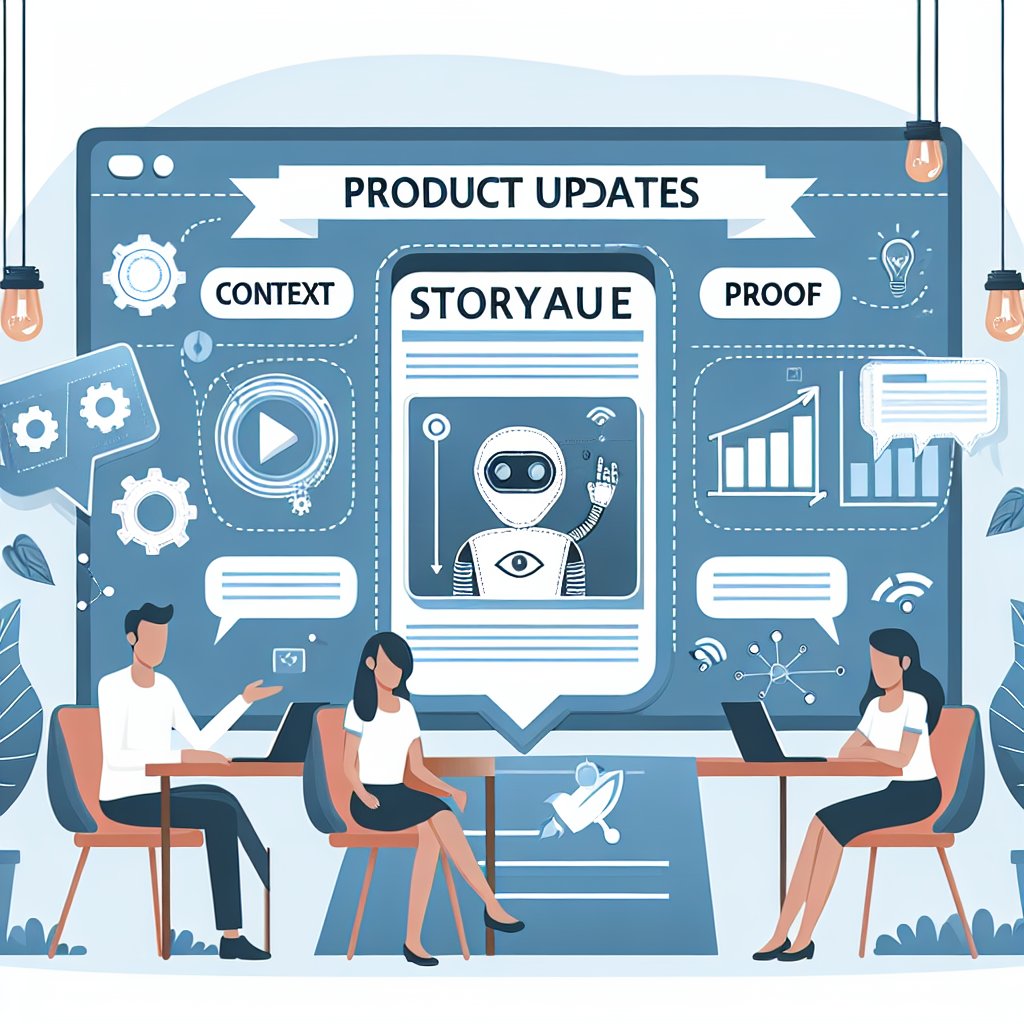


Most product updates fail for one simple reason: users do not understand the outcome for them. This guide shows how to announce improvements and new features with clarity, proof, and practical next steps so customers actually adopt what you ship.
Product updates are not just a record of what shipped. They are a moment of truth: users decide whether your product is improving in ways that match their daily work, whether they should invest time to learn something new, and whether your team can be trusted to make changes without disruption.
Yet many updates get ignored because they read like internal engineering notes. Users see feature names, ticket numbers, and vague promises, but they do not see the “so what.” The result is predictable: low adoption, support tickets that could have been avoided, and a growing gap between what you built and what customers use.
This article breaks down a practical approach to announcements, improvements, and new features, what changed and why, with examples you can reuse. You will learn how to present updates in a way that feels relevant to each audience, reduces confusion, and turns shipping velocity into customer momentum. Along the way, we will also reference how platforms like Staffono.ai can help teams automate update distribution and collect feedback across messaging channels where customers already talk to you.
Users are busy and change is expensive. Even a helpful improvement can feel like a disruption if it arrives without context. Most update posts fail because they prioritize “what” over “why,” and “why” over “how to use it today.”
Common failure patterns include:
A strong update fixes these issues by treating the announcement as a mini onboarding experience, not a bulletin.
Whether you are shipping a major feature or a small improvement, you can use the same core template. It keeps the update readable and creates confidence.
Lead with a sentence that answers: “What can I do now that I could not do before?” For improvements, answer: “What is now easier, faster, safer, or more predictable?”
Example outcome-led openers:
Describe the change as the user experiences it. Avoid internal labels. If a setting moved, say where it moved. If a workflow changed, show the new path.
“Why” should not be “because we could.” Tie it to:
When users see the reason, they are more willing to invest in learning the change.
Give step-by-step guidance, but keep it light. Most people want a 30-second path to value, not a manual. You can link to deeper docs if needed.
Be explicit:
Below are three examples that demonstrate how to announce different types of updates. They are generic enough to reuse, but specific enough to show the level of detail users appreciate.
Outcome: “You can now automatically qualify leads from WhatsApp and Instagram and send only high-intent conversations to your sales team.”
What changed: “A new ‘Lead Qualification’ rule builder lets you ask up to three questions (budget, timeline, location) and tag the conversation based on answers. Qualified leads can be pushed to your CRM or assigned to a rep.”
Why we changed it: “Teams told us the inbox was full of ‘just browsing’ messages that slowed down follow-up for serious buyers. This feature separates curiosity from intent, without making customers feel interrogated.”
How to use it:
Who is impacted: “Admins configure it once. Sales reps see tagged conversations and a short summary.”
This is also where an AI automation platform can elevate the experience. With Staffono.ai, businesses can run 24/7 AI employees that qualify leads directly inside messaging channels, then hand off clean context to humans when needed.
Outcome: “Fewer missed replies during busy hours, because message assignment is now more predictable.”
What changed: “Conversations are now auto-assigned based on last responder, team workload, and business hours. If the assigned agent is offline, the system reassigns within a defined timeout.”
Why we changed it: “Customers reported duplicated responses and handoff gaps. Predictable assignment reduces internal confusion and improves response time.”
How to use it:
What to watch: “If you have a VIP routing process, add VIP tags to the ‘Do not reassign’ list.”
In multi-channel operations, these improvements matter even more. Staffono.ai can keep first responses consistent across WhatsApp, Instagram, Telegram, Facebook Messenger, and web chat, while your team focuses on complex cases.
Outcome: “File uploads now work reliably on slower mobile networks.”
What changed: “We adjusted upload retries and improved error messaging. If an upload fails, the system now suggests a quick retry instead of silently timing out.”
Why we changed it: “We saw higher failure rates on certain carriers and regions. The update reduces friction for customers sharing screenshots, invoices, or documents.”
How to use it: “No action needed. If you see an upload prompt, tap retry.”
What we learned: “We added monitoring that alerts our team when upload failure rates spike.”
Fix notes build trust when they are specific and honest. Users do not expect perfection, they expect accountability.
Users can sense when “why” is generic. Strong reasons come from evidence. Before you publish an update, collect one or more of these:
If you use messaging as a primary channel, you can also use conversation logs as evidence. Platforms like Staffono.ai help centralize customer interactions across channels, making it easier to spot recurring pain points and turn them into confident product decisions.
Even the best update post fails if it is posted in the wrong place. A practical distribution plan includes:
This is where automation is a competitive advantage. With Staffono.ai, you can send targeted update messages, answer follow-up questions instantly with an AI employee, and route complex cases to a human, all while keeping the tone consistent and the response time fast.
Shipping is not the finish line. Adoption happens after the announcement. Add a small follow-up loop:
The key is to keep the loop simple and consistent. Customers appreciate being heard, and teams get better data for prioritization.
When you communicate updates well, you reduce anxiety, lower support load, and help users get value faster. You also create a narrative of competence: you listen, you ship, you explain, and you support adoption.
If your team is scaling customer communication across multiple channels, consider using an automation layer that makes update distribution and Q and A effortless. Staffono.ai provides AI employees that can announce changes in the same channels where customers ask questions, guide them through new workflows, capture feedback, and hand off to your team when needed. Explore Staffono.ai to turn product updates into clearer conversations, faster adoption, and a smoother customer experience.