
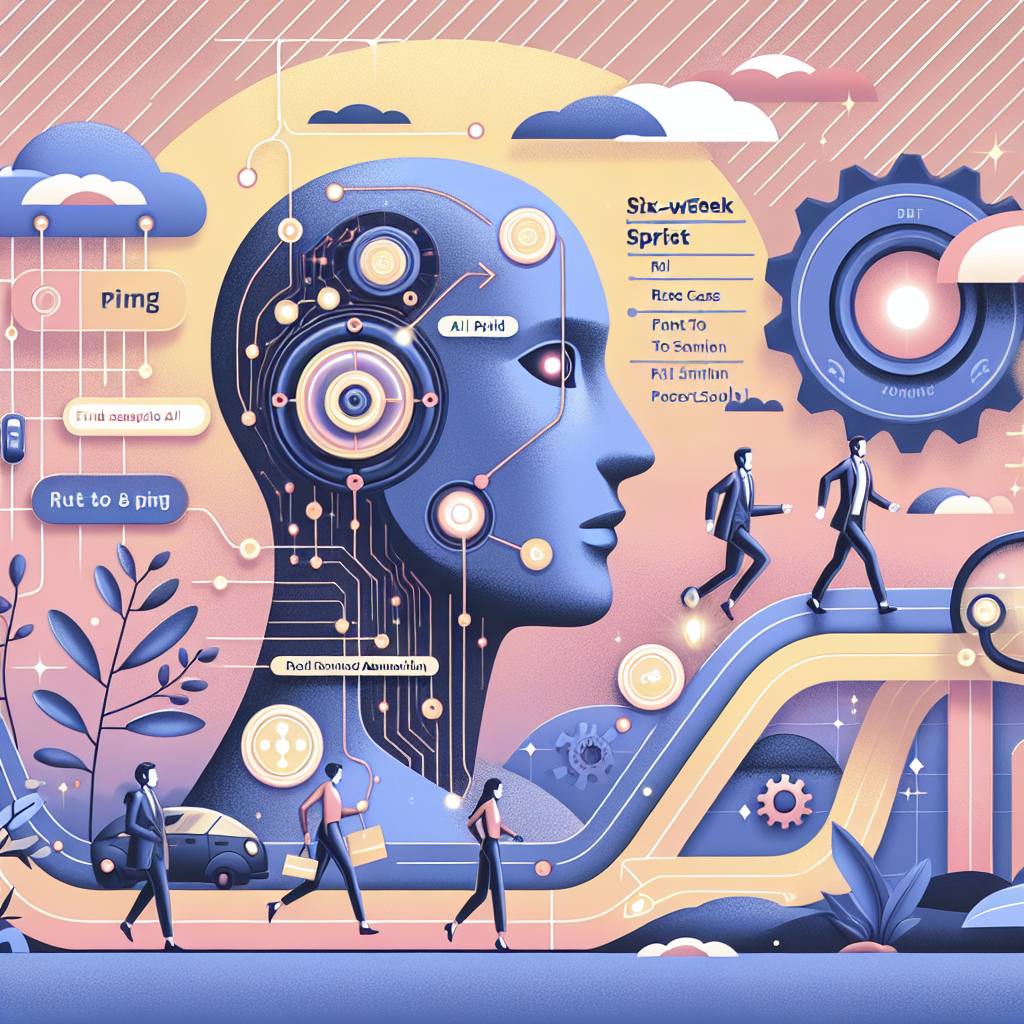
Most teams talk about use cases like ideas. This post turns them into a six-week rollout plan with real scenarios, concrete message flows, and step-by-step workflows you can implement across WhatsApp, Instagram, web chat, and more.
Use cases get thrown around like brainstorm notes: “We should automate support,” “We need better lead handling,” “Let’s add a chatbot.” The problem is not imagination, it is execution. If you want automation to actually move revenue, retention, and ops costs, you need a short, repeatable rollout method that starts with the messages you already receive and ends with measurable outcomes.
This article is a practical six-week sprint you can run in any messaging-first business (services, clinics, e-commerce, education, real estate, and more). Each week focuses on a small set of workflows you can build step by step, test in production, and improve without rebuilding your entire stack. Throughout, you can implement these flows using an AI employee platform like Staffono.ai, which runs 24/7 across WhatsApp, Instagram, Telegram, Facebook Messenger, and web chat, handling customer communication, bookings, and sales with consistent logic.
Before you automate anything complex, standardize how requests enter your business. The goal is not to answer every question, it is to capture the minimum structured data needed to route the conversation correctly and create a trackable record.
Scenario: Customers message “Hi,” “Price?,” “Do you ship?,” “Need an appointment,” across multiple channels. Your team loses time asking the same clarifying questions.
Workflow steps:
Implementation tip: With Staffono.ai, you can deploy the same intake behavior across WhatsApp, Instagram, and web chat so customers get consistent questions, while your team receives structured leads and requests instead of free-form chat.
Booking is one of the highest ROI automations because it removes back-and-forth, reduces no-shows, and keeps your calendar full outside business hours.
Scenario: A salon, clinic, or service provider gets messages like “Do you have anything tomorrow?” and staff spend hours negotiating times.
Workflow steps:
What to measure: booking completion rate, no-show rate, average time to book, after-hours bookings.
How Staffono.ai fits: Staffono can act as a 24/7 AI receptionist, guiding customers through scheduling in messaging, confirming details, and pushing outcomes to your booking process so your team focuses on service delivery.
Lead handling fails for two reasons: slow response and unclear next steps. This week builds a workflow that captures intent, qualifies fit, and creates a clear path to a sales conversation.
Scenario: A B2B provider or premium service receives “How much does it cost?” but needs project size, timeline, and decision-maker info to quote.
Workflow steps:
Practical example message flow: “To give you accurate pricing, I need 3 quick details: what outcome are you aiming for, when you need it, and your approximate budget range.”
Where Staffono.ai helps: Staffono.ai can maintain consistent qualification logic in every channel, respond instantly, and escalate only the leads that match your criteria, improving conversion without hiring more SDRs.
Support automation is not about blocking customers. It is about solving common issues fast, then escalating exceptions with context so humans can finish quickly.
Scenario: An e-commerce brand gets repetitive messages: “Where is my order?” “Can I change address?” “How do I return?”
Workflow steps:
What to measure: deflection rate (resolved without human), time to resolution, repeat contact rate.
Staffono angle: Because Staffono.ai operates 24/7 across messaging channels, customers can get tracking and return instructions instantly, while your team receives only the cases that truly need manual attention.
Many businesses treat messaging as pre-sale only. Post-sale is where profit expands: replenishment reminders, cross-sell, onboarding, and renewal checks.
Scenario: A fitness studio sells packages, or a tech provider sells subscriptions, but customers churn because they do not get guided success steps.
Workflow steps:
Implementation note: Use simple rules first, then refine with data. Even basic segmentation can lift retention.
Where Staffono.ai fits: Staffono can run these post-sale check-ins automatically in the same channel the customer used to buy, keeping engagement high without adding pressure to your support team.
Once customer-facing flows are stable, automate internal coordination tasks that drain time: confirmations, document collection, and status updates between teams.
Scenario: A travel agency, education program, or real estate service needs ID documents, forms, or proofs, and staff chase customers repeatedly.
Workflow steps:
Result: fewer delays, less manual chasing, faster delivery cycles.
Automation fails when it is treated like a one-time build. Make it a living system with feedback loops.
If you implement only Weeks 1 to 3, you should already see faster response times and better lead conversion. Add Weeks 4 and 5 to lower support load and improve retention. Week 6 is how you protect margins as volume grows.
The most important decision is choosing tooling that can run these flows across all your inbound channels, keep context, and hand off to humans smoothly. That is exactly where Staffono.ai is designed to help: AI employees that work 24/7 on WhatsApp, Instagram, Telegram, Facebook Messenger, and web chat, handling booking, sales qualification, and support resolution with consistent logic.
If you want to turn your message volume into predictable outcomes, start with one workflow this week, ship it, and iterate. When you are ready to scale across channels without adding headcount, explore how Staffono.ai can run these use cases end-to-end while your team focuses on the work that truly needs a human.