
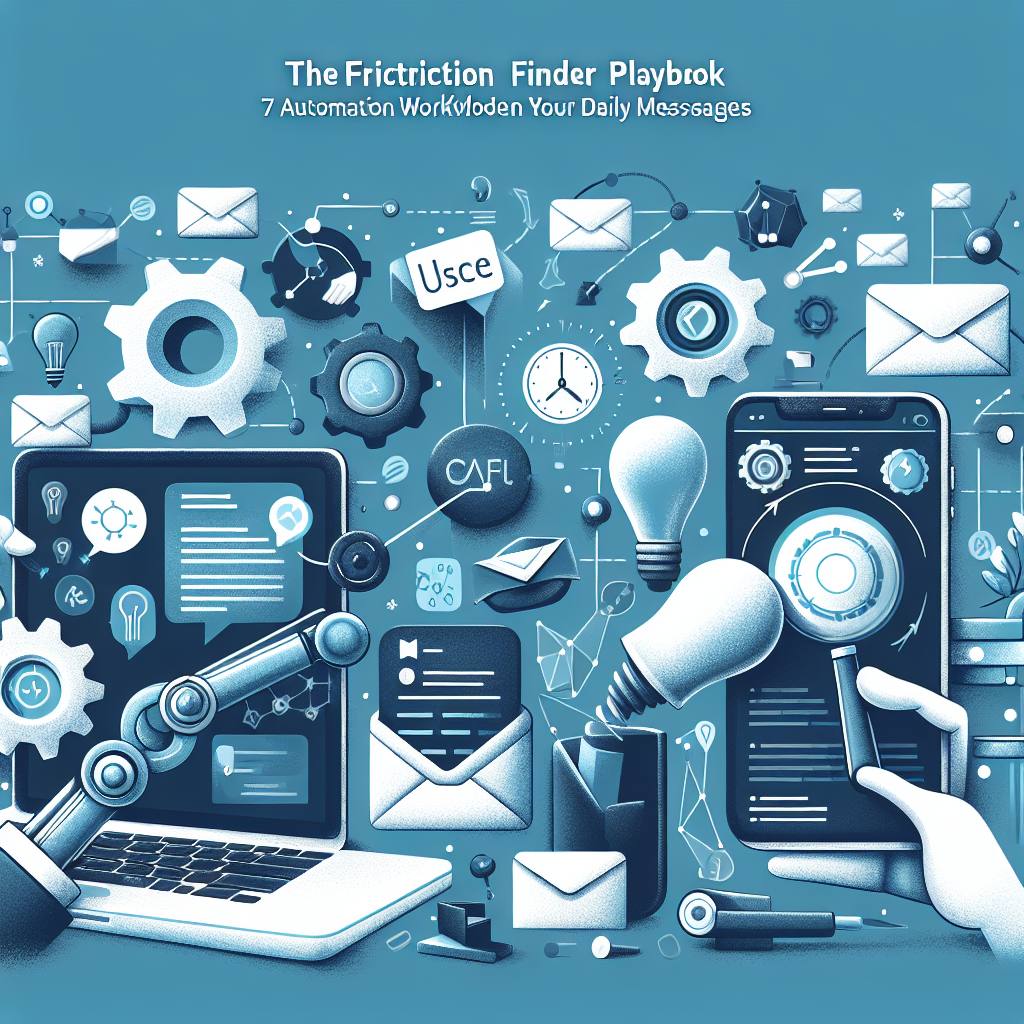
Most automation ideas fail because they start with tools instead of friction. This playbook shows how to spot repeatable bottlenecks inside everyday chats and turn them into reliable workflows you can implement step by step across sales, support, and operations.
“Use cases” sound abstract until you tie them to something concrete: friction. Friction is the moment a customer repeats themselves, a teammate copy-pastes the same answer, or a lead goes cold because no one replied in time. If you can name the friction, you can design an automation that removes it.
This article is a practical playbook for turning real message bottlenecks into step-by-step workflows. Each scenario is built from patterns that show up in WhatsApp, Instagram DMs, web chat, Telegram, and Facebook Messenger. You can implement these with any stack, but you will move faster when you have an AI employee layer that can talk to customers, collect data, and trigger actions across systems. Staffono.ai (https://staffono.ai) is designed for exactly that: 24/7 AI employees that handle communication, bookings, lead capture, and routine operations across channels.
Before the workflows, here is a lightweight method to pick winners. Open the last 100 conversations from your busiest inbox and tag messages with one of these labels:
Use cases that combine “repeat question” plus “data collection” are usually the fastest wins. Now let’s turn friction into workflows.
Scenario: A prospect asks, “How much does it cost?” The team replies with questions, then sends a quote later, sometimes too late.
Where Staffono.ai helps: Staffono.ai can run this flow across WhatsApp, Instagram, and web chat, collect structured inputs, and deliver a consistent quote range instantly. It can also notify your sales rep with a ready-to-use lead brief, so humans spend time closing, not interrogating.
Scenario: Customers want to book, but the team wastes time confirming availability and collecting details. No-shows happen because reminders are inconsistent.
Practical example: A salon uses Instagram DMs for bookings. The AI collects service type and stylist preference, then confirms the slot and sends a reminder the day before. If the customer replies “Can we move it to Friday?”, the system reschedules without staff involvement.
Where Staffono.ai helps: Staffono.ai’s AI employees can manage the entire booking conversation 24/7, reducing missed opportunities outside business hours and standardizing reminders so no-shows drop.
Scenario: Customers ask, “Where is my order?” then “Can I change the address?” Agents bounce between systems and the customer waits.
Where Staffono.ai helps: Staffono.ai can act as the first responder in WhatsApp or web chat, collect the identifiers, and deliver the correct next step instantly. Even when a human is needed, the handoff is clean because the AI already gathered the order context.
Scenario: A new lead arrives, but response time varies. Follow-ups are manual, inconsistent, and sometimes annoying.
Practical example: A B2B services firm runs ads to WhatsApp. The AI answers instantly, captures project scope, and offers a calendar slot. If the lead disappears, the follow-up shares a short “cost drivers” guide instead of a generic “just checking in.”
Where Staffono.ai helps: Staffono.ai is built for messaging-first lead capture and can run these sequences across channels without sounding robotic, while keeping your team focused on qualified conversations.
Scenario: Customers ask for returns, agents interpret policy differently, and the experience feels random.
Quality tip: Add a “policy in plain language” snippet so customers understand the decision, even when the answer is no.
Where Staffono.ai helps: Staffono.ai can enforce one consistent policy flow across every channel, gather the right proof up front, and escalate edge cases to a human with all required details attached.
Scenario: Messages from customers trigger internal work: restocking, scheduling technicians, updating CRM notes, creating invoices. The risk is missed tasks.
Where Staffono.ai helps: Staffono.ai can sit between messages and operations, turning chat requests into structured tasks and confirmations. Your customer sees fast progress while your team sees clean inputs instead of vague chat screenshots.
Scenario: After purchase, customers ask basic “how do I…” questions. Support becomes a training department.
Practical example: A fitness equipment retailer sends a setup guide via WhatsApp the day the item is delivered. Customers can reply “assembly” or “warranty” and get the correct steps immediately.
Where Staffono.ai helps: With Staffono.ai, this education can run automatically in the same channel where customers already ask questions, reducing tickets and improving satisfaction without adding headcount.
Automation succeeds when you track outcomes, not just activity. For each workflow, define:
Then iterate on the top two points of friction you still see in transcripts. That is how a “use case” becomes a compounding system.
Pick one workflow that matches your current pain: quotes, bookings, status checks, lead follow-up, returns, ops tasks, or onboarding. Implement it in a single channel first, then expand once the copy and logic are stable. If you want to move faster, Staffono.ai (https://staffono.ai) can provide AI employees that handle these conversations 24/7 across WhatsApp, Instagram, Telegram, Facebook Messenger, and web chat, while keeping your team in control of rules, escalation, and brand voice.
The best use cases are not the fanciest. They are the ones your customers and teammates already repeat every day. Remove that friction, and you will feel the difference in revenue, speed, and sanity.