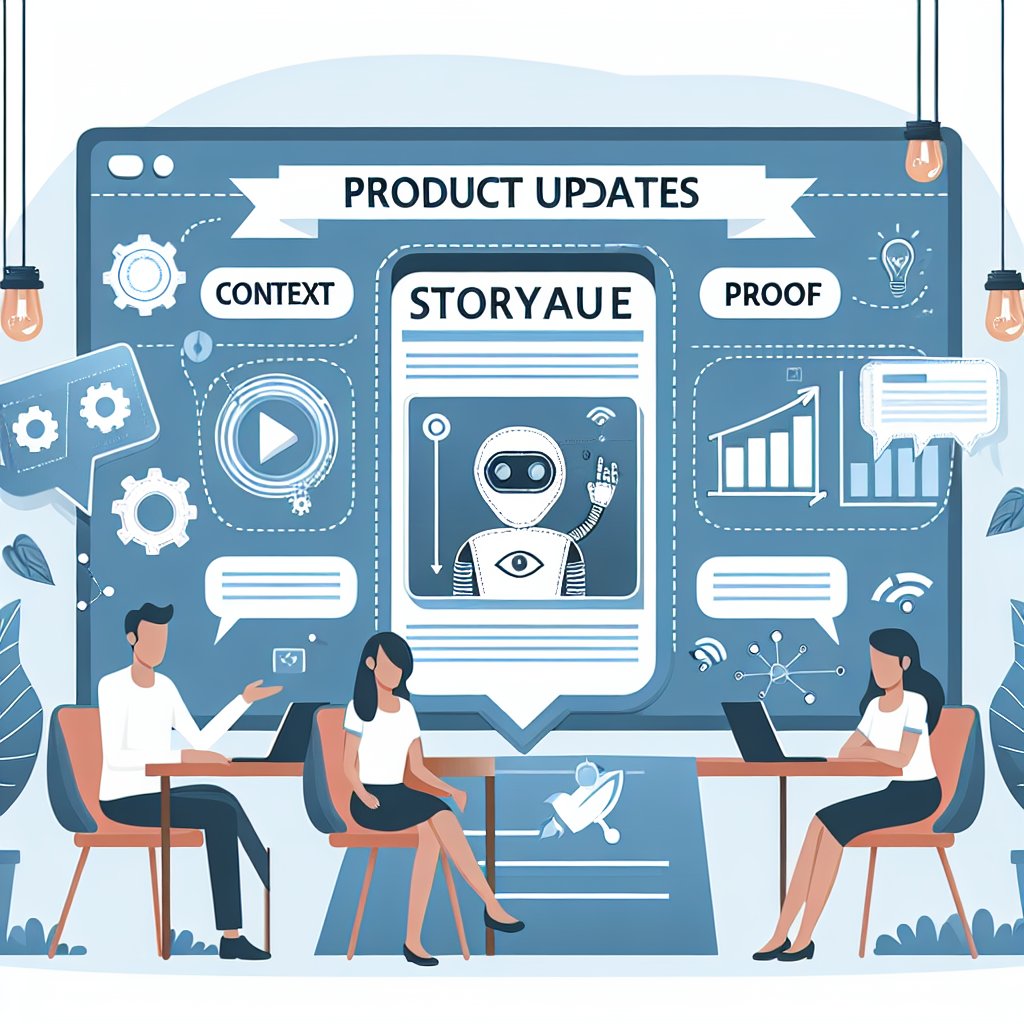


Most product updates fail or succeed in the first two days, not because the feature is weak, but because the message is unclear. This guide shows how to communicate what changed and why, reduce confusion, and drive adoption using a simple, repeatable rollout sequence.
Shipping a product update is only half the job. The other half happens immediately after release, when customers notice something different, ask questions, or ignore it completely. In practice, the first 48 hours determine whether an update becomes a habit or becomes a support ticket.
The challenge is not just announcing “new features.” It is helping people understand what changed, why it matters to them, and what to do next, without making them read a novel. That is especially true when your users are busy, multi-tasking, and encountering your product in quick bursts via messaging, mobile, or a browser tab they keep open all week.
Below is a practical framework for product updates: a two-day rollout sequence, the content components you need, and examples you can adapt. You will also see how an AI-powered messaging layer like Staffono.ai (https://staffono.ai) can keep communication consistent across WhatsApp, Instagram, Telegram, Facebook Messenger, and web chat, so your update does not get lost.
Teams often treat release day as a finish line. Customers treat release day as an interruption. Your job is to turn that interruption into momentum.
In the first two days, three things happen:
Your update message should deliberately guide users through those steps. If you only publish a changelog, you are relying on customers to do the interpretation work themselves.
Most announcements lead with internal thinking: “We redesigned the settings page” or “We upgraded our infrastructure.” Customers care about outcomes: “It is easier to find the thing you need” or “Imports are faster and more reliable.”
Use this simple structure in every channel:
Example:
“You can now reschedule bookings from the chat thread. We built this because many customers told us switching screens slowed them down. Next time a client asks to move an appointment, tap ‘Reschedule’ in the conversation to confirm in under a minute.”
A strong product update is not a one-time blast. It is a short sequence that meets users where they are and repeats the message just enough to be remembered.
This is the moment you publish the “truth source” that everything else links to. It can be a release note, a help center article, or a landing page, but it must be scannable.
Tip: If you operate on messaging channels, add a short keyword trigger so users can ask for details without searching. With Staffono.ai, you can set up an AI employee that responds to “update” or “new feature” in WhatsApp, Instagram DMs, Telegram, Messenger, and web chat, then provides the right explanation based on the user’s plan or role.
Now you push a short message that drives one action. Keep it specific. Do not list ten bullets. Pick the most valuable change and attach a single next step.
Example message:
“New: faster lead handoff in chat. Reply with ‘Assign’ to send a conversation to a teammate instantly. Try it on your next inbound inquiry.”
If your product supports multiple personas, segment the nudge. Admins get setup instructions. Frontline users get a one-step use case. Everyone else gets nothing.
Adoption increases when users feel heard quickly. In the second day, invite feedback with a lightweight prompt:
This is where messaging automation shines. Instead of asking users to fill out a form, you can collect feedback in the same chat thread where they do business. Staffono.ai can automatically tag feedback, summarize themes, and route urgent issues to your team, so the update cycle becomes faster and calmer.
People consume updates differently depending on urgency. Design for all three modes so nobody feels forced into the wrong level of detail.
When you publish a single long post, skim readers miss the point and implementers cannot find specifics. Break the content into layers and link between them.
Here are a few examples you can adapt across industries.
What changed: “Search results now load in under one second for most accounts.”
Why: “We saw teams abandoning searches when results took too long.”
Do now: “Try searching by company name and use the new filters to narrow faster.”
What changed: “You can create a quote directly from a chat conversation.”
Why: “Many deals stall when information lives in messages but quoting happens elsewhere.”
Do now: “Open any qualified chat and tap ‘Create quote’ to send a PDF in two clicks.”
What changed: “Notification settings moved to Profile.”
Why: “Users expected personal settings to live with account info.”
Do now: “Go to Profile, then Notifications, and confirm your preferences.”
Safety net: “Old links redirect for 30 days.”
Confusion usually comes from tiny mismatches between expectation and reality. A small “known differences” block reduces support load dramatically.
Include items like:
If you can, pin these answers in the channels where users ask questions. Staffono.ai can serve these as instant replies and escalate only the unusual cases, which keeps your human team focused on real bugs and high-value accounts.
Open rates and clicks are not adoption. For product updates, track metrics that reflect behavior.
Messaging channels add an advantage: you can see questions in real time. If a single question repeats, your update copy is the problem, not the customer.
The best product updates do not feel like marketing. They feel like assistance at the moment someone needs it. That is why conversational delivery often outperforms a one-way announcement, especially for operational changes.
Consider a simple approach: announce publicly, then let users pull details on demand. For example, “Reply ‘how’ for steps” or “Type ‘pricing’ for what changed.” With Staffono.ai, you can implement this across WhatsApp, Instagram, Telegram, Facebook Messenger, and web chat with consistent answers, personalization by customer segment, and 24/7 coverage.
Each update should reduce future effort. Keep a reusable template, a library of short clips, and a set of message triggers that your team can deploy quickly. Over time, your customers learn what to expect from your announcements, and your internal team stops reinventing the wheel.
If you want your product updates to land consistently across every messaging touchpoint, Staffono.ai (https://staffono.ai) can act as the always-on front line that explains what changed, guides users to the right steps, collects feedback, and routes edge cases to your team. When the first 48 hours are handled well, your release becomes a growth lever instead of a support burden.