

Product updates are not just announcements, they are promises about what your product will do next. This guide shows how to communicate improvements and new features with clarity, proof, and rollout design so customers feel informed, not disrupted.
Most teams treat product updates like a broadcast: a list of changes, a few screenshots, a link to docs, done. But customers experience updates differently. Every change renegotiates expectations: what the product does, how reliable it feels, how much effort it takes to keep using it, and whether the vendor is still aligned with their goals.
That is why your changelog acts like a contract. Not a legal document, but a trust agreement between you and the people depending on your software. When you announce updates with the right structure, users read them as reassurance. When you announce them poorly, users read them as risk.
Below is a practical approach to announcements, improvements, and new features: what changed, why it changed, and how to ship the message so adoption goes up and support load goes down.
Customers do not buy features, they buy outcomes and stability. If you announce only “what changed,” users still have unanswered questions:
Modern SaaS products are also distributed across channels and roles. A change might affect admins, frontline agents, sales reps, or customers contacting you through messaging. If you do not specify impact, each group fills in the gaps with assumptions, and assumptions become tickets.
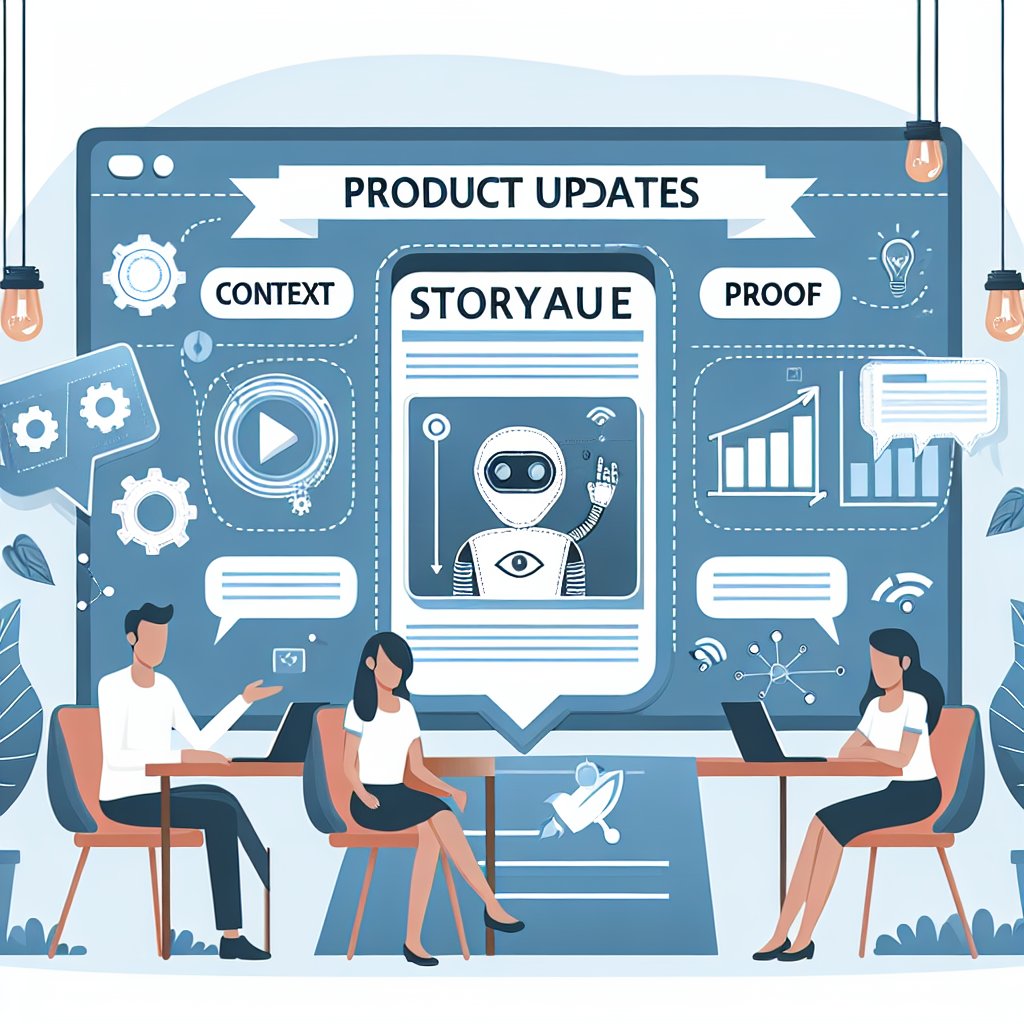
A strong product update reads like a well-structured agreement. It sets context, defines the change, clarifies implications, provides evidence, and offers a safe path to adoption.
Start with the real friction. Not “we improved performance,” but “message replies were sometimes delayed during peak hours, causing slower lead response and missed conversions.” This signals you understand the user’s world.
Be concrete: what screens, APIs, permissions, defaults, or behaviors changed. If it is a new feature, specify what it replaces (if anything) and how it fits into the workflow.
Spell out the effect by persona and by scenario. If only some customers are affected, say which plan, region, integration, or configuration triggers the change.
Offer a simple verification step: a metric, a test flow, a before-and-after example. This reduces anxiety and helps champions inside customer organizations explain the update to others.
Even if you cannot roll back, you can offer controls: toggles, phased rollouts, compatibility modes, or guidance on how to adapt quickly. Include the fastest path to help: docs, live chat, a known issues list, and escalation options.
Not all changes deserve the same framing. Mixing them together leads to confusion, because users scan for relevance.
These are high-stakes. Lead with timelines and user action. If you are deprecating something, do not bury the lede. Provide migration steps, deadlines, and what happens if users do nothing.
Practical example: “We are retiring Legacy Export on May 30. If you use it for weekly reporting, switch to Scheduled Exports by May 15 to avoid interruptions. Here is a 3-minute setup guide.”
These are best communicated with outcomes and evidence, not just “improved.” Use measurable language where possible: reduced time, fewer clicks, higher throughput, fewer errors.
Practical example: “Bulk tagging now processes 10,000 contacts in under 2 minutes (previously up to 12). This helps teams segment leads faster before campaigns.”
For new features, the key is activation. A feature announcement should include a first-use path, not just a description. Provide one primary use case, one secondary use case, and a quick-start checklist.
Practical example: “New: Follow-up sequences for inbound leads. Use the prebuilt template for ‘No reply after quote’ to automatically send two reminders on WhatsApp and one on email.”
Users judge updates not only by what you ship, but by how you ship it. A thoughtful rollout reduces disruption and increases adoption.
If you roll out gradually, say so. Provide the criteria: “available to 10 percent of accounts today, expanding daily.” This prevents confusion when teams compare notes across locations.
If a change affects daily routines, offer a short opt-in period. Early adopters give feedback, and risk-averse customers get time to prepare.
When something is imperfect, acknowledge it. Users are surprisingly forgiving when you are specific and proactive. Silence feels like denial.
Internal language is efficient for builders but confusing for customers. Replace implementation details with user consequences. If technical detail matters, link it as an appendix.
Every change has a trade-off. If you improved security and added an extra step, say it and explain why it is worth it. When users discover trade-offs on their own, they feel tricked.
Some users read email. Some only see in-app banners. Some are on messaging. If your product touches customer communication, consider multi-channel updates that meet users where they already work.
This is where platforms like Staffono.ai can help. If your business runs sales and support through WhatsApp, Instagram, Telegram, Facebook Messenger, or web chat, Staffono’s AI employees can deliver update notices contextually inside real conversations, answer “what changed?” questions instantly, and route edge cases to a human when needed.
Use this structure and you will cover the questions users actually have:
Keep it scannable. Your best readers are busy admins and operators who need confidence quickly.
Before: Leads arrive on Instagram DMs. A rep responds when they see it. Response time varies, and some leads go cold.
Update message that drives adoption: “Instant lead capture for Instagram DMs is now available. When a new DM arrives, the system collects name, service interest, and preferred time, then creates a lead automatically. You can confirm it works by sending ‘pricing’ from a test account and checking the lead list. Available now for all Pro plans.”
For businesses that want this outcome without building a complex automation stack, Staffono.ai offers AI employees that can respond 24/7 across Instagram, WhatsApp, and web chat, qualify leads, and hand off high-intent conversations to your team with the context already captured.
Before: Booking confirmations sometimes fail when customers type free-form messages.
Update message that builds trust: “Booking confirmations are now more resilient to typos and slang. The assistant recognizes common variants like ‘tmrw 3ish’ and confirms the appointment. You can verify by trying three test messages in your sandbox. If the assistant is unsure, it asks one clarifying question instead of failing silently.”
This kind of improvement matters most when it is communicated with a proof step. Users want to see it work in their reality.
Shipping is not success. Communication is successful when it changes behavior and reduces uncertainty. Track:
If you already use conversational channels to serve customers, you can also measure update comprehension. For example, when users ask “how do I do X now?” in chat, your support team feels the impact immediately. With STAFFONO.AI, many of these questions can be answered instantly by an AI employee trained on your docs and release notes, while complex cases are escalated with full conversation history.
Some teams avoid “why” because they fear debate. The solution is to explain intent, not internal politics. Good “why” statements include:
Avoid blaming users, competitors, or “market demands.” Users do not want to be told they are using the product wrong. They want to feel supported as the product evolves.
When you treat your changelog as a contract, you stop writing updates to “announce” and start writing updates to “secure agreement.” Agreement means users know what changed, why it changed, how it impacts them, and how to move forward safely.
If your product updates touch customer conversations, booking flows, or sales follow-ups, it is worth operationalizing the communication itself. Teams using Staffono.ai can keep customers informed inside the channels they already use, automate explanations and onboarding steps, and maintain consistent service 24/7 even during major releases. When the next update ships, your customers should not feel surprised, they should feel taken care of.