
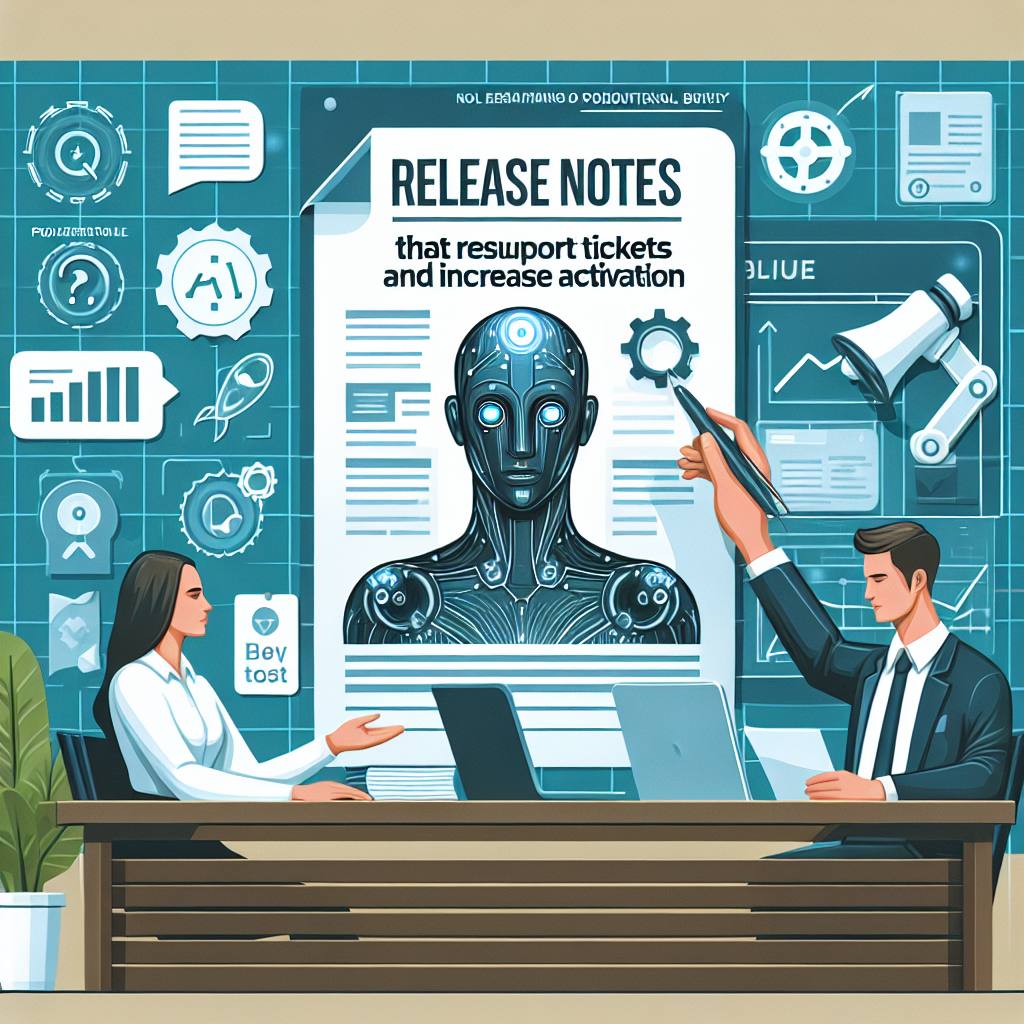
Product updates are not just announcements, they are a lever for fewer confused users, faster onboarding, and higher feature adoption. This guide shows how to explain what changed and why in a way that prevents repetitive questions, speeds activation, and turns improvements into measurable business outcomes.
Most product updates fail in a very predictable way: the team ships something valuable, announces it, and then support volume spikes because users cannot map the change to their day-to-day workflow. Meanwhile, the adoption graph stays flat because the update was described as a list of changes instead of a guided path from old behavior to new benefit.
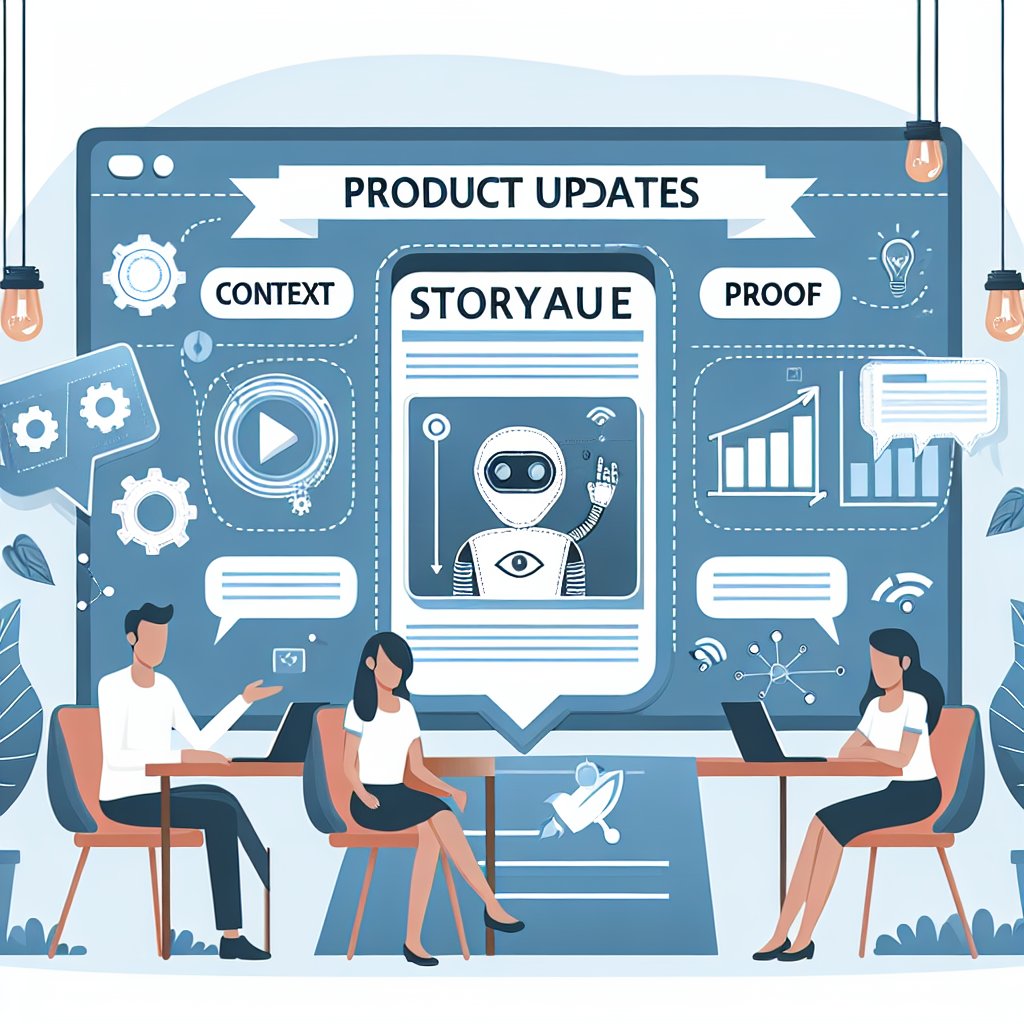
A strong update post answers three questions in the order your customers actually experience change: what changed, why it changed, and what to do next. When you consistently do that, release communication becomes an operational tool that reduces tickets, accelerates activation, and makes improvements visible to decision-makers who pay the bill.
Think about the last time you introduced a new setting, redesigned a screen, or improved a workflow. Even small changes can trigger confusion because users build muscle memory. Confusion creates two outcomes:
A product update is your chance to preempt both. The best updates do not just tell users what is new. They teach the new behavior quickly, set expectations, and point to proof that the change is worth it.
If your product involves customer communication, bookings, or sales conversations, this becomes even more important. Changes impact revenue workflows, and revenue workflows amplify confusion. This is where platforms like Staffono.ai can help because you can automate the follow-up and guidance across channels like WhatsApp, Instagram, Telegram, Facebook Messenger, and web chat, right when users encounter the change.
Before you write a single line of the announcement, forecast what support will hear. Treat the update like a mini risk assessment. Ask:
Then write the update to intercept those questions. This is not just a writing trick. It is a measurable cost reduction strategy.
Imagine you rename “Auto-reply” to “Instant response” because it better matches your messaging positioning. If you announce only the rename, you will get tickets like “Where did Auto-reply go?” and “Did you remove the feature?” A better update includes a short translation layer:
That last sentence “Your existing rules still work” can eliminate a surprising number of tickets.
Users do not experience software as a changelog. They experience it as a path from intention to outcome. That is why a “before, after, because” structure works across almost any update type.
This structure also keeps you honest. If you cannot explain “because” clearly, the update might be more internal than customer-driven, and you should adjust the framing or reconsider the change.
Say you improved lead routing so that inquiries from Instagram DMs can be categorized and assigned automatically based on keywords and availability.
If you use Staffono.ai, you can go one step further and show how an AI employee can handle the first interaction, ask the missing questions, and push a qualified lead into the correct pipeline automatically, without forcing customers to wait for business hours.
People scan. Your update needs to satisfy two reading modes:
To support both, keep “what changed” short and concrete, then invest your effort into “why it matters.” The mistake many teams make is reversing that. They write a long technical description of the changes and a vague sentence about benefits.
Instead, use the “why” section to connect the update to outcomes: fewer steps, fewer errors, faster replies, higher booking rate, better reporting, less manual work. When possible, add a lightweight metric or expectation, even if it is directional, like “most teams will save 10 to 15 minutes per day per agent.”
A link to documentation is helpful, but it is not an adoption plan. Give users a small sequence that fits into their day, especially for updates that change behavior.
For messaging and sales automation features, this is where you can add practical scripts. For example, if you introduce a new booking confirmation flow, provide a message template for WhatsApp and Instagram that users can copy, and an example of how to handle rescheduling.
Staffono.ai users often benefit from this approach because setup is frequently the difference between “We bought automation” and “We actually use automation.” A short adoption path makes it easier to deploy an AI employee across channels and start seeing faster responses and better qualification immediately.
Customers are not only afraid of new features. They are afraid of losing old reliability. Every update should explicitly state what remains the same, especially when UI or terminology changes.
Include a short “unchanged” section in your narrative:
This reduces anxiety and prevents escalations from admins who fear disruption.
The same update means different things to different readers. Consider three micro-sections or callouts:
This is also an internal alignment tool. When you write the executive impact clearly, your own team can connect shipping to business results.
If your product touches messaging, show examples in the actual channel context. A generic description like “improved response automation” is less helpful than showing a WhatsApp conversation snippet, a lead qualification question, or a booking confirmation flow.
For instance, if you shipped a feature that lets businesses automatically confirm appointments and collect missing details, show a short scenario:
This is exactly the kind of workflow that Staffono.ai is designed to run 24/7 across WhatsApp, Instagram, Telegram, Facebook Messenger, and web chat, so customers get immediate answers and your team stays focused on high-value tasks.
The best product update is not finished when you publish it. It is finished when users adopt it and your support volume reflects clarity. After release, monitor:
If you see repeated confusion, edit the announcement and add an FAQ section. Treat your update post as a living artifact, not a one-time broadcast.
When you apply this consistently, you will notice something important: product updates stop being a reactive chore and become a proactive growth lever. Users feel guided, admins feel safe, and your team spends less time repeating answers.
If your updates involve customer communication, lead capture, booking, or sales follow-up, consider pairing the announcement with automated in-product and messaging guidance. With Staffono.ai, you can deploy AI employees that explain new workflows, route questions, and help customers complete setup directly inside the channels they already use, so your improvements translate into adoption instead of extra tickets.