
Most product updates fail not because the change is bad, but because customers cannot quickly understand what they should do differently. This guide shows how to write announcements, improvements, and new-feature notes that respect customer expectations, reduce confusion, and increase adoption.
Product updates are rarely “just news.” For your customers, they are a test of reliability: will the tool they depend on still work the way they planned their week, trained their team, or promised outcomes to their own clients? That is why the best updates do more than list changes. They keep a promise by giving people context, meaning, and a safe path forward.
This article breaks down a practical approach to communicating announcements, improvements, and new features: what changed, why it changed, who it affects, and what customers should do next. You will also see how automation can make update communication consistent across channels like WhatsApp, Instagram, Telegram, Facebook Messenger, and web chat using Staffono.ai (https://staffono.ai).
Even positive changes can cause anxiety. Customers fear losing time, breaking workflows, and having to re-learn steps under pressure. If your update message is vague or overly technical, customers fill the gaps with worst-case assumptions.
Common hidden fears behind “What changed?”
Great product update communication acknowledges these fears without being dramatic. It offers clarity, proof, and options.
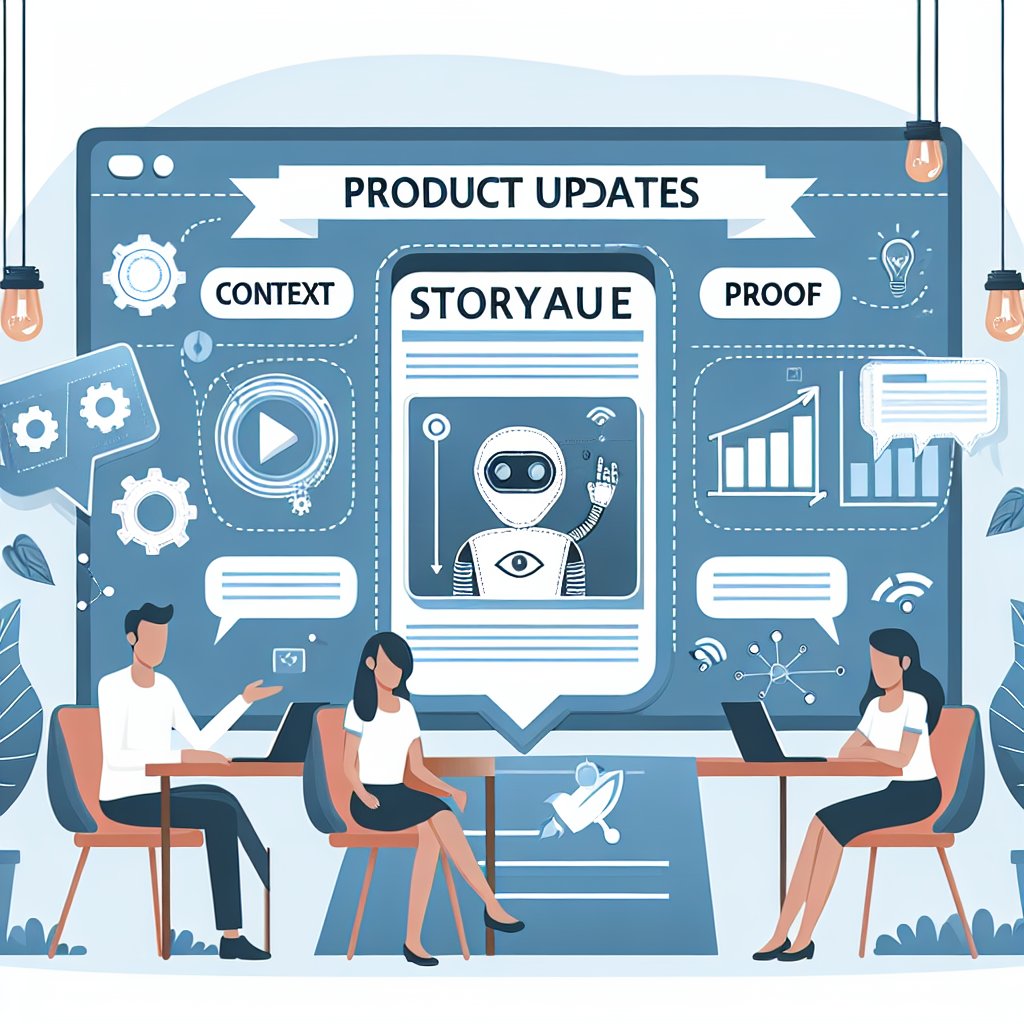
Instead of writing release notes like an internal changelog, use a customer-facing structure that answers the questions people silently ask. A reliable framework is:
When you consistently publish updates in this format, customers learn how to read them quickly. That alone increases adoption because you are reducing the cognitive load of change.
Announcements are for changes that alter expectations: pricing, packaging, deprecations, policy changes, major UI redesigns, or platform migrations. The goal is not excitement. The goal is controlled understanding.
Weak: “We are discontinuing Classic Reports soon.”
Better: “Classic Reports will be retired on May 30 to improve speed and reduce duplicate reporting logic. Your saved reports have already been migrated to New Reports, and you can export an archive until May 30. If you rely on a specific filter that is not yet supported, reply to this message and we will help you map it.”
If you run customer communication across multiple messaging channels, you can use Staffono.ai to deliver these announcements consistently, route replies to the right team, and automatically answer common questions with approved messaging. That prevents the “different answers in different inboxes” problem that can erode trust.
Improvements are often performance, reliability, UX polish, accessibility, and security upgrades. They matter, but customers do not always feel them immediately. Your job is to translate engineering effort into customer outcomes.
Avoid: “Improved caching layer and optimized queries.”
Prefer: “Pages load faster during peak hours, and search results appear in under 2 seconds for most accounts.”
Customers trust improvement notes that feel measured and testable. They distrust “everything is better now” language.
“We upgraded our message delivery pipeline to reduce delayed notifications. In the last 14 days, delivery delays over 60 seconds dropped from 1.8% to 0.4%. No action is required, and your existing templates continue to work as before.”
For teams using Staffono.ai, reliability improvements can be tied to real operational outcomes: fewer missed leads, faster booking confirmations, and more consistent follow-ups across WhatsApp, Instagram, Telegram, Messenger, and web chat. Including that “why” makes the improvement meaningful to business owners, not just technical readers.
New features are the easiest updates to oversell and the hardest to adopt. Customers need a clear job-to-be-done and a quick start path.
Example: “New: Auto-assign conversations by topic.”
Feature adoption improves when you state constraints clearly:
Staffono.ai is a good example of why guardrails matter in automation. If you introduce a new AI workflow, teams want to know how it handles edge cases, escalation to humans, and message tone across channels. Writing these details into your product update reduces hesitation and accelerates real usage.
Publishing release notes on a blog is not enough. Customers live in inboxes and chat threads. The right channel mix depends on impact and urgency.
If you support customers across many messaging channels, consistency becomes difficult. Staffono.ai can act as a centralized communication layer: you publish one approved update brief, then the AI employees distribute it, answer FAQs, collect feedback, and book live help sessions when needed.
Customers accept change faster when the reason is believable. Strong “why” statements usually come from:
Avoid blaming customers or hiding behind “strategic direction.” A simple, respectful rationale beats corporate language.
If you want to scale this process, consider automating the distribution and FAQ handling. With Staffono.ai (https://staffono.ai), teams can deploy AI employees to share product updates via WhatsApp, Instagram, Telegram, Facebook Messenger, and web chat, then instantly respond with the same approved explanations, links, and next steps.
Do not measure success by “sent.” Measure by reduced confusion and increased adoption.
When you connect your product update communication to these metrics, you can improve both the product and the narrative over time.
Product updates that keep promises do not try to impress. They try to protect customers from uncertainty, show respect for their time, and provide a confident path forward. If your team is ready to make every announcement and feature release easier to understand across every chat channel your customers use, Staffono.ai can help you automate the communication, handle questions 24/7, and turn change into steady adoption.