
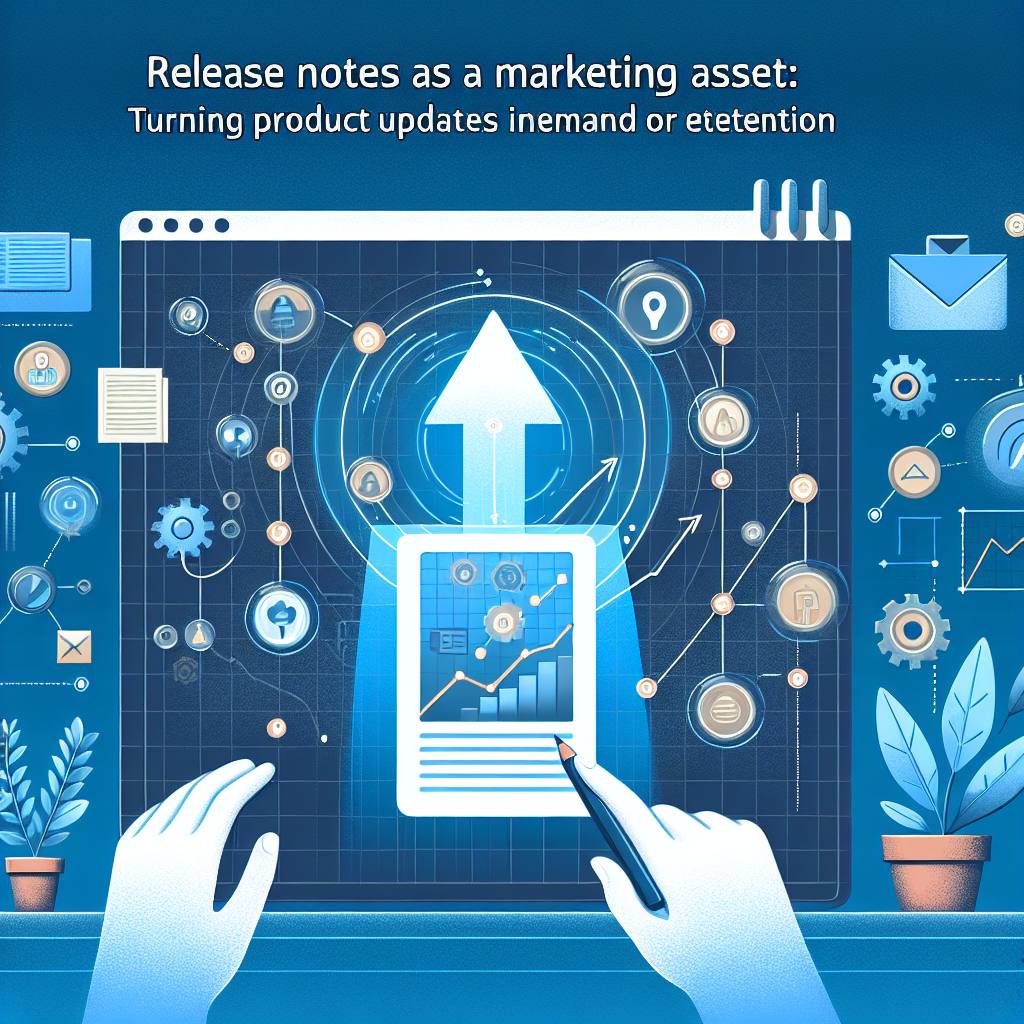
Most product updates are written like an internal memo, then wondered why adoption is low. This post shows how to announce improvements and new features in a way that clarifies what changed, explains why it changed, and turns every release into a measurable growth lever.
Product updates are often treated as housekeeping: a quick list of changes, a link to documentation, and a hope that users will figure it out. The result is predictable: new features underperform, support tickets spike, and the team moves on to the next sprint without learning what actually landed.
A better approach is to treat every update as a public asset that can drive adoption, retention, and even demand. That does not mean hype. It means packaging clarity: what changed, why it changed, who it affects, and how to use it. When you do that consistently, your release notes stop being a checkbox and start becoming part of your go-to-market system.
This article breaks down a practical way to announce improvements and new features so customers understand the change, trust the intent, and act on it. Along the way, you will see how platforms like Staffono.ai (https://staffono.ai) can help distribute updates across messaging channels and automate follow-ups so your announcements actually reach the right people.
Updates fail to create value when the communication is optimized for the builder, not the user. Common patterns include:
Users do not experience your product as a roadmap. They experience it as a routine. Any update that interrupts that routine needs a clear reason and a small, safe next step.
“What changed” should be written from the perspective of a job-to-be-done, not a technical component. A strong description answers three questions quickly:
Example of a weak description: “Added new rules engine and improved caching.”
Example of a strong description: “You can now route new inquiries to the right team based on message keywords and customer type. Find it in Settings, Automation, Routing rules. Existing rules continue to work with no changes required.”
If you are building messaging-first experiences, be explicit about channels too: “Available on WhatsApp and web chat today, Instagram next week.” That single sentence reduces confusion and support requests.
Users are more tolerant of change when they understand the intent. “Why” should be specific and grounded in outcomes. Good reasons include:
Also mention trade-offs when they exist. If a setting moved, say so. If behavior changed for a subset of accounts, call it out. Transparency is not just ethical, it is operationally efficient.
When you connect the “why” to observable results, adoption rises because users can predict how the change will help. For example: “This update reduces missed leads by keeping inquiries assigned even when a rep is offline.”
“Faster” and “better” are not persuasive unless you anchor them to something real. You do not need perfect lab benchmarks, but you do need evidence that matches user reality.
If you cannot quantify, demonstrate. A short GIF, a 30-second walkthrough, or a simple checklist can communicate value better than a paragraph of adjectives.
Shipping is not adoption. Every announcement should include the smallest next step a user can take to experience value. Think in two-minute actions:
For example, if you introduce automated booking confirmations, your activation path could be: “Open Bookings, choose a service, turn on auto-confirmation, then send yourself a test message.”
This is where automation helps. Staffono.ai can act as the distribution and activation layer by sending personalized update messages through WhatsApp, Instagram, Telegram, Facebook Messenger, and web chat, then guiding users step by step based on their responses. Instead of a generic email, users can ask, “Does this work for my salon locations?” and receive an immediate, accurate answer, 24/7.
The same update can mean different things to admins, frontline reps, and executives. Announce once, but tailor the message. Segmentation can be simple:
Practical example: If you release “lead qualification questions in chat,” admins need the configuration guide, while sales reps need a script for when the AI hands off a qualified lead.
With Staffono.ai, segmentation can be operationalized across messaging channels: the AI employee can identify the user, detect their account type, and deliver the right version of the announcement, including links, quick replies, and setup prompts.
Users want speed, but they also want details when needed. Use a layered approach:
This structure works especially well in messaging environments where attention is limited. A chat-first update can offer “Show me how” buttons that open the deeper layer only when the user asks.
If an update changes behavior, treat it like a rollout, not a post. You want to reduce surprise and protect user workflows.
A simple, effective tactic is to provide a “compatibility check” that users can run. Even a short self-audit list reduces anxiety: “If you use custom webhooks, verify field X, confirm signature Y.”
Messaging automation can reduce the operational burden. Staffono.ai can proactively message only affected accounts, confirm whether they completed the migration, and escalate to a human when the AI detects risk or confusion.
Do not judge a release by how many people saw the announcement. Judge it by behavior change. Pick a small set of metrics aligned to the update type:
Then build a feedback loop. Add one question to the announcement: “Did this solve the issue you had?” In chat, you can collect structured responses with quick replies.
Staffono.ai is useful here because it can capture user feedback directly in the conversation, tag it by theme, and sync insights back to your team. That turns product updates into continuous discovery, not a one-way broadcast.
What changed: “Message handoff to a human agent is now instant when a customer asks for a person.”
Why: “We saw delays when agents were online but not assigned quickly, which caused drop-offs.”
How to try: “Send ‘agent please’ in your test chat. You will see the handoff in under 2 seconds. No settings required.”
What changed: “You can now create channel-specific templates so WhatsApp and Instagram messages match each platform’s style.”
Why: “Different channels have different expectations, and one template was not converting equally well.”
How to try: “Open Templates, duplicate your top reply, customize it for WhatsApp, then run a test conversation.”
Consistency beats brilliance. A lightweight workflow helps every team ship clearer announcements:
If you operate across multiple messaging channels, consider making chat the default distribution layer. Many customers will not read long emails, but they will respond to a well-timed WhatsApp message asking if they want setup help. Staffono.ai can automate this flow end to end, from announcing the update to guiding configuration and collecting feedback, while keeping humans in the loop for edge cases.
Product updates are not just a record of shipping. They are a moment where you can strengthen trust, reduce confusion, and teach users how to succeed with what you built. When you clearly state what changed, explain why it matters, and offer an easy activation path, your announcements become part of your growth engine.
If you want your updates to reach customers across WhatsApp, Instagram, Telegram, Facebook Messenger, and web chat, and you want automated, personalized follow-ups that improve adoption, Staffono.ai (https://staffono.ai) can help you operationalize the entire release communication loop with 24/7 AI employees that guide users in real time.