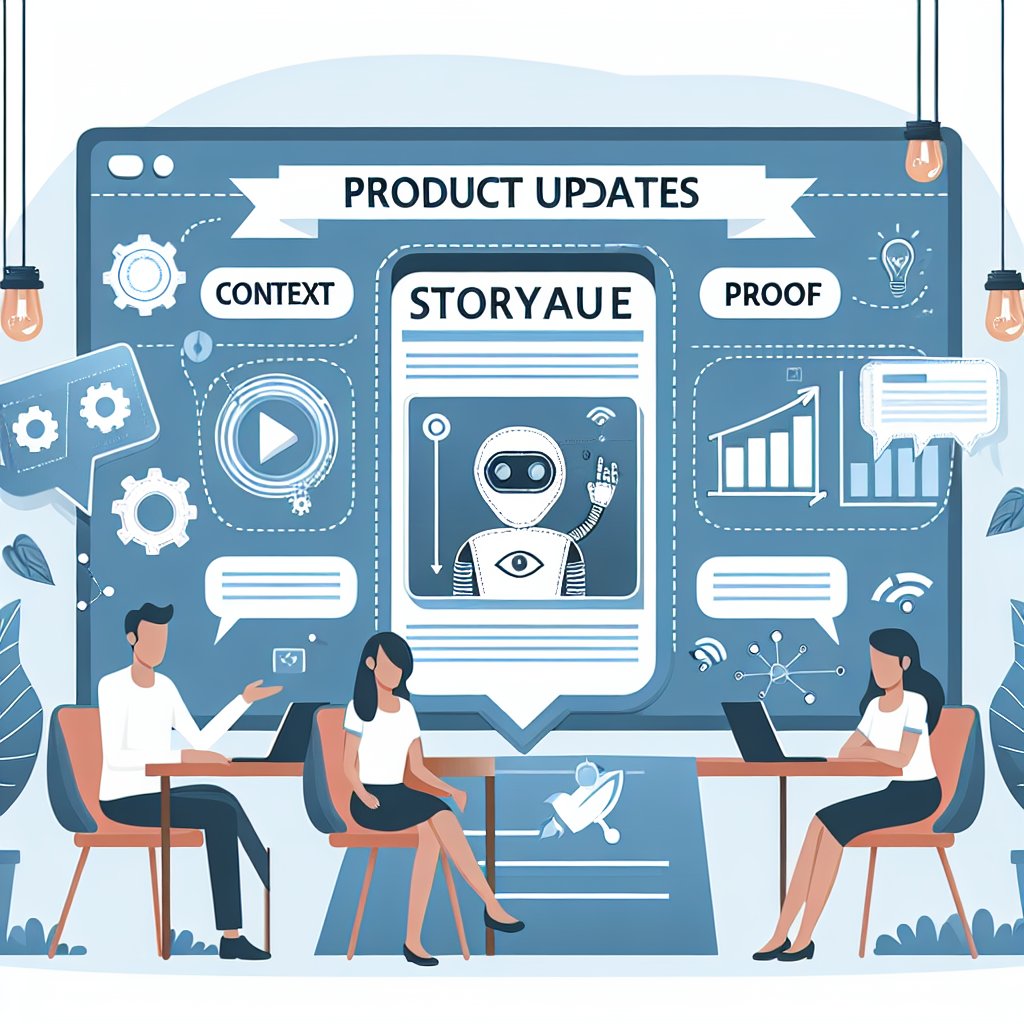


Product updates are easy to ship and surprisingly hard to validate in the real world. This guide shows how to announce improvements and new features with measurable goals, track adoption across channels, and explain what changed and why without guessing.
Most teams treat product updates like a publishing task: write the notes, send an email, post on social, and move on. The problem is that “done” is not the same as “worked.” If you cannot demonstrate that an announcement improved adoption, reduced support load, or increased revenue, you are leaving growth to chance.
This article introduces a practical release communication scorecard: a simple way to connect announcements, improvements, and new features to outcomes. You will learn what to measure, what changed and why to explain, and how to design messages that perform across email, in-app, and messaging channels like WhatsApp and Instagram. Along the way, you will see how Staffono.ai (https://staffono.ai) can automate the conversational side of releases, so customers understand changes, complete onboarding steps, and get help instantly.
Customers rarely wake up hoping for a new setting or a redesigned screen. They care about progress toward their goals: faster bookings, fewer mistakes, better reporting, more sales. That is why the “why” matters, but the “proof” matters even more.
A scorecard mindset forces you to answer: after the update announcement, what should happen differently in user behavior? If you cannot name the behavior, you cannot measure it. If you cannot measure it, you cannot improve the next release.
A good scorecard is small, consistent, and tied to the customer journey. Start with 6 categories and choose 1-2 metrics per category. Track them for every meaningful release.
Staffono.ai can help capture several of these signals automatically by handling customer conversations across web chat, WhatsApp, Instagram, Telegram, and Facebook Messenger, then tagging intents like “confused about new pricing,” “needs setup help,” or “wants a demo.” That gives you a real-time view of comprehension and friction without waiting for a quarterly survey.
Before you write the announcement, write a hypothesis that includes the user problem and the expected behavior change. Keep it short.
This sentence becomes the backbone of your “why.” It also tells you what to measure: completed bookings, speed to lead, meeting bookings, and the segment (mobile users, sales teams).
The fastest way to create confusion is to broadcast one generic message to everyone. Product updates often affect different groups differently:
Build 3-5 segments and map each to a channel mix. For example, admins get email plus an in-app modal, while frontline users get a short in-app tooltip and a link to a 60-second walkthrough. Prospects may get a sales enablement message and a demo snippet.
If you use Staffono.ai, segmentation can extend into conversational channels. Your AI employee can recognize whether someone is an admin, a staff member, or a prospective buyer and respond with the right explanation, setup steps, or demo invitation based on their intent.
High-performing updates behave like mini-onboarding. The announcement is only the first step. The real work is helping the user complete the first successful action.
Example for a new feature: “Route leads automatically to the right rep (Outcome). You can now set routing rules by region and product line in Settings (Change). Add your first rule in 2 minutes using this checklist (Next step).”
“We listened to your feedback” is fine, but vague. Better: “Sales teams told us the manual handoff caused delays when leads came in on weekends. The new routing rules assign leads instantly so no inquiry sits unanswered.” That type of explanation reduces support tickets because users can predict the intent of the change.
Scenario: You improved a form by adding validation and clearer labels.
What changed: Required fields now show inline hints and errors before submission.
Why: Users were losing time after submission due to missing information.
Scorecard focus: decreased form abandonment, fewer support tickets about “cannot submit,” faster completion time.
Messaging tip: Show a before/after screenshot and a single promise: “Submit correctly the first time.”
How Staffono helps: If users still get stuck, Staffono.ai can answer in chat instantly, collect the missing details, and guide them back to completion, turning a friction moment into a saved conversion.
Scenario: You launched automated appointment reminders.
What changed: A new Reminders tab with templates and schedules.
Why: No-shows were harming revenue and staff planning.
Scorecard focus: reminder setup completion rate, reduction in no-show rate, increase in repeat bookings.
Messaging tip: Provide a 3-step setup checklist and recommended default settings.
How Staffono helps: Staffono.ai can run reminders and confirmations across WhatsApp, Instagram, Telegram, Messenger, and web chat, then handle rescheduling automatically, which boosts adoption because the feature immediately does useful work.
Scenario: You updated pricing, limits, or a policy.
What changed: Clear description of the new plan structure and effective date.
Why: Aligning pricing with usage and funding improvements users requested.
Scorecard focus: churn risk in affected cohort, inbound billing questions, upgrade or downgrade rates, sentiment.
Messaging tip: Create a “What this means for you” table for each segment and provide a path to talk to someone.
How Staffono helps: Your Staffono AI employee can handle repetitive billing questions instantly, escalate complex cases, and book calls for at-risk customers, reducing support load during a sensitive change.
You do not need a complex analytics overhaul. Use a simple routine:
One practical trick: create a “release tag” in your support and messaging systems. With Staffono.ai, you can tag conversations by the release name automatically based on keywords and intents, making it easier to quantify the impact of your communication.
If your first message reads like internal documentation, users will ignore it. Lead with outcomes and a single next step. Put technical depth behind a link.
If workflows change, include a short “If you used to do X, now do Y” section. This reduces panic and tickets.
Users do not live in your email inbox. Use a mix: in-app, web chat, and the messaging apps your customers prefer. Staffono.ai is useful here because it keeps the explanation consistent across channels and available 24/7.
High opens do not equal adoption. Tie the scorecard to behaviors: first use, repeat use, completion, and business metrics.
When customers consistently understand what changed and why, and they feel guided rather than surprised, trust grows. Trust turns into faster adoption, fewer tickets, and a willingness to try new capabilities.
If you want product updates to perform like a growth lever, treat them like a measurable system. Define a hypothesis, segment the audience, design a guided experience, and hold your communication accountable with a scorecard. And if you want the conversational layer to run without adding headcount, Staffono.ai (https://staffono.ai) can act as a 24/7 AI employee that explains releases, answers questions across WhatsApp, Instagram, Telegram, Facebook Messenger, and web chat, and helps customers complete the first successful action that proves your update worked.