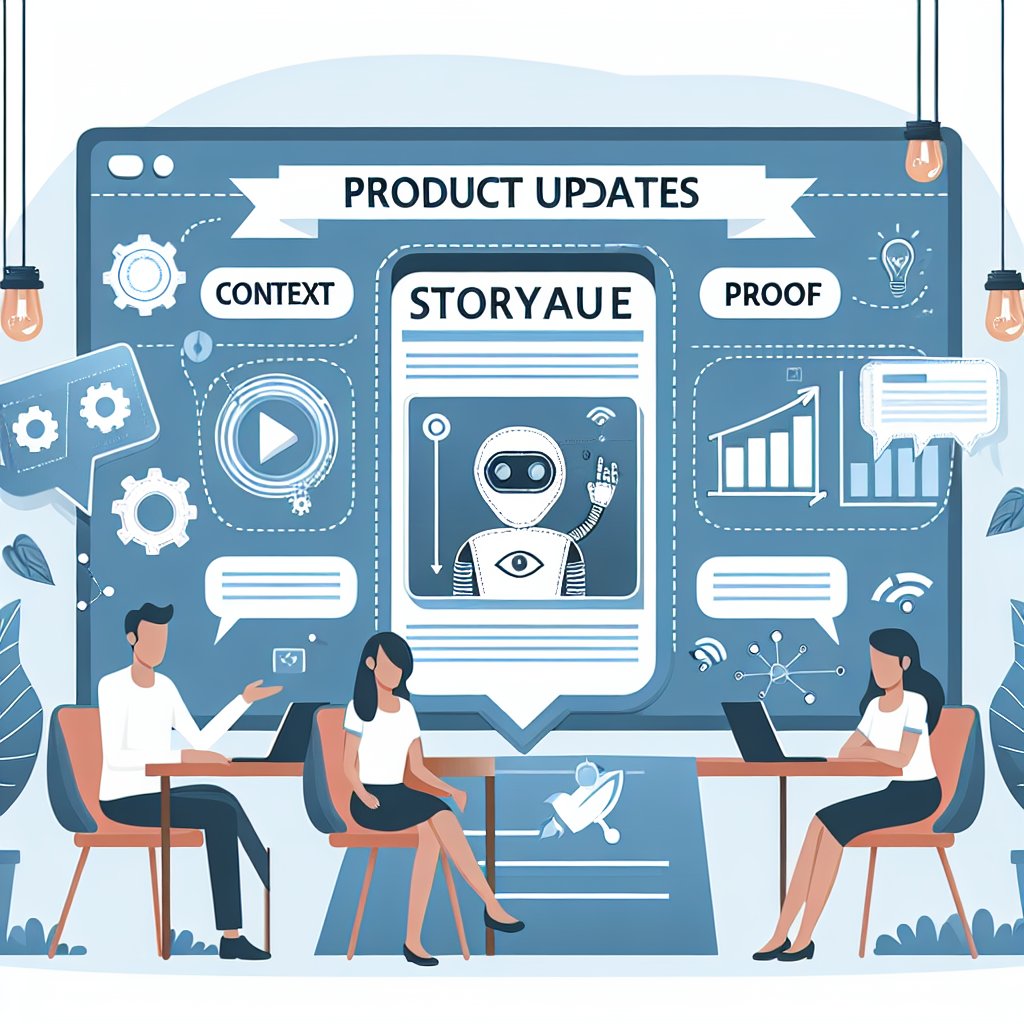

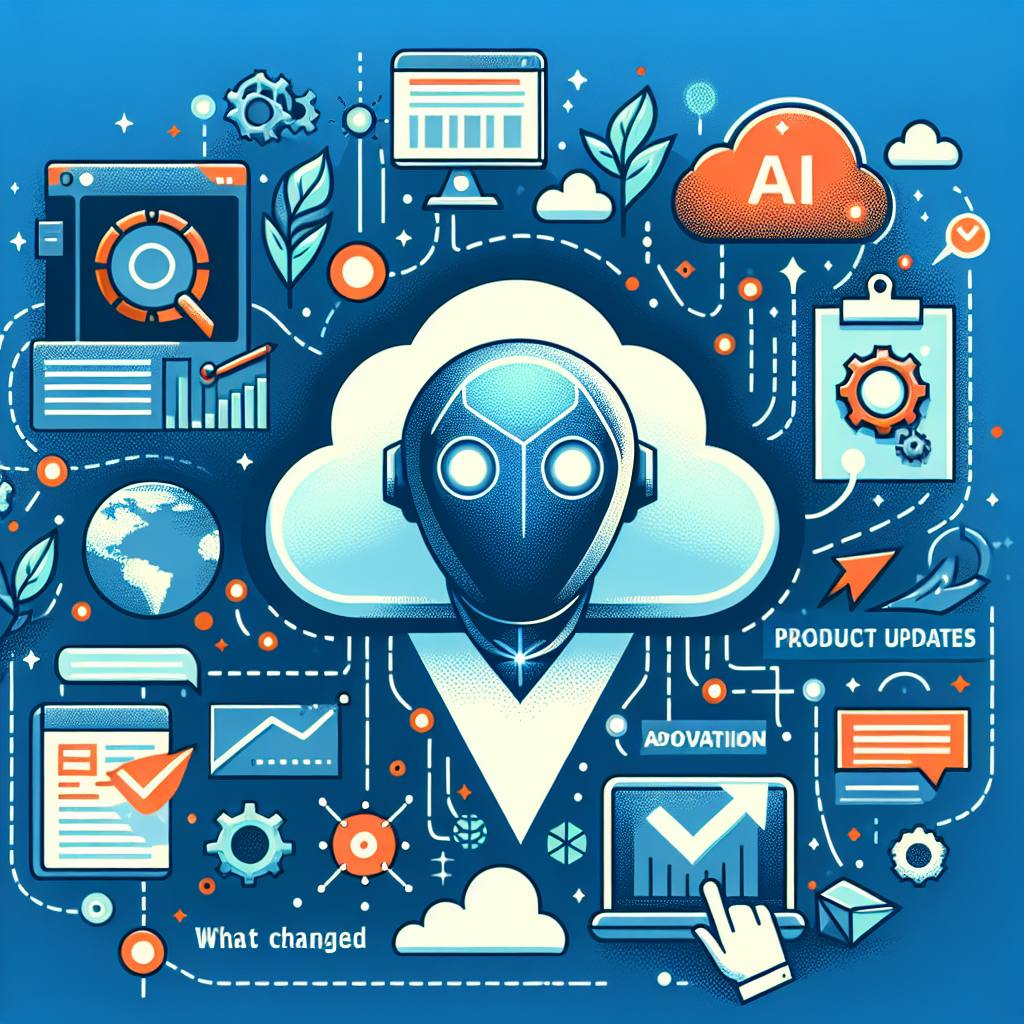
Product updates are not just a list of new features, they are a narrative about customer needs, business outcomes, and trust. In this post, we break down what meaningful product updates look like, why they matter, and how to announce improvements in a way that drives adoption and measurable growth.
Product updates are one of the most underused growth levers in SaaS and automation businesses. Teams ship improvements every week, but customers often experience them as noise: a long changelog, a vague announcement, or a popup that appears at the worst possible moment. The result is predictable: low adoption, repeated support questions, and features that never reach their impact.
The best product updates do three things at once: they explain what changed, why it changed, and how it improves outcomes for the customer. This is especially important in AI automation, where users want confidence, transparency, and clear value. If you provide AI employees that handle communication, bookings, and sales across WhatsApp, Instagram, Telegram, Facebook Messenger, and web chat, your updates are not just UX polish. They directly influence revenue, customer satisfaction, and operational cost.
Below is a practical framework for product updates that customers actually read, understand, and adopt, plus examples and tactics you can apply to your next release.
In traditional software, users can often “figure it out.” In AI-driven products, users want assurance that the system is reliable, compliant with their policies, and aligned with their tone of voice. Small changes can have big downstream effects, such as how leads are qualified or how booking confirmations are sent.
Strong product updates reduce perceived risk and increase perceived control. They also create a feedback loop: customers see that their requests translate into improvements, which increases retention and willingness to expand usage.
Platforms like Staffono.ai, which provide 24/7 AI employees for messaging and sales automation, benefit from updates that are communicated in business language: faster response times, fewer missed leads, improved conversion rates, and smoother handoff to human teams when needed.
A useful update is not “We improved the bot.” It is “We reduced the time to first response and improved lead qualification accuracy so your team spends less time on unqualified conversations.” Customers buy outcomes, not features.
If you can only write two sentences, make them “why” and “impact.” That is what builds trust.
Most teams focus on awareness, which is necessary but not sufficient. Adoption happens when the right person sees the update at the right moment with a clear next step.
Because Staffono.ai operates across multiple messaging channels, many businesses already have a natural communication loop. A practical approach is to let customers opt in to product update digests delivered in the same channel where they manage conversations, such as a WhatsApp message that links to a short release summary and setup instructions.
Not every release needs fireworks. Some of the most valuable updates are improvements that remove friction. The key is to translate them into customer language.
In an AI employee context, these improvements directly influence conversion. If an AI assistant qualifies leads more consistently and books appointments without delays, you are effectively adding capacity without adding headcount. That is a business outcome worth highlighting.
New features often fail because they are announced as capabilities, not as workflows. The user is left to imagine how the feature fits into their day.
Instead of “New: multi-step booking flows,” explain it like this: “Now your AI employee can confirm availability, collect required details, and send a calendar invite, all inside the chat, so customers do not drop off between steps.”
Staffono.ai is a good example of where workflow framing matters. Businesses using AI employees across Instagram DMs and WhatsApp need consistency. A feature like unified conversation history is not just “a dashboard update.” It means a customer can start on Instagram, continue on WhatsApp, and still get accurate, context-aware support and sales follow-up.
Here are a few examples of how to write update announcements with measurable outcomes.
What changed: Lead qualification now uses additional signals from the conversation, such as timeline, budget range, and location.
Why: Teams reported spending time on leads that were not ready to buy, and missing high-intent prospects during peak hours.
Impact: Sales reps can focus on high-intent leads, and the AI can nurture the rest with helpful follow-ups.
Action: Review your qualification criteria and update your routing rules.
What changed: Booking confirmations now include automatic reminders and a fallback check if a customer does not respond.
Why: No-shows and incomplete bookings were causing revenue leakage.
Impact: More completed bookings and fewer manual reminders.
Action: Enable reminders for your top services first, then expand.
Shipping is not the finish line. Adoption is. Track both product usage and business outcomes.
If you run AI-driven customer communication, these metrics are especially important because improvements can compound. A small increase in lead capture from Instagram DMs, plus faster follow-up in WhatsApp, can translate into meaningful monthly revenue.
The strongest product update strategy treats announcements as a conversation, not a broadcast. Ask for feedback in a structured way: a one-question survey, a quick “Was this helpful?” prompt in the help center, or a short customer interview schedule link.
When customers see that their suggestions show up in future improvements, trust grows. That trust is the foundation for expanding automation into more workflows, channels, and teams.
If your business wants to turn product updates into measurable growth, it helps to use a platform that is built for real-world operations, not demos. Staffono.ai helps businesses deploy 24/7 AI employees that handle customer communication, bookings, and sales across WhatsApp, Instagram, Telegram, Facebook Messenger, and web chat. When you pair consistent automation with clear, outcome-focused updates, you create a system that improves every month. Explore Staffono.ai at https://staffono.ai to see how AI employees can reduce missed leads, speed up responses, and help your team scale without adding overhead.