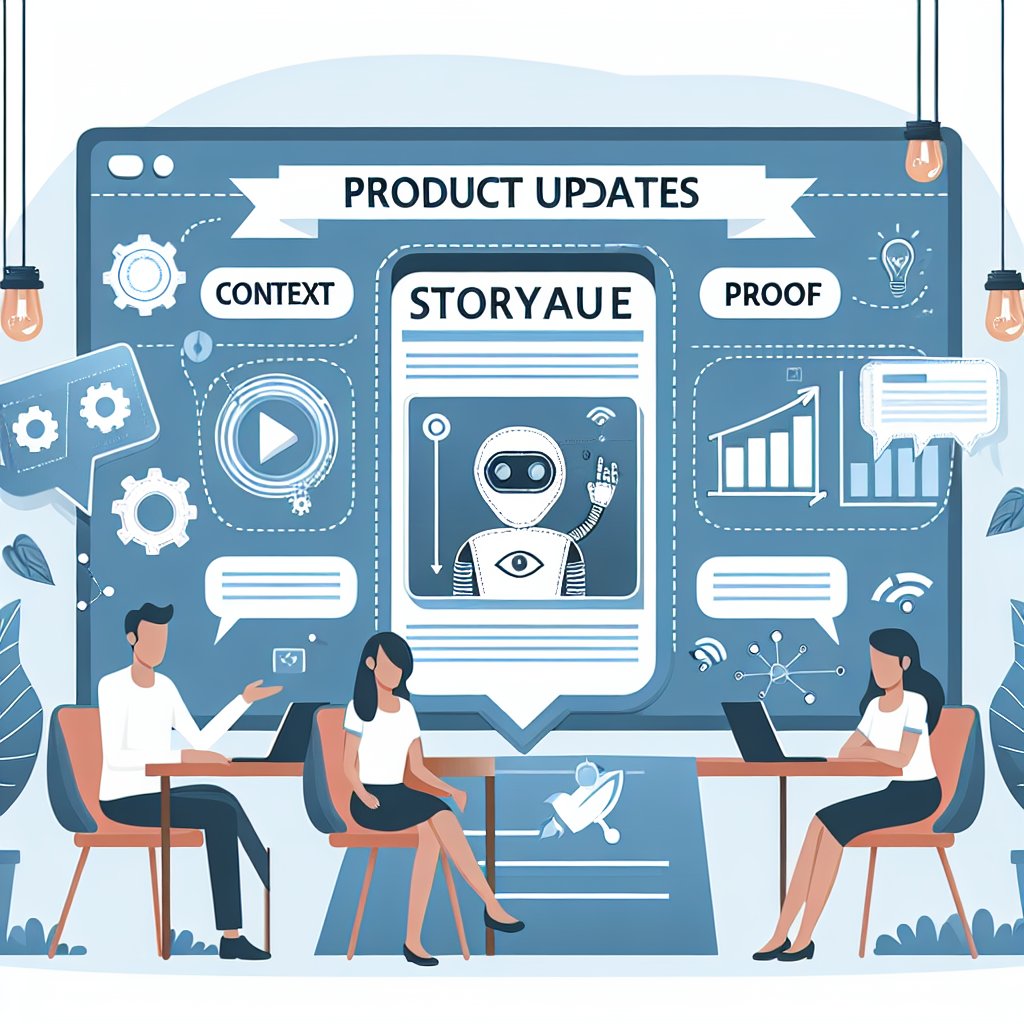


Product updates are not just release notes, they are a map of where automation is heading and how fast your business can follow. In this post, we break down the most important types of updates in AI-powered customer communication and sales automation, what typically changes, and why it matters for growth.
Product updates can feel like background noise: another announcement, another feature, another “improvement.” But in AI automation, updates are often the difference between a system that simply answers messages and one that actively drives revenue, reduces workload, and improves customer experience across channels.
If your business relies on WhatsApp, Instagram, Telegram, Facebook Messenger, or web chat to generate leads and close sales, you are operating in a world where customer expectations change quickly. People want instant replies, accurate information, and a smooth booking or checkout process. AI tools evolve to meet those expectations, and the best updates are the ones that make automation more reliable, measurable, and aligned with real business workflows.
This article unpacks the kinds of announcements, improvements, and new features that matter most in AI automation, what changed, and why those changes are worth paying attention to. Along the way, we will use practical examples and show how platforms like Staffono.ai can help you turn updates into real operational gains.
Traditional business software updates often add new buttons or dashboards. AI automation updates can change the quality of outcomes. A small improvement in intent detection, message routing, or lead qualification can translate into fewer missed inquiries, higher conversion rates, and less time spent by your team correcting mistakes.
There are three reasons AI updates are uniquely important:
For businesses using AI employees like those provided by Staffono.ai, these updates are not “nice to have.” They are part of maintaining a 24/7 customer-facing operation that does not depend on human availability.
Product announcements usually highlight “new features,” but the real value is in the operational impact. When you read an announcement, ask:
For example, an announcement like “improved WhatsApp flows” might mean the AI can guide users through structured steps more reliably, which matters for bookings, quotes, or qualification. On platforms such as Staffono.ai, multi-channel communication is core, so channel-related announcements often translate directly into more consistent customer experiences.
Improvements are often underappreciated because they do not look flashy. In practice, they can be the updates that stop leads from slipping through the cracks.
One of the most common friction points in automated messaging is misclassification. A customer asks, “Do you have availability this Friday?” and the system answers with pricing, or it responds with a generic message that forces the customer to repeat themselves.
When intent detection improves, you get:
Actionable insight: review your top 20 incoming questions from the past month and check whether your automation handles them end-to-end. If not, you need better intents, better knowledge, or better flows. With Staffono.ai, businesses can automate customer communication across channels and refine how AI employees respond based on real conversations, which helps reduce repeat questions and improve resolution rates.
AI responses should sound like your company, not like a generic bot. Improvements to tone controls, response templates, and context handling can make AI messages more confident, shorter, or more empathetic depending on your brand.
Actionable insight: define three brand voice rules (for example: concise, friendly, solution-oriented) and audit your AI transcripts for consistency. If you have different teams managing different channels, consistency becomes even more important. A unified system like Staffono.ai helps maintain a stable voice across WhatsApp, Instagram, Telegram, Facebook Messenger, and web chat.
Automation should not try to “win” every conversation. It should know when to hand off, and it should pass context so the human can resolve the case quickly.
Improvements in handoff typically include:
Actionable insight: measure how long it takes for a human agent to take over and resolve escalated chats. If agents spend time asking the same questions again, your handoff flow needs improvement.
New features matter most when they connect messaging to revenue. In AI automation, the most valuable additions often fall into a few categories.
A common new feature in automation platforms is more flexible lead qualification: the AI asks the right questions, scores the lead, and routes it to the right pipeline or team.
Practical example: a real estate agency receives 200 inquiries per week across Instagram and WhatsApp. The AI can ask about location, budget, move-in date, and property type. High-intent leads get routed to a senior agent, while low-intent inquiries receive listings and a follow-up sequence.
Actionable insight: build a qualification script that captures only what your sales team actually uses. Too many questions reduce conversion. A good starting point is 3 to 5 questions, then offer a booking link or an agent callback.
Bookings are where many businesses lose money: missed calls, slow replies, and back-and-forth messages. Updates that improve scheduling integrations, time zone handling, availability logic, or rescheduling flows can have immediate impact.
Practical example: a beauty salon uses AI to answer Instagram DMs at night. The AI checks availability, suggests time slots, confirms the booking, and sends reminders. Staff arrive to a clean schedule instead of a pile of unanswered messages.
Staffono.ai is designed for 24/7 handling of customer communication and bookings, which is especially useful for service businesses where inquiries peak outside working hours.
Many “new features” are about what happens after the first conversation: reminders, abandoned cart follow-ups, quote follow-ups, and reactivation campaigns.
Actionable insight: create two follow-up tracks:
When AI employees can execute these tracks automatically across messaging channels, you reduce manual work and improve conversion consistency. This is one of the practical advantages businesses look for in platforms like Staffono.ai.
Some of the most important changes are technical but have clear business outcomes.
AI employees are only as good as the knowledge they can reliably access. Updates may improve how the system uses your FAQs, documents, product catalogs, or policies.
Actionable insight: maintain a single source of truth for pricing, availability rules, and policies. When the AI references outdated info, trust drops fast. Schedule a monthly review of your knowledge base and top conversation failures.
Better analytics turns automation into a growth tool. Look for updates that add:
Actionable insight: pick one metric to improve each month. For example, reduce average first response time, increase booking completion rate, or reduce escalations caused by missing information.
Updates only create value if they are adopted. Internally, your team needs to know what changed and how it affects daily work. Externally, customers should feel the improvement without being overwhelmed by announcements.
With an AI automation platform like Staffono.ai, these improvements can be delivered consistently across multiple channels, so customers feel the change whether they message you on WhatsApp, Instagram, or web chat.
The businesses that win with automation are not the ones chasing every new feature. They are the ones that translate updates into simpler journeys: fewer steps to book, fewer messages to get a quote, and faster resolution when something goes wrong.
To make product updates work for you, keep a simple operating rhythm:
If you want a practical way to apply these principles without adding headcount, consider using AI employees from Staffono.ai to handle customer communication, bookings, and sales conversations 24/7 across WhatsApp, Instagram, Telegram, Facebook Messenger, and web chat. When updates arrive, you are not just reading release notes, you are upgrading a revenue-generating system that keeps working while your team focuses on higher-value tasks.