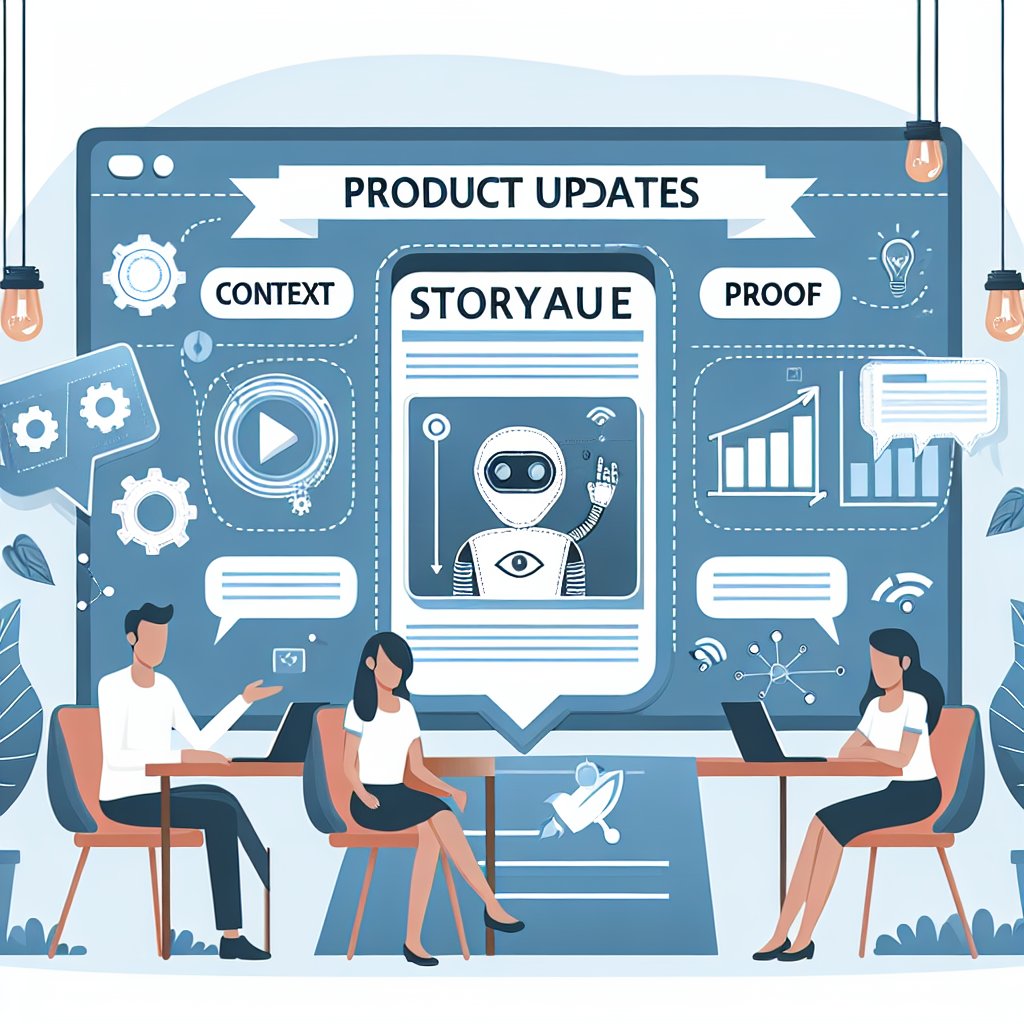


Most product updates fail not because the features are bad, but because the announcement does not change behavior. This guide shows how to explain what changed and why in a way that drives repeat usage, reduces confusion, and builds durable customer habits.
Shipping improvements is only half the job. The other half is helping customers incorporate those changes into their routine. Many teams treat product updates like a broadcast: a list of fixes, a few screenshots, and a hope that users will explore. In reality, adoption is a behavior change problem. If your announcement does not make the next action obvious and easy, the feature becomes shelfware.
This is where a “what changed and why” update can become a growth lever. When you explain changes through the lens of customer behavior, you reduce friction, create clear triggers to try the new capability, and help users build a habit around it. The result is better activation, higher retention, and fewer support conversations that begin with “What happened?”
Users do not wake up wanting new features. They wake up wanting outcomes: faster replies, fewer mistakes, more bookings, cleaner reporting, less busywork. A product update competes with existing habits, workarounds, and muscle memory. If you change a button, rename a field, or introduce a new workflow, you are asking customers to spend attention, which is their scarcest resource.
A behavior-centered update answers three questions in plain language:
Notice what is missing: internal project names, tech stacks, and celebratory language. You can be proud of your work, but customers need a path from “read” to “use.”
A common mistake is leading with the feature label: “Introducing Smart Routing” or “New Dashboard Widgets.” Instead, lead with the job the user is trying to accomplish. For example:
Once you anchor the update in a job, “what changed” and “why” become easier to explain because you are referencing a real workflow. This also improves SEO because customers search for outcomes, not your internal names.
Vague statements create doubt. “We improved performance” or “We made the UI cleaner” forces users to guess what’s different. Instead, give users a quick verification step:
This style does two things: it reduces support tickets and it makes the change feel real. Verification is a trust builder.
Customers are surprisingly comfortable with tradeoffs when you explain them clearly. A strong “why” statement includes one of the following:
When you share reasoning, users stop interpreting change as arbitrary. They see momentum and care, which increases willingness to adapt.
Behavior change happens when the first step is small. Every update should include a one-minute action that delivers a visible payoff. Examples:
If you use Staffono.ai, this “first minute” concept maps perfectly to setting up an AI employee to handle a single high-frequency conversation, like pricing or availability. Staffono.ai can respond 24/7 across messaging channels, so users see immediate value without redesigning their entire process on day one.
Product updates land best when examples sound like what customers actually say. Instead of “User requests information,” use real phrasing like “How much is it?” or “Are you open today?” or “Can I book for Saturday?”
Imagine you shipped an improvement that asks two qualifying questions before handing a lead to sales. A behavior-driven announcement could look like this:
If your team runs messaging across multiple channels, Staffono.ai can implement this pattern with an AI employee that qualifies leads consistently on WhatsApp, Instagram, Telegram, Facebook Messenger, and web chat, then hands off to a human only when the lead is ready. That is a behavior change users can feel immediately: fewer back-and-forth messages, faster booking, and cleaner handoffs.
Most frustration is predictable. Users get confused when names change, settings move, or defaults behave differently. Include a short “Heads up” subsection in your update that addresses the top confusion moments:
This is not negativity, it is guidance. You are showing customers you know their workflow.
Different changes require different delivery. A tiny fix belongs in a changelog. A workflow change needs in-product guidance. A strategic shift benefits from a longer narrative email or blog post. A useful rule is to match channel to impact:
For messaging and automation products, in-chat education can be powerful. For example, an AI assistant can proactively explain a new setting when a user tries to do the old behavior. Staffono.ai is especially effective here because the AI employee can guide customers inside the same channels they already use to communicate, turning the update into a conversation instead of a document.
Open rates and page views are not adoption. Define success metrics that reflect behavior change. Depending on the update, track:
When metrics lag, your “what changed and why” may be correct, but the next action is too big. Shrink the first step, add a template, or provide a ready-made workflow.
Here is a structure that consistently drives clarity and action:
This format turns announcements into onboarding, which is what adoption really needs.
If your product touches customer communication, every change reverberates through real conversations. That is why clarity matters. A small routing update can change response times. A booking flow change can affect revenue. A template tweak can reduce errors. Treat each announcement as a behavior design artifact: it should make the new habit obvious, safe, and rewarding.
If you want your updates to translate into measurable business outcomes, consider pairing your release communications with automation that helps customers act immediately. Staffono.ai (https://staffono.ai) can deploy AI employees that answer questions, qualify leads, book appointments, and guide users across WhatsApp, Instagram, Telegram, Facebook Messenger, and web chat. When a feature ships, you can also ship the habit around it by embedding the new workflow into always-on conversations.
In the end, “what changed and why” is not a formality. It is the bridge between shipping code and changing customer behavior. Build that bridge well, and every update becomes a compounding investment in trust, adoption, and growth.