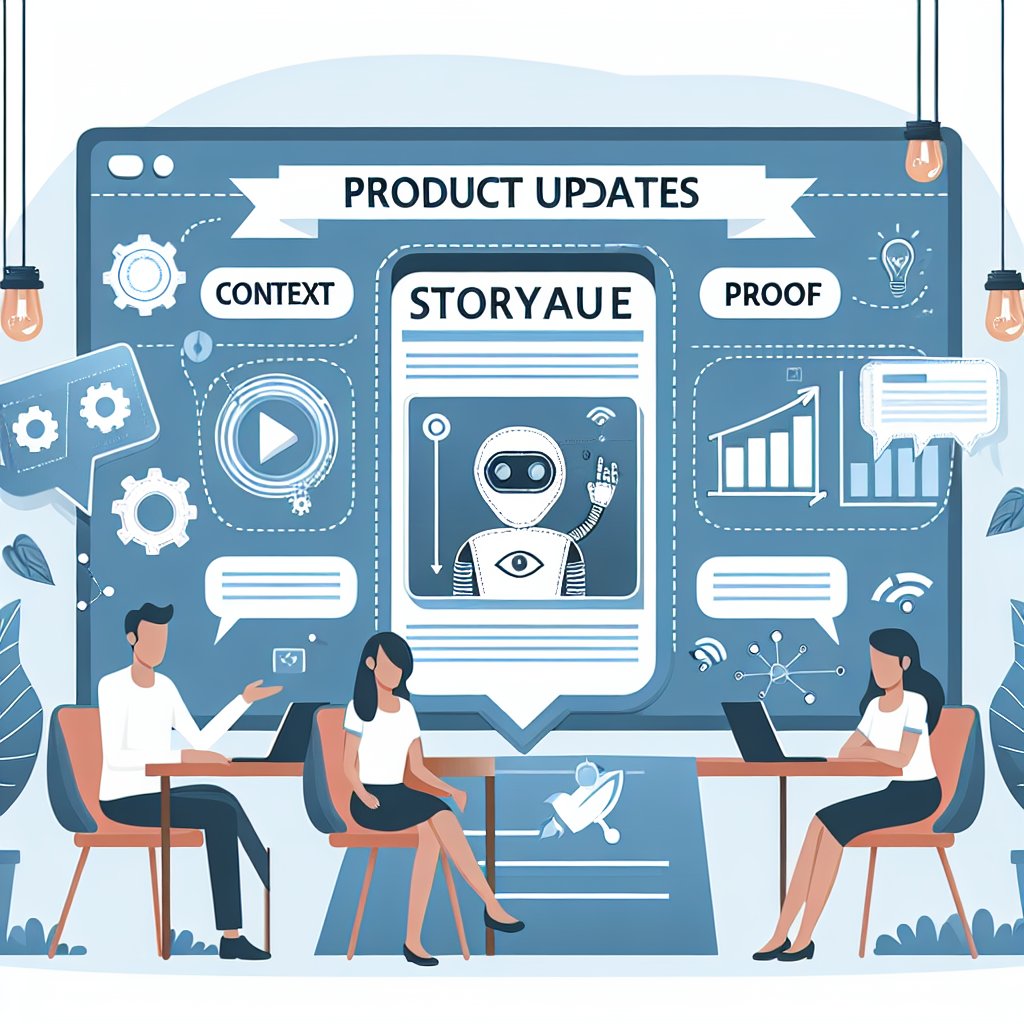


Most product updates fail not because the feature is bad, but because the change arrives with unclear routing: who it affects, what it replaces, and what users should do next. This post shows how to treat updates like logistics, with clear destinations, timing, and messaging that keeps customers moving forward.
Product updates are often written like a diary: what shipped this week, what got fixed, what is new. But customers do not consume updates as history. They experience updates as disruption or relief, and they decide in seconds whether a change is worth their attention. If your announcements are not built to answer that decision, your improvements can still feel like friction.
A better mental model is logistics. Every release needs routing information: who is impacted, what changes in their workflow, what stays the same, and where to go if something breaks. When you communicate updates like a logistics plan, you reduce confusion, protect trust, and speed up adoption.
Before you write a single word of release notes, define a routing label. This is the compact, internal description that forces clarity. It should fit in one sentence and include the audience and the outcome.
If you cannot write a routing label, you probably do not yet understand the user impact. That is a sign you need to clarify scope, not a sign you need better copy.
Many product update posts group changes by internal categories: “Added,” “Improved,” “Fixed.” That is helpful for builders, but users read through the lens of effort. What do they need to learn? What do they need to do? What might break?
Try structuring your update communication around user effort instead:
This approach keeps busy customers from scanning past the one item that matters to them.
“We improved performance” is a sentence that sounds good and means little. The goal is to connect the change to a measurable promise, even if the metric is directional. Users do not need your internal roadmap logic. They need the benefit they can expect.
In messaging-first businesses, speed and consistency often matter more than novelty. If you are building automation, the “why” should frequently reference reduced manual work, fewer errors, faster response times, or improved conversion rates.
This is also where platforms like Staffono.ai can be part of the story: when your product update affects customer communication across WhatsApp, Instagram, Telegram, Facebook Messenger, and web chat, you should explain how the change improves the end-to-end conversation. For example, a new booking flow is not just “a feature,” it is fewer back-and-forth messages, fewer no-shows, and better handoff to sales.
Different readers need different depth. If you only write for power users, you lose everyone else. If you only write for beginners, you frustrate admins and developers. The simplest solution is a two-layer explanation:
Keep Layer 1 short. Then make Layer 2 skimmable with bullets and clear labels like “Admin note” or “Integration note.”
Product updates land when users can visualize the moment they will use the change. In messaging and sales automation, that moment is usually a conversation snippet, a lead handoff, or a booking confirmation.
Before: A lead messages “How much is it?” and your team replies manually, asks a few questions, then forgets to follow up if the lead goes silent.
After: The system asks one or two qualifying questions, tags the lead (budget, timeline, interest), and schedules an automatic follow-up if there is no reply in 2 hours.
With Staffono.ai, this kind of update can be framed as “your AI employee now qualifies leads and keeps the conversation moving, even after hours.” That is a tangible outcome: fewer cold leads slipping away and less manual chasing from your team.
Users do not distrust change because they hate improvement. They distrust change because they have been burned before. Earn trust by acknowledging risk and offering a recovery path.
This reduces support tickets because it lets customers self-diagnose, and it makes your team look prepared.
Posting one update blog and calling it done is a common failure mode. Different changes require different delivery routes. Think like a dispatcher: send the message where it will be seen at the right moment.
If your customers run their business through messaging, meeting them there is not “marketing,” it is operational communication. Tools like Staffono.ai are built around multi-channel messaging, so you can deliver update notifications where your team and customers already talk, and even automate responses to common questions about the change.
Even if you write beautifully, customers still ask: “What should I do now?” Answer that explicitly. Include a short checklist that matches the user’s role.
These checklists also help you measure adoption. If users do not complete the steps, you have a clear signal that the update was not communicated well or requires more in-product guidance.
The most reassuring sentence in a product update is not “we shipped.” It is “here is what we are monitoring.” It signals responsibility and reduces anxiety.
If you run conversational automation, you can go one step further and monitor intent-level signals. For example, if many users ask “Where did X go?” inside chat, that is not just support noise, it is a discovery problem. With Staffono.ai, businesses can route these questions to an AI employee that answers instantly, and they can analyze recurring questions to refine onboarding and future announcements.
A strong product update leaves people confident. Confidence comes from three things: clarity about impact, a path to action, and a safety net if something goes wrong.
When you treat updates as change logistics, you stop writing for the archive and start communicating for behavior. You will see faster adoption, fewer “what happened?” messages, and more customers using what you built.
If your updates touch customer conversations, lead capture, bookings, or sales follow-up across messaging channels, consider using Staffono.ai to operationalize the rollout. Staffono’s 24/7 AI employees can explain new flows to customers in chat, qualify leads with the updated logic, and keep bookings moving while your team focuses on higher-value work. It is one of the simplest ways to make sure product change translates into business results, not extra manual effort.