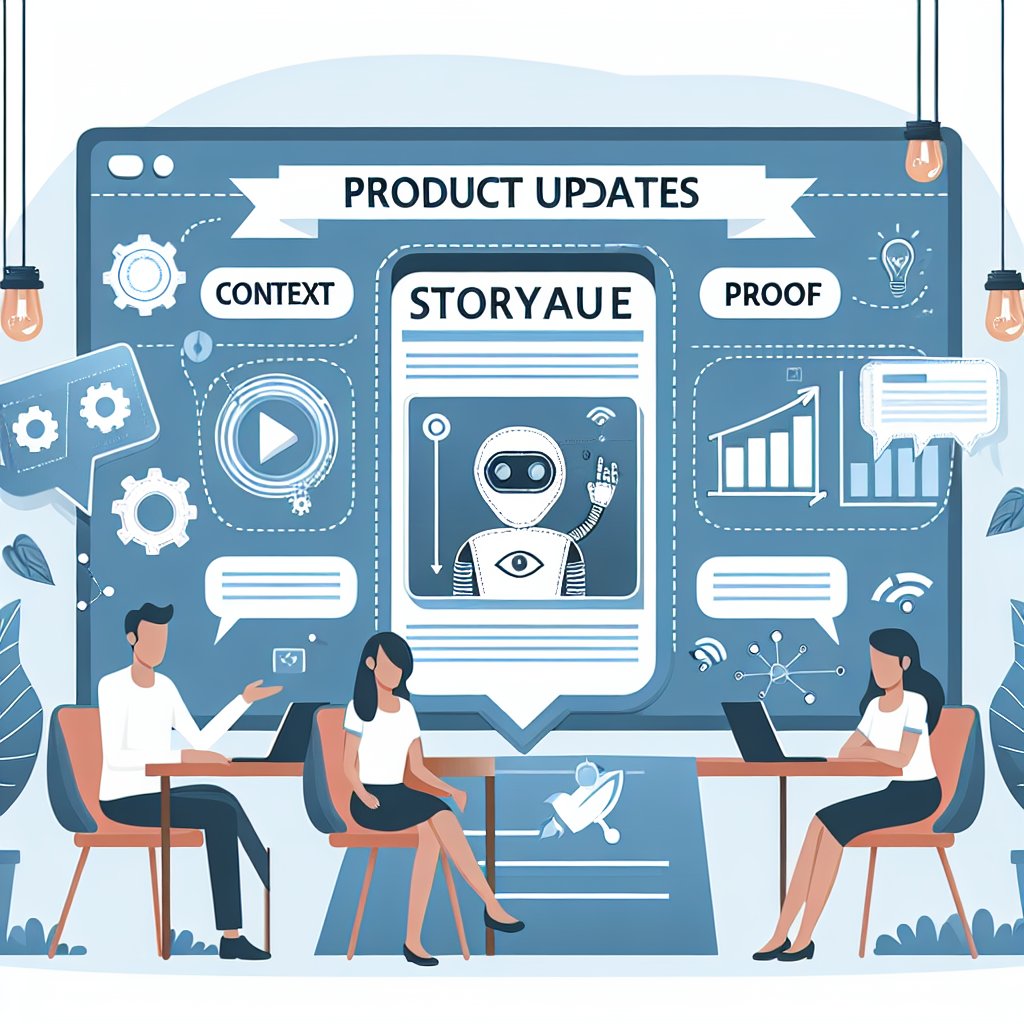

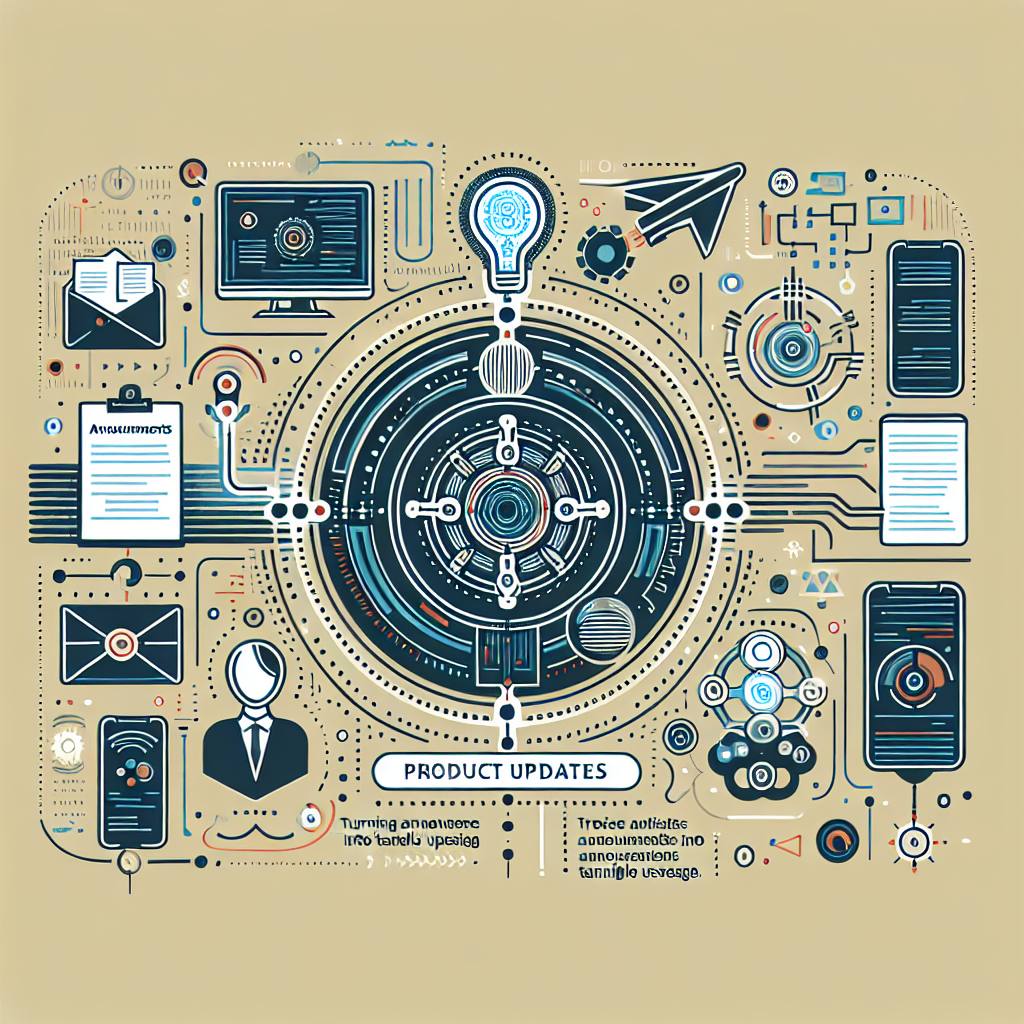
Most product updates fail for one simple reason: they tell people what changed, but not what to do next. This guide shows how to write announcements, improvements, and new-feature notes that convert attention into adoption, with practical examples across messaging, sales, and operations.
Product updates are often treated like a broadcast: ship something, write a few bullets, post it, move on. The result is familiar. Customers skim. Internal teams forget. Support gets the same questions. And the feature that took weeks to build barely changes behavior.
A stronger approach is to treat every update as a set of next actions for real people. Your audience is not looking for a changelog. They are looking for clarity: what changed, why it matters, what they should do now, and whether anything might break.
This article is a practical framework for announcing product updates (announcements, improvements, and new features) in a way that drives daily usage. You will learn how to write notes that reduce confusion, accelerate activation, and make your product feel easier to adopt. Along the way, you will see examples drawn from messaging and automation, where changes can impact customer conversations instantly.
Users do not buy features. They hire products to do jobs. Product update communication works best when it begins with the job that will improve, then ties the change to the outcome.
Instead of: “We added advanced routing rules.”
Try: “Now you can route inbound messages to the right team automatically, so leads stop waiting and support tickets stop bouncing between inboxes.”
This framing matters even more in high-velocity channels like WhatsApp, Instagram, Telegram, Facebook Messenger, and web chat, where customers expect quick replies. A small change to routing, templates, or handoff logic can reshape response time and revenue.
Platforms like Staffono.ai are built around those jobs: answering customers 24/7, capturing leads, booking appointments, qualifying requests, and handing off to humans with context. When you describe updates through the lens of those jobs, customers immediately understand the point.
“What changed” is the facts. “Why” is the decision. The best product updates provide both, but with discipline. The goal is not to publish your internal reasoning. It is to give the user just enough context to trust the change and act on it.
Example for a messaging product:
This structure prevents the most common failure mode: announcing a feature and hoping the user figures out how it fits into their workflow.
Every product update is read by at least three groups:
You can satisfy all three without bloating the message by layering details. Keep the main story short, then add optional depth in sections like “For admins” or “If you use X workflow.”
In Staffono.ai deployments, for example, a single update can affect multiple roles: operators who handle escalations, managers who track lead outcomes, and admins who connect channels. A layered update ensures the operator understands the immediate benefit, while the admin sees exactly what changed in configuration.
Many “improvements” read like vague wins: faster, better, smarter. That language is easy to write and hard to trust. A better pattern is to connect the improvement to a measurable outcome that the customer can observe.
Even if you cannot publish exact metrics, you can still describe what the user will notice. This is crucial for AI features, where people want reassurance that the system will behave consistently.
Text alone is rarely enough. A before-and-after example makes the update real and reduces support load.
Before: A customer messages “Can I book for Friday?” The system asks multiple back-and-forth questions, then fails when the customer changes the time.
After: The system proposes available times in one message, confirms the booking, and sends a reminder with reschedule options.
This is where business automation platforms shine because the update is not just a UI tweak. It changes the operational outcome. With Staffono.ai, an AI employee can handle booking across WhatsApp, Instagram, Telegram, Facebook Messenger, and web chat, so a booking-flow improvement directly impacts conversion rate and staff workload.
Users scan for one thing: “Does this affect me?” Make that answer explicit.
This is especially important in multi-channel messaging, where a change may apply to WhatsApp but not Instagram, or to web chat only. If you do not specify it, customers will assume the worst and ask support.
Adoption happens when the update includes a concrete next step that can be completed in minutes. Good next steps are small, specific, and tied to value.
For automation products, next steps often include configuration. If the change is optional, say so. If it is mandatory, provide a short checklist and an estimate of time required.
If your first paragraph looks like release notes, most readers will bounce. Lead with the outcome, then provide technical details lower down.
“New feature available” is not a plan. Add a recommended workflow: when to use it, who owns it, and what success looks like after one week.
Users do not all read email. Pair your update with in-product messaging, a short video or screenshot, and a help article if needed. For messaging-first businesses, consider sending an opt-in update digest via WhatsApp or web chat.
Use this structure to keep announcements consistent without sounding robotic:
As you scale, consistency becomes a competitive advantage. Customers learn how to read your updates quickly, internal teams learn how to explain them, and fewer surprises turn into fewer tickets.
The best product updates do not just inform. They coordinate behavior across customers, teams, and systems. They tell users what changed, why it matters, and what to do next in a way that fits the reality of daily work.
If your product touches customer conversations, bookings, or sales, the stakes are higher because a small change can ripple into revenue and customer satisfaction. That is why teams increasingly pair clear update communication with automation that executes reliably. With Staffono.ai, businesses can deploy AI employees that respond 24/7 across messaging channels, qualify leads, book appointments, and hand off to humans with context. When you ship an improvement, you can also operationalize it quickly, so the change shows up in real conversations, not just in a post.
If you want your next announcement to translate into higher reply rates, faster bookings, and more qualified leads, explore how Staffono.ai can help you automate the workflows your updates introduce, and keep every channel aligned as your product evolves.