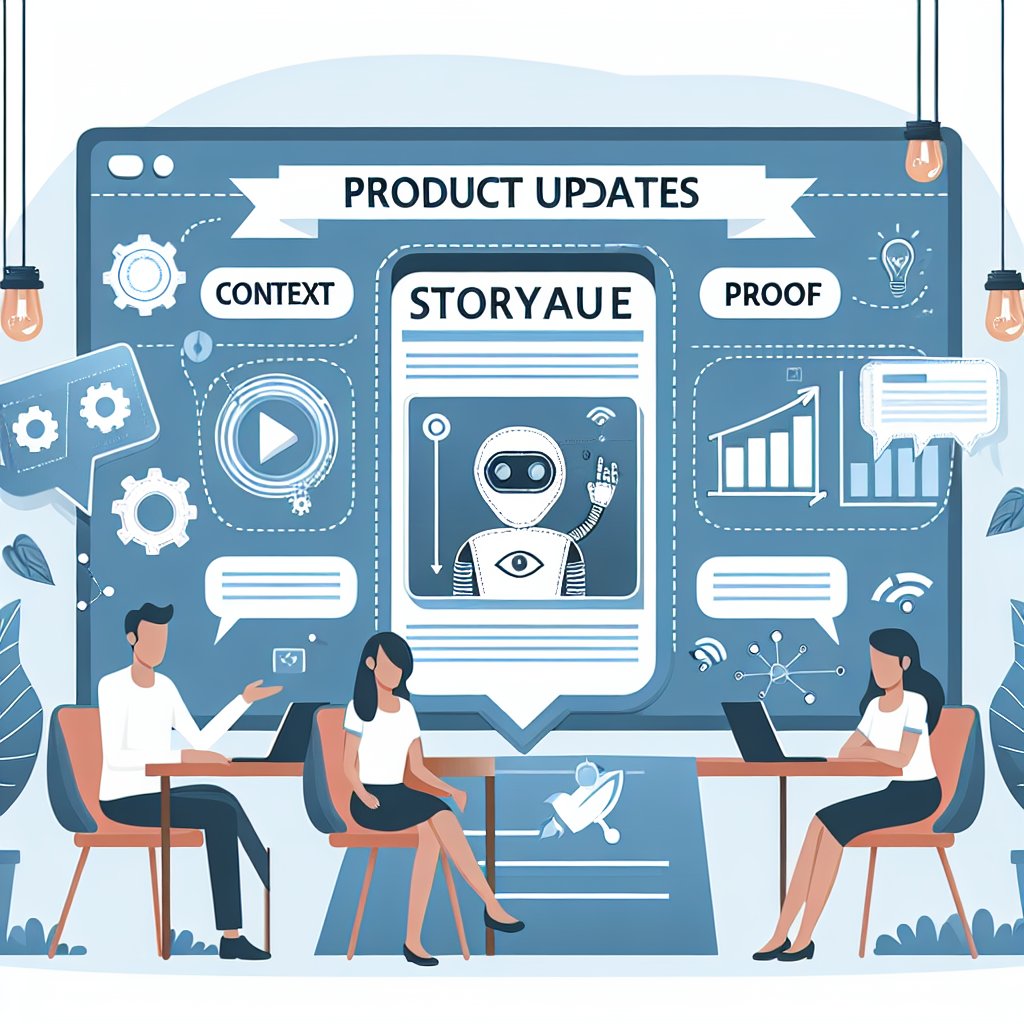


Product updates are not just lists of tweaks. The best announcements translate what changed into what users can do differently today, and why it matters for their goals, workflows, and trust.
Most product update posts fail for a simple reason: they speak like an internal ticketing system. Users do not care that a component was refactored or that a new setting exists. They care about outcomes. Can they reply faster, book more appointments, reduce errors, or stop losing leads? A strong product update announcement is a narrative that links improvements and new features to measurable changes in behavior and results.
This matters even more in messaging-first businesses where customer expectations are immediate and unforgiving. If your team sells, supports, and schedules through WhatsApp, Instagram, Telegram, Facebook Messenger, and web chat, each change can shift response speed, lead conversion, and customer satisfaction. Platforms like Staffono.ai operate in that environment every day, where releasing improvements is not just shipping code, it is protecting revenue and credibility across multiple channels.
A product update is a promise renewal. Every time you change something, you ask customers to keep trusting your product with their work. That means an update needs to answer three practical questions:
If you skip the “why,” you create uncertainty. If you skip the “what should I do now,” you create friction. And if you skip both, you create rumors, support tickets, and churn.
Internally, teams often categorize releases by engineering effort. Externally, users categorize releases by disruption and value. Consider framing changes in one of these user-centric buckets:
Your post can include all three, but each requires different proof. Announcements need clarity and timelines. Improvements need before-and-after context. New features need examples and a quick path to first success.
“We listened to your feedback” is not a reason. It is a vague claim. A credible “why” includes one of the following:
For example, if you run a lead intake funnel through messaging, a “why” could be: “We saw that leads dropped when teams asked the same questions multiple times across channels. We redesigned the intake flow to capture required fields once and reuse them across WhatsApp and web chat.” That is legible and defensible.
When you write your next release post, structure each item like a mini-case study:
Describe the problem in user language. Mention the moment it appears in the workflow.
Describe what is new or different. Avoid jargon. If there is a setting or new screen, say where it lives.
Explain how it changes outcomes. Use a metric when possible, even if it is directional (fewer steps, faster response, less rework).
Tell users exactly what to do. If nothing is required, say that explicitly.
This format scales from small improvements to major launches. It also helps internal teams align on what “done” means: not shipped, but usable and adopted.
Below are examples you can adapt for your own release notes. They show how to connect change to user outcomes without overexplaining.
Context: Teams missed messages when a customer switched from Instagram to WhatsApp mid-conversation, creating duplicate threads and slower replies.
Change: Conversation identity now follows the customer across connected channels, and the inbox merges related threads automatically.
Why: Cross-channel fragmentation caused delayed responses and inconsistent answers.
Impact: Faster resolution, fewer handoffs, and clearer accountability for sales and support.
Next step: No action needed. If you want more control, adjust merge rules in inbox settings.
This is exactly the type of operational improvement businesses use Staffono.ai for, because a unified messaging workflow is the foundation for 24/7 AI employees to handle questions, qualify leads, and book appointments without losing context.
Context: Appointment-based businesses lose revenue when customers forget, no-show, or arrive with missing details.
Change: Automated confirmations, reminders, and pre-visit questions can now be triggered via WhatsApp, Telegram, and web chat.
Why: Manual follow-ups are costly and inconsistent, especially outside business hours.
Impact: Higher show-up rates and fewer last-minute cancellations, plus better preparation data for the team.
Next step: Enable the reminder workflow and choose timing (for example, 24 hours and 2 hours before).
If your business uses Staffono.ai to manage bookings, this kind of update is not just convenience. It can directly reduce missed revenue by ensuring every lead and customer gets a timely, consistent follow-up even when the office is closed.
Some changes are controversial: UI adjustments, renamed features, removed options, pricing packaging, or stricter security. Avoid defensive language and focus on decision quality. A good explanation includes:
For instance, if you change how message templates are approved across WhatsApp, say so plainly: the platform requirement changed, here is what you need to update, here is what stays the same, and here is how you can test it. Users can accept bad news when it comes with clarity and a path forward.
Publishing a changelog is not distribution. You need an audience-aware rollout plan based on urgency and audience segments:
Messaging distribution is often overlooked. If your customers engage through WhatsApp or Instagram, a short, well-timed message can outperform an email blast. With Staffono.ai, businesses can automate customer notifications across channels and still keep the tone consistent, including routing “I have a question” replies to the right workflow or human teammate.
“Shipped” is not a success metric. Tie every meaningful update to at least one adoption and one outcome metric:
Then close the loop in your next update: “Last month we launched X. Since then, teams using it are responding 18 percent faster and booking 12 percent more consultations.” This turns your release stream into an evidence-based story, not a parade of features.
A strong product update is an operational tool. It reduces confusion, accelerates adoption, and helps customers see the compounding value of staying with your product. When you treat announcements as narratives tied to outcomes, you also make your internal roadmap clearer: every change must defend its “why” and prove its impact.
If your updates touch customer communication, lead capture, or scheduling, consider how automation can amplify the benefits. Staffono.ai helps businesses deploy 24/7 AI employees that respond instantly, qualify leads, and manage bookings across WhatsApp, Instagram, Telegram, Facebook Messenger, and web chat. When you pair thoughtful release communication with reliable automation, improvements do not just exist, they get used. Explore Staffono.ai to see how automated messaging workflows can make every product change translate into faster service and more revenue.