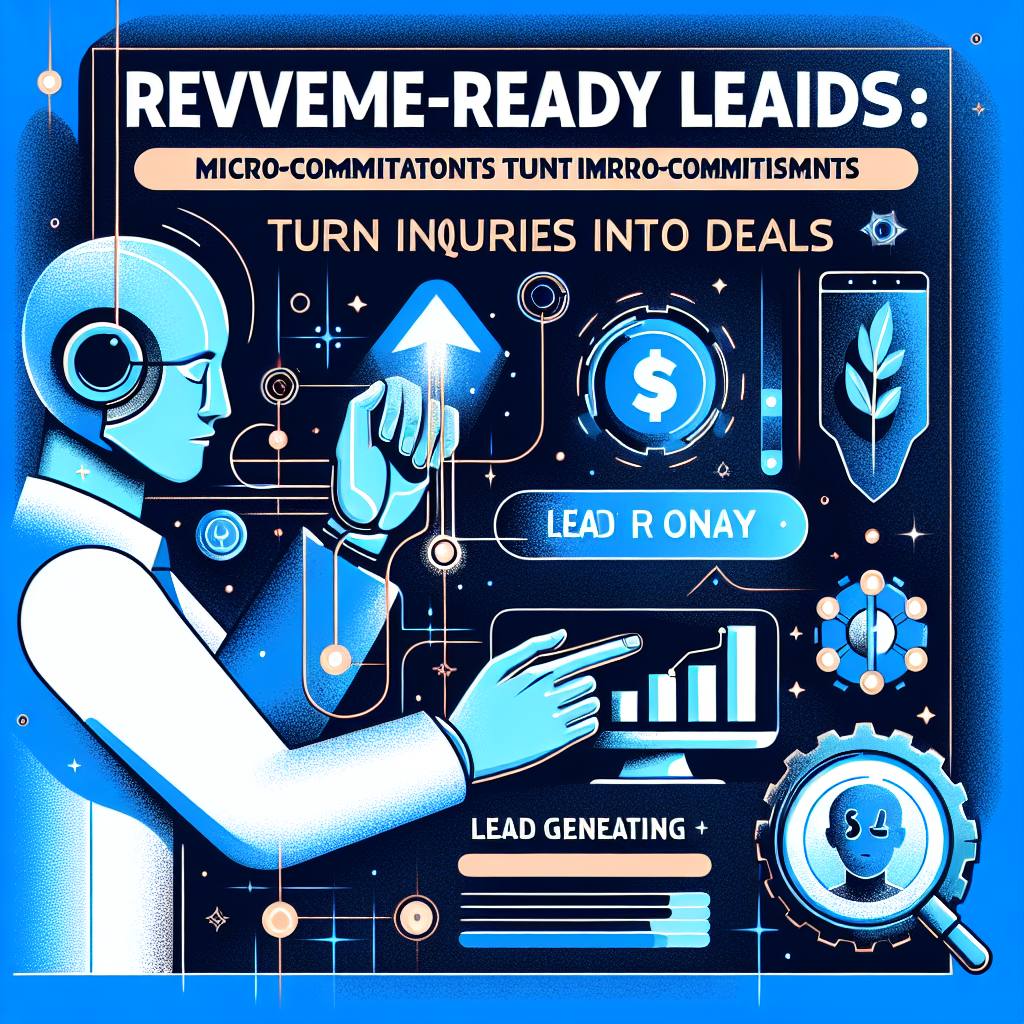


Most lead gen advice focuses on getting more names, but the real leverage comes from what happens in the first minutes and first messages. This guide shows how to capture leads in the channels they already use, qualify them with lightweight scoring, and convert with a follow-up system that feels helpful, not pushy.
Lead generation and sales often break down for a simple reason: teams treat “getting leads” and “closing deals” as separate activities. In reality, the moment a lead appears is the moment your sales process begins. The channel, the first question, the speed of response, and the next step you offer are all part of conversion.
This article is a practical workshop-style playbook for building a revenue-ready lead system. You will learn how to capture leads where intent is highest, qualify them without adding friction, and convert them with structured follow-up across messaging channels, email, and calls. Along the way, we will highlight how Staffono.ai (https://staffono.ai) can act as a 24/7 AI employee to handle first response, qualification, scheduling, and handoff across WhatsApp, Instagram, Telegram, Facebook Messenger, and web chat.
“More leads” is not a strategy. A good lead is one that matches your ideal customer profile and has a measurable reason to buy now. Before you tune ads, funnels, or outbound, define three elements:
Write these into a one-page “lead definition” and share it with marketing and sales. This becomes the foundation for qualification questions, routing rules, and your lead scoring model.
Forms still work, but in many industries the highest-intent prospects prefer messaging. They are already on WhatsApp or Instagram, and they want a fast answer before they commit to a call or a long form. Instead of forcing a single path, create multiple entry points with consistent tracking.
Whatever the entry point, make the first interaction easy. The goal is not to “sell” immediately. The goal is to identify intent and guide the person to the next best step.
Staffono.ai is useful here because it can be present on multiple messaging channels at once, responding instantly and consistently. Instead of losing leads overnight or during busy hours, you can capture and qualify them 24/7, then route hot opportunities to a human closer.
The fastest way to kill a lead is to ask for too much too soon. The best first message does three things: acknowledges the request, offers a quick path, and asks one simple question.
For service businesses: “Thanks for reaching out. I can help with pricing and availability. What service do you need and what city are you in?”
For B2B: “Glad you messaged. To point you in the right direction, are you looking for a solution for a team, or just for yourself?”
For education or training: “Happy to help. Are you looking for weekdays or weekends, and what level are you starting from?”
Notice what is missing: long paragraphs, attachments, and immediate meeting links. You are building momentum. Once they answer, you can qualify further and propose a next step that fits their intent.
Qualification does not need to feel like an interrogation. Keep it conversational and use a small set of questions that map to your “good lead” definition. Four signals typically predict conversion:
In messaging, you can gather these signals in two to five short exchanges. If the lead is not ready, your goal shifts: capture contact details, offer a helpful resource, and set a follow-up reminder instead of pushing for a call.
Lead: “How much for a website?”
Reply: “It depends on the type. Is it a simple site, an online store, or something custom?”
Lead: “Online store.”
Reply: “Got it. Roughly how many products, and do you need payments and delivery integrations?”
Now you have scope signals. Next, you can ask timing: “When do you want to launch?” and authority: “Will you be the person approving the final decision?”
Staffono.ai can run this kind of qualification automatically, using your preferred questions and branching logic. It can also tag the lead based on answers, for example “ecommerce, 50-200 products, launch in 30 days,” and pass that context to your sales team so the first human call is sharper.
Most lead scoring fails because it is too complex. Keep it lightweight and transparent. Use a 0-100 score with three components:
Then create three routing bands:
The scoring model is only valuable if it changes behavior. Your team should know exactly what happens at each score band.
Leads stall when the next step is vague. “Let me know if you have questions” is a conversion killer. Replace it with a specific offer that reduces effort for the buyer.
These work because they feel like help, not pressure. They also create micro-commitments that move the deal forward.
Most revenue is won in follow-up, but most follow-up is either too aggressive or too passive. A simple cadence across channels works well:
The secret is context. Reference what they asked, what they cared about, and what step they were considering. That is why capturing structured notes in the first interaction matters so much.
This is also where Staffono.ai can reduce workload. Instead of relying on manual reminders, Staffono can automate follow-up sequences in the same channel the lead used, keep the conversation history, and escalate to a human when the lead shows buying signals like “price,” “book,” “available,” or “send contract.”
Imagine a clinic running Instagram ads for a popular service. Leads DM: “How much?” “Is it safe?” “Do you have slots this week?” If the clinic replies hours later, the lead books elsewhere.
A revenue-ready workflow looks like this:
With Staffono.ai acting as a 24/7 AI receptionist across Instagram and WhatsApp, the clinic can handle peaks in demand, reduce missed inquiries, and keep staff focused on in-person service.
You do not need a dashboard with 50 charts. Track five metrics weekly:
When one metric drops, you know where to fix the process. For example, a strong meeting rate but low show rate usually means the confirmation and reminders need improvement, or the next step is not valuable enough.
A revenue-ready lead engine is not a single tactic. It is a set of connected behaviors: capture in high-intent channels, respond instantly, qualify with minimal friction, score leads so you can prioritize, and follow up with context until the buyer decides.
If you want to implement this without hiring a larger team, Staffono.ai (https://staffono.ai) can serve as an always-on AI employee across WhatsApp, Instagram, Telegram, Facebook Messenger, and web chat, handling first response, qualification, bookings, and handoff to sales. When your system answers fast and stays consistent, leads stop leaking and revenue becomes more predictable.