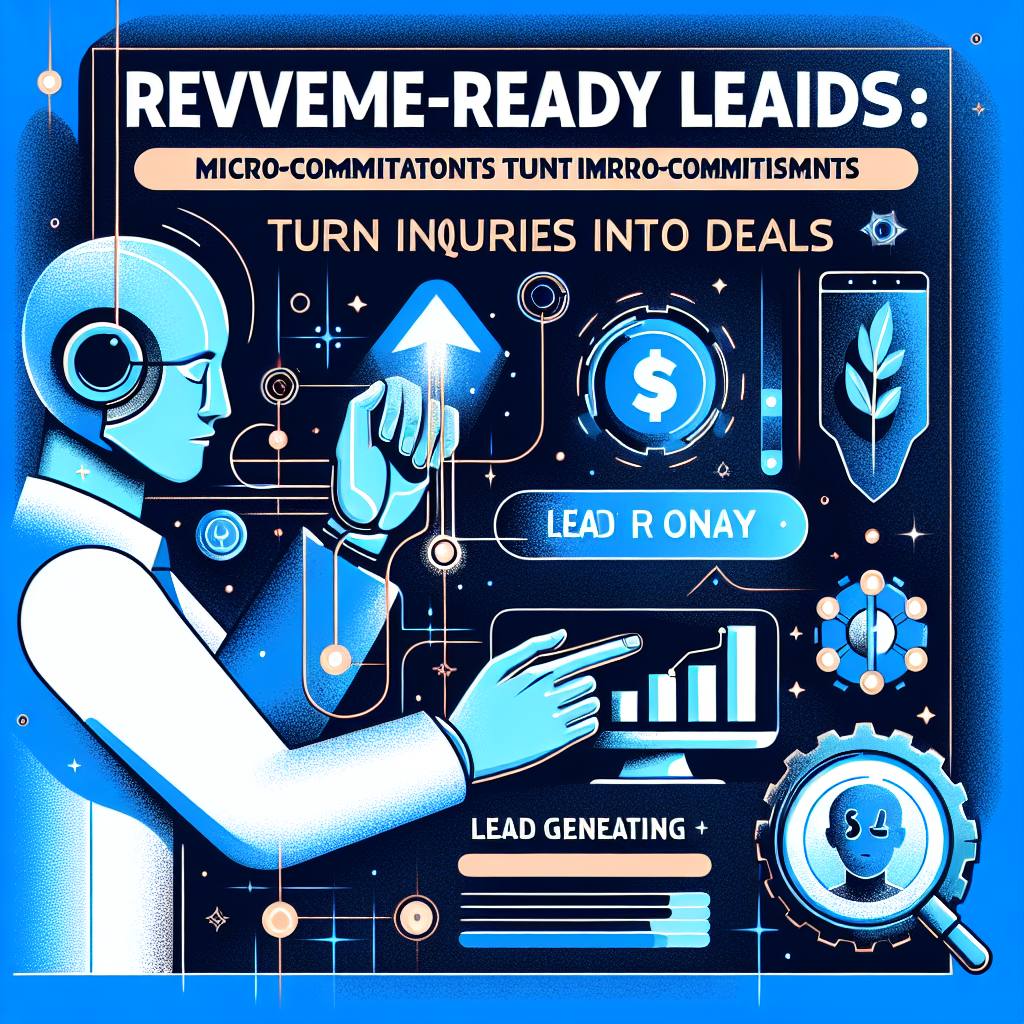


Lead generation is not a volume game anymore, it is a control system. This guide shows how to build a measurable loop that captures intent, qualifies fast, and converts consistently across messaging, calls, and follow-ups.
Most teams treat lead generation and sales as a linear path: run ads, collect contacts, push for a call, then hope the pipeline closes. In reality, modern buying behavior is messy. Prospects bounce between channels, ask questions at midnight, disappear after pricing, return a week later from a different device, and expect replies that feel immediate and personal.
The fix is not “more leads.” The fix is a lead-to-revenue control loop: a repeatable system that continuously senses intent, routes the lead to the right next step, and learns from outcomes. When you build this loop, you spend less time chasing ghosts and more time having real sales conversations with people who are ready.
A funnel implies one-way flow. A control loop assumes you measure signals, act, and then adjust based on feedback. In lead gen and sales, the key signals are:
Your job is to capture these signals early and use them to choose the next best action. This is where messaging-first automation becomes a competitive advantage, because most signals are revealed in chat long before a lead agrees to a call.
Capturing leads is not just collecting emails. It is creating micro-moments where a prospect can ask a question with low effort and get a useful response. The best capture systems do two things: reduce friction and increase clarity.
Instead of “Download our brochure,” use entry points that match what buyers are already trying to solve:
These offers attract fewer tire-kickers because they require context. They also start the qualification process immediately.
Many prospects prefer WhatsApp, Instagram DMs, Telegram, or Facebook Messenger over forms. If your ads or website push everyone into a form, you are forcing friction where the buyer expects conversation.
Staffono.ai (https://staffono.ai) is useful here because it can capture and respond to leads across multiple messaging channels and web chat with 24/7 AI employees. Instead of losing after-hours inquiries, you can greet, answer key questions, and collect the details needed to qualify, even while your team sleeps.
Early capture should ask for only what is required to route the lead correctly. A practical minimum set is:
Everything else should be collected progressively as trust builds. Progressive profiling keeps conversion rates high at the top while still producing sales-ready profiles later.
Qualification fails when it feels like a form disguised as a conversation. The goal is to diagnose needs and readiness while delivering value in each message.
Instead of asking ten questions, use three layers that adapt based on answers:
This approach qualifies without stalling. It also respects different buying styles: some want details first, others want to talk immediately.
Lead scoring should be explainable. A simple scoring model that works across industries:
Assign small point ranges and define actions per tier. Example:
When you do this, your sales team spends time where conversion probability is highest.
Objections are often missing information. Common categories:
Build short responses for each category that include one proof point and one question. Example for price: “Totally fair. Most customers look at payback time. If I estimate your current manual workload at X hours per week, would saving Y hours be meaningful for you?”
With Staffono.ai, these objection-handling responses can be standardized and delivered consistently across channels, while still feeling conversational. Your AI employee can collect the missing data and route true sales opportunities to a human rep when the lead is ready for a deeper discussion.
Conversion is not persuasion, it is removing uncertainty. The most effective systems create momentum through clear choices, fast scheduling, and follow-up that feels helpful rather than pushy.
Not everyone wants a call. Give two conversion paths:
The key is to keep both paths moving. “Let me know if you have questions” kills momentum. Replace it with a specific next action: “If you tell me your team size and goal, I will recommend the best option and share a price range.”
Prospects trust stories that match their situation. Build a small library of proof snippets by segment:
In chat, keep proof short and relevant. One paragraph beats a PDF no one reads.
Every extra step reduces bookings. Best practices:
Staffono.ai can automate booking workflows inside messaging channels so a lead can pick a time without switching apps, and your team receives a clean summary of context before the call.
Most revenue is not lost to competitors. It is lost to silence. A follow-up system should be multi-channel, time-bound, and value-driven.
Instead of “Just checking in,” send something useful:
Each follow-up should end with a low-friction question that advances the deal: “Which of these two options is closer to what you want?”
Automation helps here because consistency is hard when humans are busy. Staffono.ai can run these sequences across WhatsApp, Instagram, Telegram, Messenger, and web chat, while escalating hot replies to your team instantly.
To improve lead-to-revenue performance, track metrics that map to control points:
When one metric drops, you know where to adjust. For example, if booking rate is high but show rate is low, you likely need better reminders, clearer agendas, or better time options.
Imagine a local service business that gets leads from Instagram and Google. A prospect messages at 10:30 pm asking “How much does it cost?” The system should:
This is the lead-to-revenue control loop: capture intent, qualify with minimal friction, convert with clear choices, then measure and improve.
If you want this running around the clock across your messaging channels, Staffono.ai (https://staffono.ai) can act as a 24/7 AI employee that captures inquiries, asks the right qualifying questions, books meetings, and hands your team a clean summary so humans can focus on closing. The result is fewer missed opportunities, faster response times, and a pipeline built on real buyer intent.