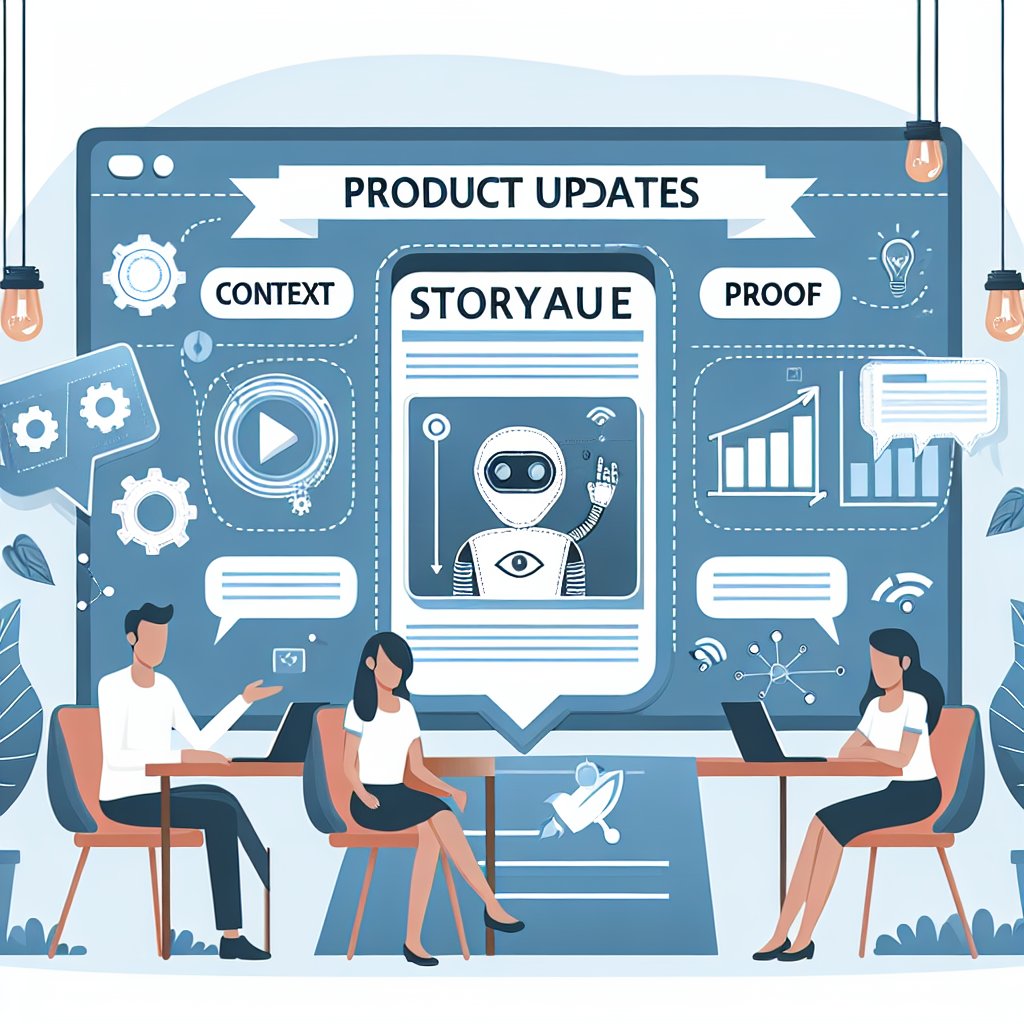


Product updates are not just news, they are a workload shift for customers, support, and sales. This guide shows how to announce improvements and new features in a way that reduces confusion, prevents ticket spikes, and drives real adoption across your messaging channels.
Most teams treat product updates as a publishing task: write notes, hit send, move on. Customers experience something very different. An update changes what they click, what they trust, how they explain the product internally, and how quickly they can complete a task. If your announcement does not answer the practical questions people have in the moment, they will ask support, stop using the feature, or create workarounds.
This article is about a specific outcome: product update communication that reduces support tickets while increasing usage of what you shipped. We will cover what changed and why, but also how to package that story so it works in real life across email, in-app, and messaging channels like WhatsApp and Instagram. Along the way, we will use examples and show where automation platforms like Staffono.ai (https://staffono.ai) can help you deliver update messages consistently and capture feedback without adding headcount.
Ticket spikes are usually not caused by bugs alone. They are caused by mismatched expectations. Customers read “New: Faster onboarding” and assume they can do it in one minute, then hit a new permission screen and get stuck. Or you deprecate a setting and people do not understand where it went. The update may be objectively positive, but the communication did not set the right mental model.
Three common triggers:
The fix is not longer release notes. The fix is structured messaging that anticipates where confusion will happen and resolves it upfront.
Changelogs list what shipped. Customers need to know how their day changes. A support lead naturally thinks in scenarios: what will break, what will people ask, what screenshots will we need, what permission will block them. Borrow that mindset and your update announcements will start preventing tickets instead of generating them.
Use this structure for each meaningful change, even if you ship multiple items:
Notice what is missing: internal implementation details. Customers do not need to know you refactored a service. They need to know where the button moved and why.
Weak update: “Bookings are now faster and more reliable.”
Ticket-reducing update: “What changed: We added an availability confirmation step before the final booking message. Why: it prevents double-booking when two customers request the same slot. Who it affects: teams using WhatsApp and web chat bookings. What to do: nothing if you already share availability, but if you use manual confirmation, you can now turn it off in Settings - Bookings. What to expect: the confirmation step appears only when a slot is within the next 48 hours.”
This version answers the question customers will ask support: “Why do I see an extra step?” It also makes the improvement feel intentional, not random.
Analytics updates often fail because they describe widgets, not decisions. Instead, anchor the announcement to the job to be done.
“What changed: The Leads dashboard now shows first response time by channel (WhatsApp, Instagram, Telegram, Messenger, web chat). Why: response speed is strongly correlated with conversion in messaging-led sales. What to do: set a target per channel and assign owners. What to expect: historical data will populate over 24 hours.”
If you are using Staffono.ai, this is also where you can mention automation naturally: “If your team struggles to meet response targets, Staffono.ai can handle first responses and qualification 24/7 across these channels, then route only sales-ready conversations to humans.” That is relevant to the workflow the dashboard is meant to improve.
Many teams default to email. But product updates behave differently depending on whether they change behavior immediately or simply add optional value.
If you sell or support through messaging, proactive messages matter. A short WhatsApp note that says “Your booking confirmation step changed, here is why” can prevent dozens of “Is this a bug?” questions.
Staffono.ai (https://staffono.ai) is designed for that multi-channel reality. You can automate update delivery through the same channels customers already use, and you can ensure replies are handled immediately with consistent explanations, links, and escalation rules.
Teams often say “We shipped X” without defining what success looks like. Customers then cannot tell whether the change is worth adopting. Add a measurable promise to the narrative.
Examples:
Then measure the same thing internally. If the metric does not move, the product might be fine but the communication might be failing. For instance, feature usage may be low because users did not understand the new default behavior.
A high-performing update announcement includes a micro-FAQ that mirrors the top questions support will get in the first week. Keep it short and honest.
If you want to go one step further, set up automated replies for these FAQs in the channels where customers ask them. With Staffono, you can create an AI employee that recognizes “Where is the old setting?” and responds with the exact steps, plus a screenshot link, and escalates only if the user is on a custom plan or has an unusual configuration.
Phased rollouts reduce risk, but they can increase confusion if customers talk to each other. If only 20 percent of accounts see the new UI, your announcement must say so.
Include:
This one paragraph prevents support tickets like “My colleague has it but I do not.”
The best update announcements invite feedback in a controlled way. Instead of “Let us know what you think,” use a single focused question tied to the change.
Examples:
Then route responses to the right place. Positive feedback can become a testimonial. Confusion can become a documentation fix. Bugs can become urgent tickets. Staffono.ai can help by classifying incoming replies automatically, tagging sentiment and intent, and pushing structured summaries to your team so you do not drown in unorganized messages.
When you communicate updates this way, you do more than inform customers. You protect their habits, reduce confusion, and make adoption the default outcome.
If your updates need to reach customers where they actually talk to you, and you want replies handled instantly without overloading support, Staffono.ai (https://staffono.ai) can help. With 24/7 AI employees across WhatsApp, Instagram, Telegram, Facebook Messenger, and web chat, you can announce changes, answer predictable questions, qualify feature-interest leads, and escalate the few cases that truly need a human, all while keeping your messaging consistent and measurable.