
Great customer messaging is less about clever words and more about consistent calibration: the right intent, the right moment, and the right level of detail. This guide gives you a practical framework, ready-to-use templates, and channel-specific best practices you can apply today across WhatsApp, Instagram, web chat, and more.
Most teams think “better messaging” means writing prettier replies. In reality, customers reward something simpler: messages that land at the right moment, answer the real question, and make the next step obvious. When messaging breaks down, it rarely happens because your team cannot write. It happens because your conversations are out of tune.
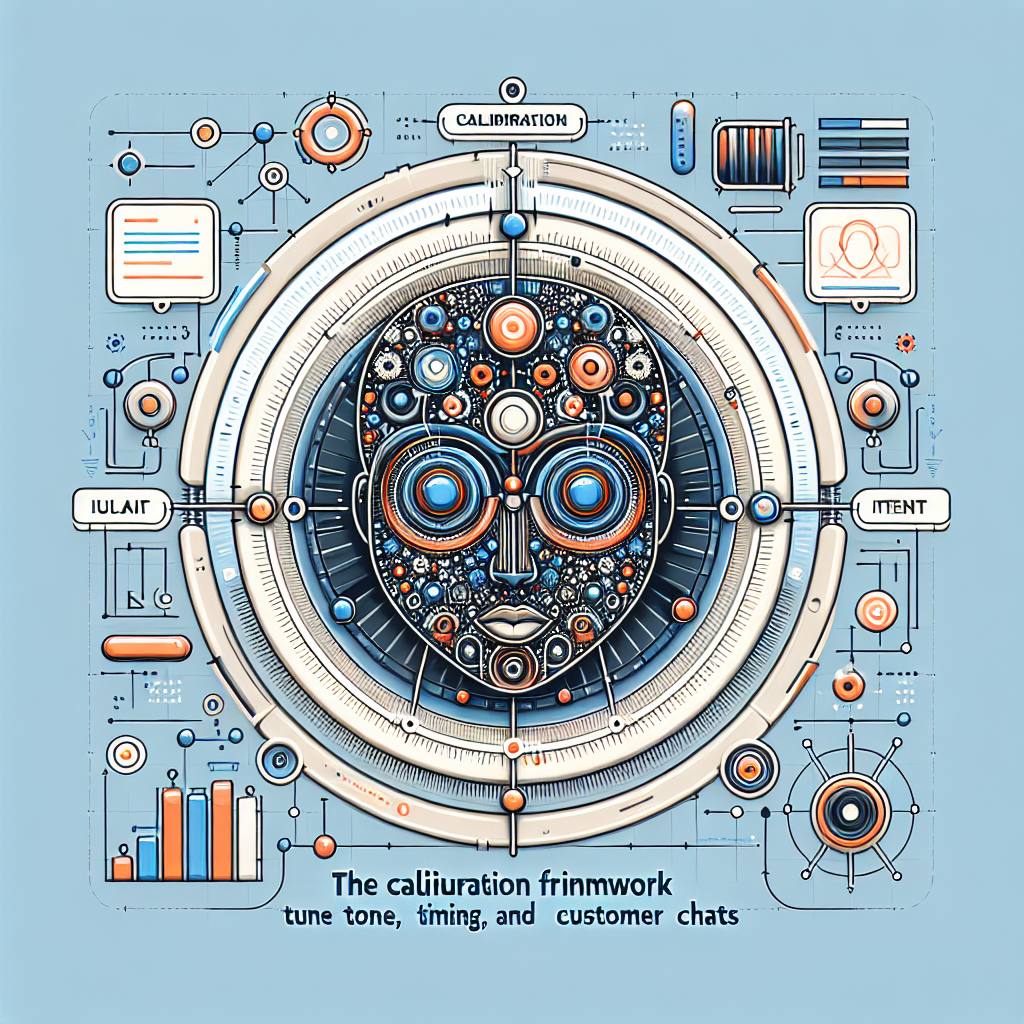
This article introduces a Messaging Calibration Framework you can use to tune three variables across every customer conversation: intent (what the message must accomplish), timing (when it should be sent), and detail (how much information is enough). You will also get templates and best practices that work across channels, plus ways to scale quality using tools like Staffono.ai (https://staffono.ai), which provides 24/7 AI employees to handle customer communication, bookings, and sales across WhatsApp, Instagram, Telegram, Facebook Messenger, and web chat.
Calibration is the discipline of matching your message to the customer’s context. Two companies can send the same words and get different results because the customer’s stage, urgency, and expectations differ.
Calibrated messaging aligns four things:
When you calibrate consistently, you reduce back-and-forth, speed up decisions, and preserve trust even when you cannot say “yes.”
Every outgoing message should have a primary job. If you try to do three jobs at once, you create confusion. Common intents include:
Quick check before you hit send: “If the customer only reads this message, do they know what to do next?”
Customers want fast replies, but they want the right fast. Timing includes response speed, follow-up cadence, and when to escalate. A good timing system uses:
Platforms like Staffono.ai help because an AI employee can respond instantly 24/7, acknowledge the request, gather key details, and either complete the task (like booking) or route to a human with the context already captured.
Too little detail triggers more questions. Too much detail causes customers to skim and miss the action. Calibrated detail looks like:
Example: instead of listing 12 service packages, ask two qualifiers and then present the best two options.
Mini-template: “Got it, [Name]. I can help with that. Which do you prefer: [Option A] or [Option B]?”
Mini-template: “Thanks for reaching out! Are you looking for [use case 1] or [use case 2]? I will point you to the best option.”
Staffono.ai is especially effective on web chat because it can handle high-volume repetitive questions, collect structured inputs, and push the conversation toward booking or purchase without forcing customers to repeat themselves.
Replace brackets with your details. These templates are designed to be calibrated: clear intent, right level of detail, and a visible next step.
“Hi [Name], thanks for messaging! I can help. To recommend the best option, can you share: (1) [key qualifier], (2) [key qualifier]? If it is easier, tell me your goal in one sentence.”
“Happy to share pricing. It depends mainly on [variable]. Are you looking for [basic outcome] or [premium outcome]? Once I know that, I can give the exact range and the best next step.”
“I can book this for you. What works better: [Day/time window A] or [Day/time window B]? If you share your phone number and email, I will send the confirmation immediately.”
“Quick check, [Name]. Do you want me to reserve [option] for you, or would you prefer an alternative? I can hold it until [time].”
“Thanks, I have the details. I am looping in a specialist to confirm [topic]. You will hear back by [time]. If anything changes meanwhile, reply here and I will update the request.”
“You are right to flag this, and I am sorry for the trouble. Here is what I am doing now: [step 1], [step 2]. You will have an update by [time]. If you prefer, we can also [compensation or alternative].”
Instead of asking open-ended questions, offer two clear paths. Customers respond faster when they can choose rather than compose.
Example: “Do you need delivery today or tomorrow?” beats “When do you need delivery?”
After a customer agrees, send a recap. It reduces errors and makes the customer feel guided.
Example recap: “Confirming: [service], [date/time], [price], [location]. Next step: I will send the payment link.”
Consistency should cover policy, pricing logic, and promises. Personalization should cover names, context, and the customer’s goal. This is where many teams benefit from automation: Staffono.ai can enforce consistent policy language while still sounding natural, using the customer’s inputs and channel context.
List your top inquiries (pricing, availability, refunds, rescheduling, product fit, onboarding). For each, define:
Automate FAQs, lead qualification, booking, reminders, and status updates. Keep humans for nuanced negotiations, complex complaints, and high-value accounts. With Staffono.ai, many businesses run a hybrid model: an AI employee handles initial capture and common flows around the clock, then hands off with a clean summary when human judgment is required.
Imagine a local clinic receiving 60 Instagram DMs per day: “How much is it?” “Do you have Saturday?” “Is it painful?” The uncalibrated approach is long explanations, slow replies, and missed follow-ups. A calibrated approach is:
Using Staffono.ai, the clinic can automatically ask two qualifiers, share compliant info, offer available slots, and confirm bookings 24/7. Staff gets fewer interruptions, and customers get immediate clarity.
Customer messaging becomes a growth lever when you treat it like a system you can tune. Calibrate intent so every message has one job. Calibrate timing so your responsiveness matches customer urgency. Calibrate detail so customers can decide quickly without feeling rushed.
If you want to apply these strategies without adding headcount, Staffono.ai (https://staffono.ai) can act as a 24/7 AI employee across WhatsApp, Instagram, Telegram, Facebook Messenger, and web chat, handling inquiries, bookings, and sales conversations while keeping your tone consistent. When you are ready, you can start by automating just one high-volume scenario, then expand as you see faster replies, fewer repeated questions, and more booked revenue.