
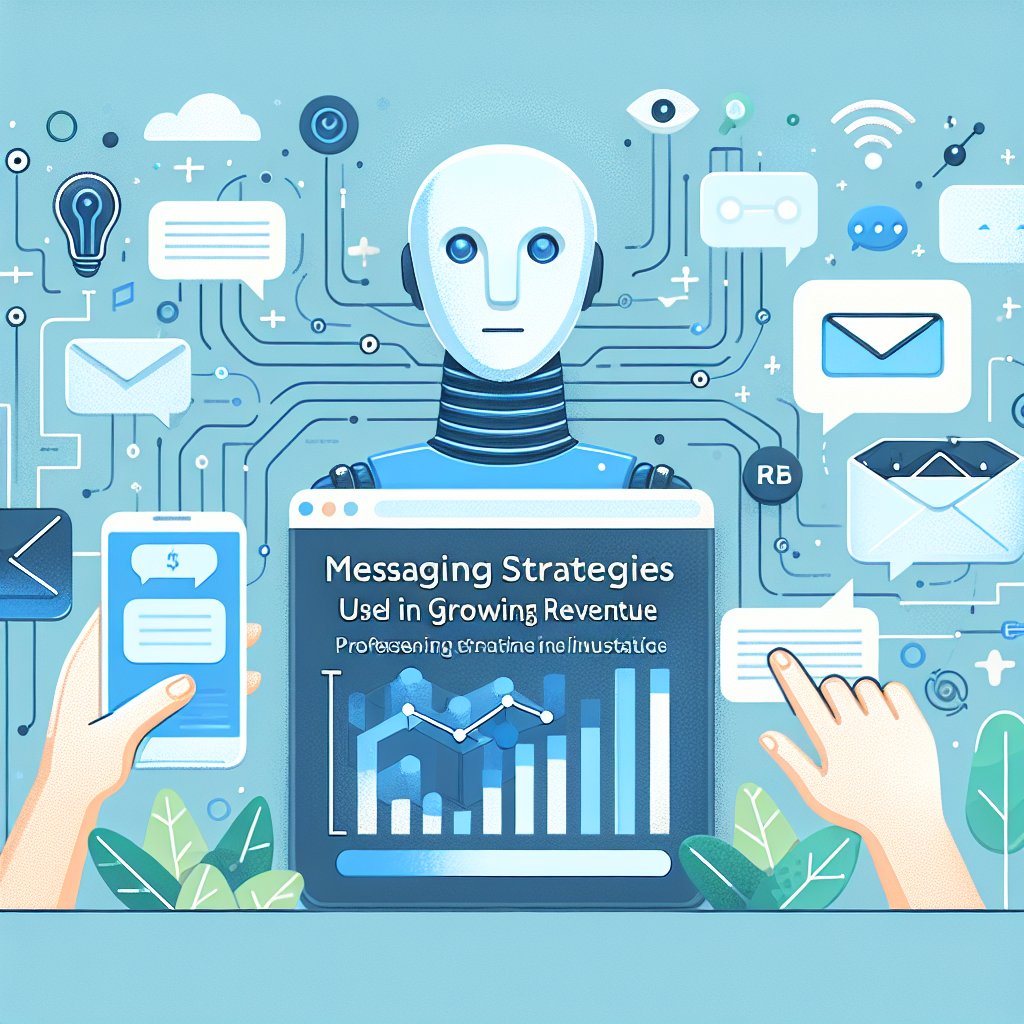
Customer messaging is not just about replying fast, it is about guiding people from confusion to clarity with minimal effort. This guide shares practical strategies, ready-to-use templates, and best practices to improve trust, shorten resolution time, and increase conversions across chat channels.
Messaging has become the front door of modern business. Customers ask questions while commuting, comparing options late at night, or standing inside your store. They expect the conversation to feel effortless, consistent, and helpful, whether they reach you on WhatsApp, Instagram, Telegram, Facebook Messenger, or web chat.
The challenge is that great messaging is not “being friendly” or “replying quickly.” It is designing conversations that remove friction: fewer follow-up questions, fewer misunderstandings, and faster decisions. When you do that well, customer support costs drop, satisfaction rises, and sales lift because people do not stall.
Below are strategies, templates, and best practices you can apply immediately, plus ways AI automation platforms like Staffono.ai can help you deliver consistent, 24/7 customer messaging across channels without losing your brand voice.
Strong customer messaging consistently achieves three outcomes:
Speed matters, but speed without clarity creates loops: “Can you explain?” “Which plan is that?” “How do I book?” Your goal is to reduce loops by anticipating the next question and answering it before it is asked.
Most businesses write messages around internal structure: sales, support, billing. Customers do not think that way. They message you in a moment: evaluating, stuck, anxious, excited, in a hurry. Your messaging should match that moment.
Platforms like Staffono.ai can be trained to detect intent from the first line and route the conversation into the right flow automatically, so the customer gets the right style of help instantly, even outside business hours.
Customers scan. Put the conclusion first, then details.
Instead of: “Our delivery depends on location and stock…”
Use: “Yes, we can deliver tomorrow. If you share your area and preferred time window, I will confirm the earliest slot.”
If you need three pieces of information, ask for them together, with examples.
Example: “To confirm your booking, please share: 1) preferred date and time, 2) service address, 3) phone number (or WhatsApp number).”
Open-ended questions create delays. Give options.
Better: “Do you prefer 11:00-13:00 or 15:00-17:00?”
Every conversation should end with a clear next action.
Example: “If that works, reply ‘Confirm’ and I will reserve the slot and send the details.”
Break long messages into short paragraphs, bullets, and simple labels like “Price,” “Timing,” “What you get.” This is especially important on mobile.
These templates are designed to reduce back-and-forth. Customize the brackets and keep the structure.
Template:
“Hi [Name], thanks for reaching out. I can help with that. To point you to the best option, are you looking for [Option A] or [Option B]? If you share [one key detail], I will confirm pricing and the next step.”
Template:
“Quick question so I recommend the right fit: are you mainly trying to [Goal 1] or [Goal 2]? Also, what is your timeline, this week or later?”
Template:
“For [Service], pricing is typically [Range]. Final cost depends on [2 variables]. If you share [detail], I will confirm the exact price and what is included.”
Template:
“Great, I can book that. Please confirm: [Date], [Time], [Address]. Once you reply ‘Confirm,’ I will reserve it and send the confirmation message.”
Template:
“Thanks for your message. We are handling a high volume right now. I can get you an answer by [time]. If this is urgent, reply with ‘Urgent’ and a one-line summary, and I will prioritize it.”
Template:
“You are right to flag this, and I am sorry for the inconvenience. Here is what I can do today: [Option 1] or [Option 2]. Which do you prefer? If you share [order/reference], I will apply it immediately and confirm once done.”
Because customers bounce between channels, consistency is hard manually. Staffono.ai supports multichannel messaging, helping teams keep the same tone and logic across WhatsApp, Instagram, Telegram, Messenger, and web chat while maintaining context.
You do not need a massive playbook to improve results. Start with a simple system:
With Staffono.ai, you can turn these intents into automated workflows handled by AI employees that ask for the right fields, synchronize with booking processes, and escalate to a human when the case is complex. That means your team focuses on edge cases, not repetitive chats.
Response time is only one metric. To improve revenue and satisfaction, track:
When you see drop-offs after pricing, you may need better framing. When you see long threads for booking, you likely need to collect details in one turn.
If you want a reliable baseline for almost any business, use this flow:
Once you have these pieces, scale becomes the next challenge: keeping quality consistent across shifts, channels, and busy periods. That is where AI employees can make a direct business impact. If you want to deliver fast, on-brand messaging 24/7 and automate bookings and sales conversations across WhatsApp, Instagram, Telegram, Messenger, and web chat, Staffono.ai is built for exactly that. Start by automating one high-volume intent, measure the lift, then expand from there.