
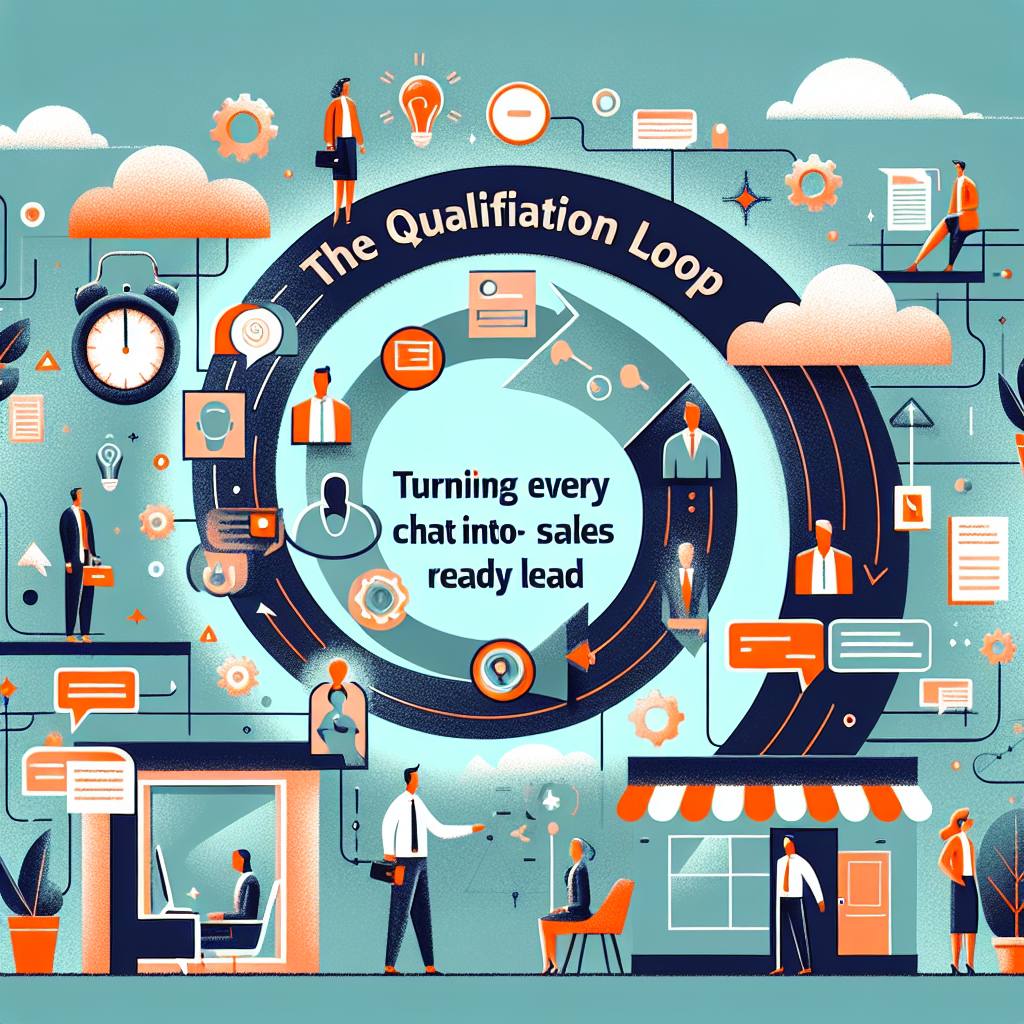
Lead generation is no longer about collecting as many contacts as possible. The winners build a qualification loop that captures intent, verifies fit, and moves qualified buyers forward in minutes, not days.
Most lead generation advice still assumes a linear funnel: run ads, collect forms, call everyone, hope a few buy. In reality, modern buyers move in loops. They discover you on Instagram, ask a question on WhatsApp, disappear, return via web chat at midnight, then expect your team to remember everything. If you treat each touchpoint as a standalone lead, you create duplicates, delays, and lost context. If you treat it as a loop, you turn scattered messages into a single, guided journey.
This article breaks down a practical system to capture, qualify, and convert leads into revenue using a “qualification loop” mindset. You will learn how to design entry points that increase response rates, ask the right questions without scaring people off, and move qualified buyers toward a clear next step. Along the way, you will see where AI automation fits naturally, especially when your leads arrive across multiple messaging channels and outside business hours.
A qualification loop is a repeatable sequence that happens every time a prospect messages you, no matter the channel:
The loop matters because prospects rarely convert in a single session. Your job is to make every session improve the next one with better data, better routing, and more relevant offers.
Forms still work, but messaging often converts better because it feels immediate and low-effort. Replace “Contact us” with specific prompts that invite a conversation:
These prompts pre-frame intent, which improves lead quality before qualification even begins. If you use click-to-WhatsApp or Instagram DM buttons, make sure the first automated reply confirms what will happen next, for example: “I can help with pricing and availability. Two quick questions.”
Each channel has different friction. Instagram DMs are great for discovery, WhatsApp for back-and-forth, and web chat for high-intent visitors already on your site. The mistake is managing them as separate inboxes with separate lead lists. You want one lead profile that accumulates the full conversation history.
This is where platforms like Staffono.ai are useful: Staffono can handle customer communication across WhatsApp, Instagram, Telegram, Facebook Messenger, and web chat while keeping the logic consistent. That makes your capture system “channel-proof” without forcing customers to switch apps.
People give information when they get something specific in return. Instead of “Book a call,” offer:
These micro-outcomes create momentum and set up qualification questions naturally.
Good qualification is not about asking everything. It is about asking the smallest number of questions that predict conversion and protect your team’s time. A strong order is:
Notice budget comes after goal and constraints. If you ask budget too early, you lose leads who do not yet understand the value. If you ask it too late, you waste time on mismatches.
Instead of “What is your budget?” try:
This approach qualifies while still helping the buyer make a decision.
Many teams overvalue company size or job title and undervalue behavior. Intent signals are stronger predictors of purchase, such as:
Design your qualification loop to capture these signals automatically in your CRM or spreadsheet, even if you are still small.
Prospects have different speeds. Give them choices that both move forward:
When you offer only one path, you force everyone into the same pace and lose those who want to act immediately.
Most objections repeat. Build a response tree for the top five, for example: price, timing, trust, comparison, and internal approval. Each branch should:
If you handle objections consistently, your conversion rate becomes less dependent on individual sales talent.
Most “just checking in” follow-ups fail because they add no value. Each follow-up should deliver one of these:
Even simple messages like “Two appointment times opened up tomorrow” can revive a stalled deal when they are true and relevant.
Goal: convert messaging inquiries into bookings. Capture via “Check availability” buttons. Qualification loop:
This sequence reduces friction because the lead gets what they want first: clarity and a time slot.
Goal: filter out poor-fit leads while keeping high-intent leads warm. Capture via “See if we are a fit” chat prompt. Qualification loop:
Disqualifying politely protects your pipeline and your brand.
The best use of AI is not replacing sales, it is removing delays and inconsistency. A platform like Staffono.ai can act as a 24/7 front line that captures leads, asks the first set of qualification questions, and routes the conversation based on answers. That means:
Just as important, automation can enforce your qualification standards consistently, even when your team is busy or new staff are onboarding.
Track weekly. Small improvements compound fast.
If you want more revenue from the same lead volume, do not start by buying more traffic. Start by building a qualification loop that works across channels, captures intent, and converts with clear next steps. Write your question sequence, define your qualification signals, and create two conversion paths for fast and cautious buyers.
When you are ready to run that loop 24/7 across every messaging app your customers use, Staffono.ai can help you deploy AI employees that capture and qualify leads, handle routine questions, and move high-intent prospects toward bookings or sales conversations. The result is a pipeline that stays responsive, consistent, and revenue-focused, even while your team sleeps.