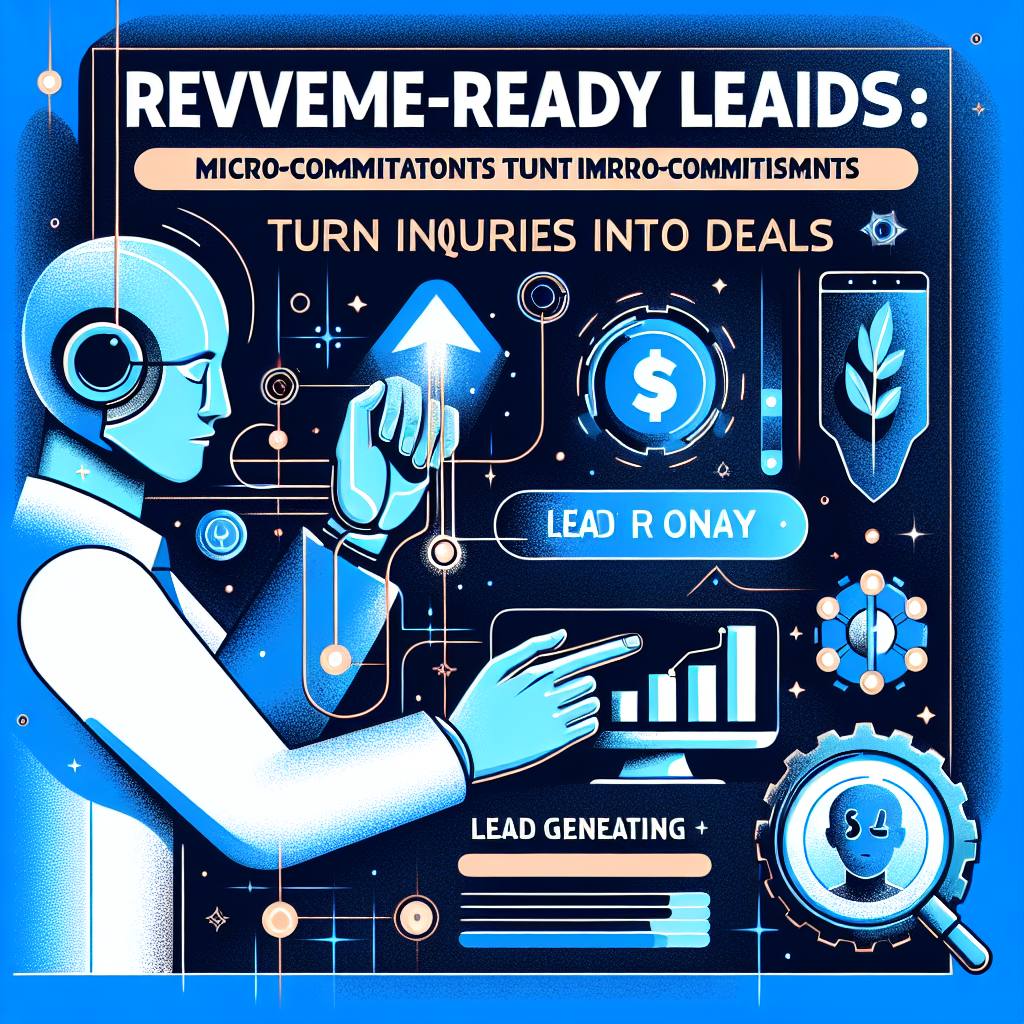


Lead generation is not a single campaign, it is an operating system that turns attention into conversations and conversations into revenue. This guide shows how to capture leads across channels, qualify them with evidence, and convert them with structured follow-up that feels personal at scale.
Most teams talk about lead generation like it is a one-time burst of activity: run ads, collect forms, hand leads to sales, hope for the best. In reality, revenue comes from a repeatable lead lifecycle, a system that captures demand, qualifies intent, and converts consistently through timely, relevant conversations.
This article breaks that system into practical workflows you can implement immediately. You will see tactics for capturing leads without friction, qualifying them without interrogation, and converting them without endless back-and-forth. Along the way, we will also highlight how Staffono.ai (https://staffono.ai) can act as an always-on AI employee across WhatsApp, Instagram, Telegram, Facebook Messenger, and web chat to keep your pipeline moving 24/7.
If your team cannot define what a “good lead” is, you will optimize for volume and wonder why revenue is flat. Before tactics, agree on a shared language that marketing, sales, and operations can all use.
Instead of vague labels like “warm” or “hot,” anchor each stage to observable signals.
When you define stages this way, every tactic in the rest of this guide can be measured: captured leads, qualified leads, conversion rate, speed-to-lead, and time-to-close.
Forms still work, but messaging wins when you want speed, context, and lower drop-off. Buyers increasingly prefer to ask one question in WhatsApp or Instagram rather than complete a multi-step form.
Wherever you get attention, make it easy to start a chat. Examples:
Staffono.ai can receive these inbound messages, greet prospects instantly, and guide them into the right flow based on what they ask. That alone improves capture rate because you reduce the gap between interest and response.
Lead magnets are often treated like PDF giveaways. The better approach is to offer something that naturally leads to a follow-up question. A few high-performing options:
The key is immediacy. If you promise value in the same conversation, people respond more, and you start qualification earlier.
Most qualification fails for two reasons: it feels like a form, or it happens too late. The goal is to ask fewer questions while extracting more signal. Think of qualification as progressive profiling.
In messaging, long questionnaires cause drop-off. Instead, ask a small number of high-leverage questions and branch based on answers. For example, for a B2B service:
Each answer routes the prospect to the next best message: education, scheduling, or a quote path. Staffono.ai can run these flows conversationally across channels, record answers, and tag the lead so your sales team sees a clean summary instead of raw chat history.
A simple scoring model can dramatically improve conversion because reps focus on the right people. Use two dimensions:
Example scoring rule: if a lead has strong fit but low intent, send a nurture sequence. If intent is high, route to sales immediately. If fit is low, politely disqualify and offer alternatives.
One question often separates real opportunities from curiosity: “What changed that made you look for this today?” If the answer is vague, you are likely in early research. If the answer references a deadline, a pain spike, or a new initiative, you have momentum. Capture that reason and reflect it back later during conversion.
Conversion is rarely about a perfect pitch. It is about removing friction, answering objections before they harden, and keeping the next step obvious.
Different prospects need different next steps. Prepare a small menu you can offer in chat:
A menu reduces decision fatigue. The prospect picks a path, and you move forward without pushing.
Create 10 to 15 short, natural responses for your most common objections. Examples:
This approach keeps the conversation moving and reveals whether the lead is truly qualified.
Most deals are lost to silence, not rejection. A practical follow-up rhythm for messaging-first sales might look like this:
Because Staffono.ai is available 24/7, you can maintain this cadence even when your team is offline, and you can keep follow-ups consistent across WhatsApp, Instagram DMs, and web chat without copying and pasting.
A dental clinic runs ads for teeth whitening. Instead of sending leads to a form, the ad opens WhatsApp. The conversation flow:
Outcome: fewer missed calls, faster bookings, and a clear handoff when a patient asks for financing or a complex procedure consult. Staffono.ai can manage the initial chat, schedule bookings, and escalate edge cases to a human.
A SaaS company adds a “Ask about integrations” chat entry point on the pricing page. The AI assistant qualifies:
High-intent leads get a calendar link and a meeting is booked. Low-intent leads get a short comparison guide and a follow-up in a week. The sales team receives a summary with tags like “HubSpot integration,” “needs WhatsApp,” “launch in 30 days.”
If you track only leads and revenue, you will miss the levers that improve conversion. Add these metrics:
When you see where the drop happens, you can refine scripts, adjust offers, or change routing logic.
If you want to move faster, Staffono.ai (https://staffono.ai) can provide AI employees that run these messaging workflows around the clock, qualify leads in real time, and keep follow-ups consistent across channels. When your team wakes up, they see prioritized conversations instead of a pile of missed messages.
Lead generation and sales do not need more hustle, they need a reliable operating system. Build the flows, measure the handoffs, and let automation handle the repetitive moments so your people can focus on the high-value conversations that close.