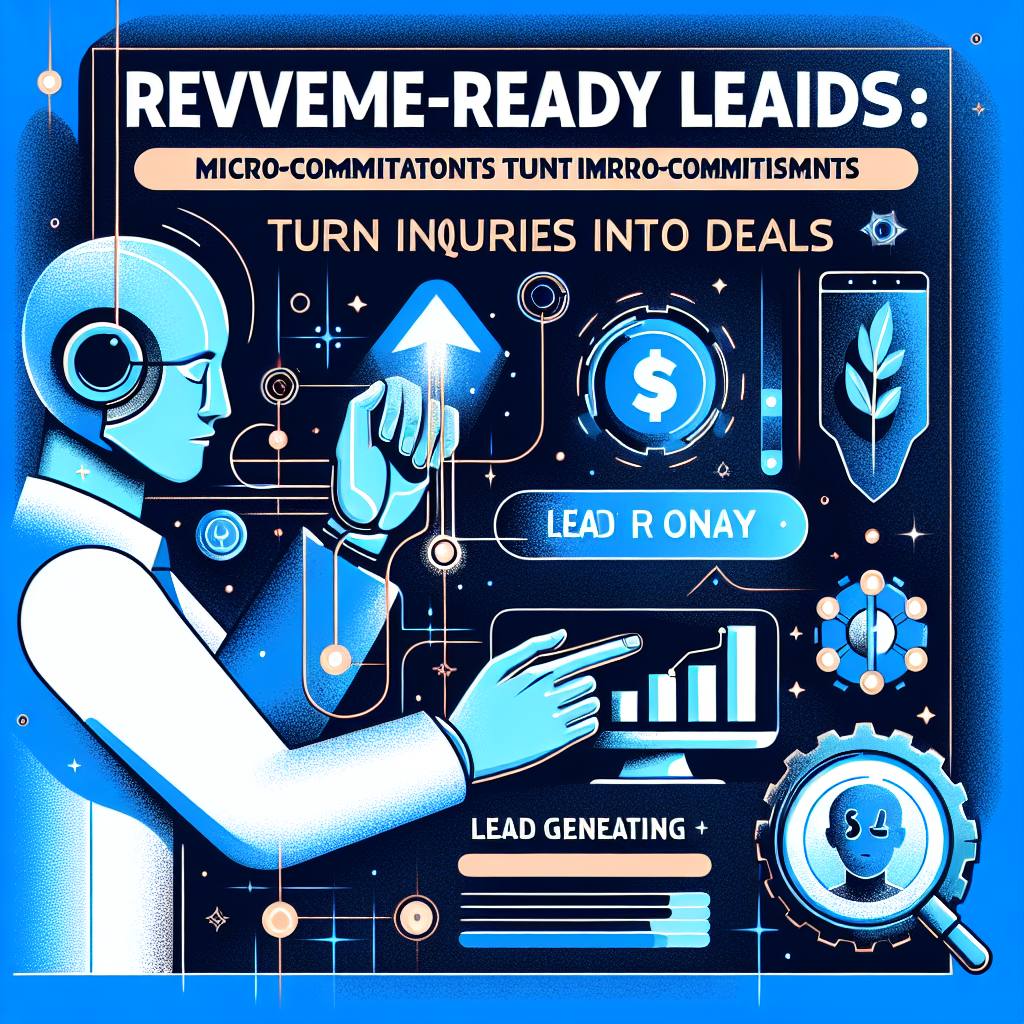


Most revenue leaks happen in the first few minutes after a prospect reaches out. This guide shows how to capture leads across channels, qualify them fast using conversational signals, and convert them with a simple messaging-first system that keeps humans focused on closing.
Leads rarely disappear because your product is wrong. More often, they disappear because the experience between “I’m interested” and “Let’s talk” is slow, confusing, or inconsistent. In a world where buyers message businesses the same way they message friends, your lead generation and sales system must behave like a great conversation: immediate, relevant, and helpful.
This article breaks down a practical blueprint designed for teams that rely on WhatsApp, Instagram DMs, Messenger, Telegram, and website chat. You will learn how to capture leads without friction, qualify them using clear signals, and convert them into revenue with a repeatable process that can run 24/7.
Many teams respond to lead goals by buying more traffic or adding more forms. That can work, but it is expensive and fragile. A faster, better first response often increases conversion without increasing ad spend.
Speed works because it matches buyer intent. When someone asks for pricing, availability, or a demo, they are actively deciding. If you reply hours later, you are no longer competing with “no decision,” you are competing with a competitor who responded instantly.
Not “first response” like an auto-reply that says “we’ll get back to you.” The goal is a first meaningful reply that answers the initial question, asks one qualifying question, and offers a next step.
Buyers prefer low-effort entry points. Instead of pushing everyone into a long form, give them a fast path into messaging, then collect details progressively.
Instead of asking for 8 fields up front, ask for 1-2 details in the first minute, then gather the rest later. Progressive profiling improves completion and preserves intent.
Qualification is not an interrogation. It is a fast, respectful way to understand fit, urgency, and next steps. The best systems rely on “signals” embedded in what people naturally say.
Use a short sequence that feels natural in messaging. The goal is to identify whether the lead should be routed to sales now, nurtured, or politely disqualified.
Lead: “Hi, how much is it for dental appointment booking automation?”
Reply: “We can help with that. Quick question: are you looking to manage bookings from WhatsApp and Instagram, or only from your website?”
Lead: “WhatsApp and Instagram.”
Reply: “Got it. Approximately how many appointment requests do you receive per week?”
Lead: “Around 80.”
Reply: “Thanks. That volume is a great fit. I can share a pricing range and book a 15-minute setup call. Which do you prefer?”
Messaging conversions work best when you break the journey into small decisions. Each step should feel easy and logical, with minimal waiting.
In chat, long explanations get ignored. Package your offer into three parts: outcome, proof, next step.
Most leads do not say “no,” they go quiet. Your follow-up should feel like customer service, not pressure. The best follow-up adds value each time.
As soon as you add multiple channels, the process breaks. A lead messages on Instagram, then follows up on WhatsApp, then fills a web form. If your team cannot see the full context, the buyer repeats themselves and the sale slows down.
This is where automation should support the team, not replace the relationship. The ideal setup is a consistent front line that captures details, qualifies, and routes the conversation, while human sales focuses on high-intent opportunities.
Staffono.ai (https://staffono.ai) provides 24/7 AI employees that handle customer communication and sales conversations across WhatsApp, Instagram, Telegram, Facebook Messenger, and web chat. That matters for lead generation because leads arrive at all hours, and the first minutes determine whether a conversation becomes revenue.
With Staffono, you can automate the first meaningful reply, ask the right qualifying questions, and route leads based on intent and fit. For example, high-intent leads can be escalated to your sales team with a clean summary, while lower-intent inquiries can be nurtured with helpful answers and a booking link.
Just as important, Staffono.ai helps you keep the experience consistent across channels. The same qualification logic and offer positioning can be applied wherever the lead starts, so your team is not reinventing the conversation every time.
If you measure everything, you improve nothing. Focus on metrics that connect directly to speed, qualification quality, and conversion.
When these metrics improve, revenue follows even if your lead volume stays the same.
A strong lead generation and sales system is not a single tactic. It is a conversation pipeline: capture with minimal friction, qualify with signal-based questions, convert through micro-commitments, and follow up with value.
If your team wants to implement this without hiring a night shift or letting leads sit unanswered, consider using Staffono.ai (https://staffono.ai) to run the first layer of messaging across your channels. With AI employees handling fast responses, qualification, and bookings, your sales team can spend more time on the conversations that are most likely to close, and you can turn more inquiries into predictable revenue.