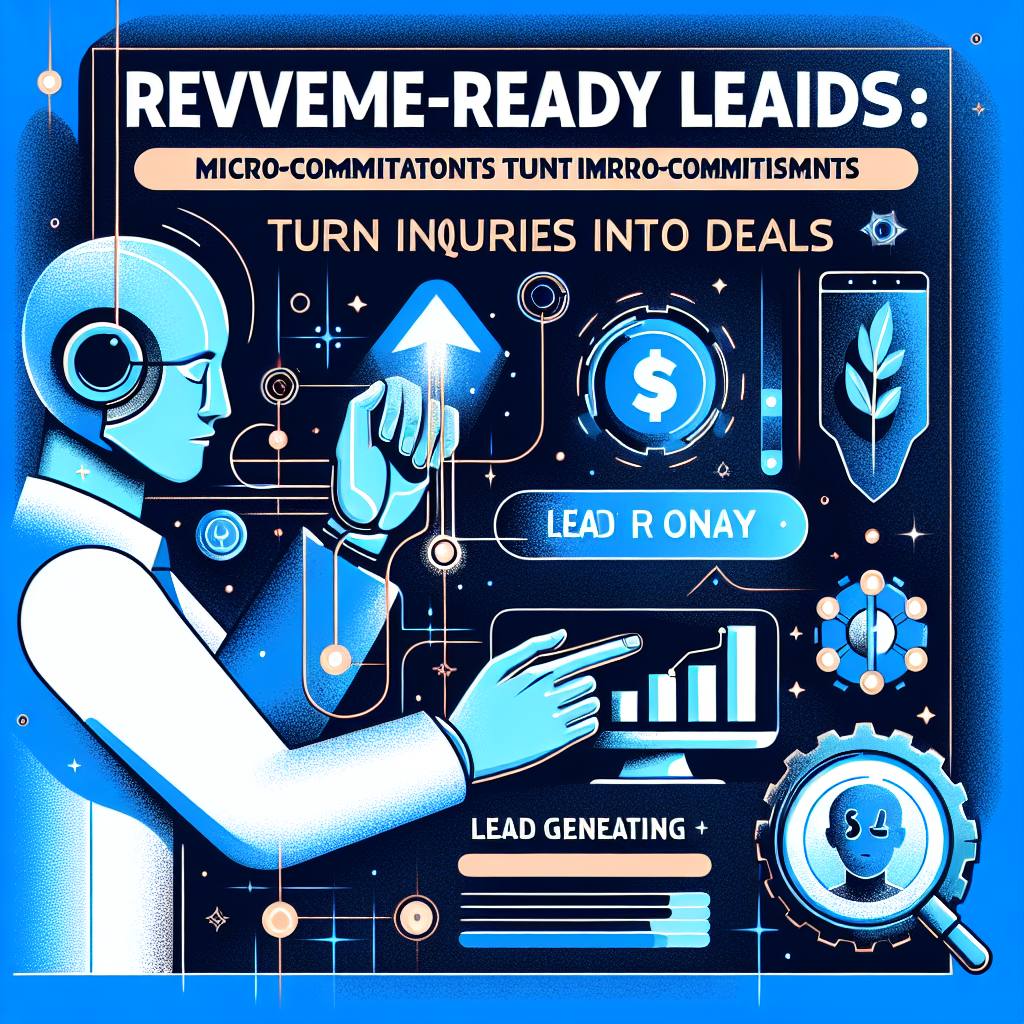


Most leads do not get lost to competitors, they get lost to time, friction, and vague follow-up. This guide shows practical tactics to capture intent instantly, qualify without interrogating, and convert with clear next steps across every messaging channel.
Lead generation and sales rarely fail because you lack traffic. They fail because the first response is slow, the questions are unfocused, and the buyer is forced to do work your process should handle. In a world where prospects reach out through WhatsApp, Instagram, web chat, and Facebook Messenger, the “lead handshake” is the short window where you prove you are attentive, relevant, and easy to buy from.
This article breaks down a practical approach to capture, qualify, and convert leads into revenue, with a bias toward speed, clarity, and consistency. You will find scripts, examples, and a simple operating rhythm you can implement without rebuilding your entire CRM.
When someone messages you, they are temporarily motivated. If they wait, motivation decays and distractions win. The goal is not just “respond fast,” but to respond with a structured micro-journey: confirm the request, identify fit, and propose a next step. Think of it as compressing your best sales habits into a short, repeatable sequence.
If your team cannot reliably hit fast response times, that is where automation becomes strategic. Staffono.ai (https://staffono.ai) provides 24/7 AI employees that can respond instantly across messaging channels, keeping the lead warm while collecting the right details for your human team or completing the booking end-to-end.
Landing pages and social profiles often try to cover everything. Instead, each entry point should be oriented around one job the lead wants done. For example, “Get a quote,” “Book a consultation,” or “Check availability.” Then, the first message should repeat that job so the prospect feels understood.
This reduces decision fatigue and keeps the conversation moving.
Long forms kill momentum, especially on mobile. A better approach is to collect details in 2 to 4 short messages. You can still capture the same information, just in a friendlier order.
Staffono.ai is designed for this kind of conversational intake, gathering structured fields while the prospect feels like they are simply chatting.
Some leads want to skip questions and talk to a human. Let them. Your capture flow should include an escape hatch like “Talk to a specialist” or “Call me.” The key is to still collect one minimum piece of information so your team is not blind.
Example: “I can connect you now. Before I do, what is the main thing you want help with?”
Qualification is not about disqualifying people harshly. It is about routing them to the right offer, timeline, and level of attention. The best qualification questions do three things: confirm context, reveal urgency, and identify constraints.
This model works in B2B and B2C because it stays focused on decision-making, not curiosity.
Use questions that unlock routing decisions. Avoid asking everything at once.
If you sell services, scope and timeline usually matter more than budget early on. If you sell subscriptions, user count and use case are often the best early signals.
Imagine a clinic receiving Instagram DMs for appointments.
Notice what happened: qualification and conversion happened together, without making the lead fill out a form.
Conversion is often blocked by ambiguity. Many teams answer questions but do not propose a clear next action. Every qualified conversation should end with one of three outcomes: a booking, a quote with a deadline, or a handoff to a human rep with context.
Instead of asking “Would you like to book?” offer two realistic options.
This is not pushy, it is helpful. People like choosing from a small set.
Leads lose momentum when you ask for availability, they answer vaguely, and you loop for days. Set boundaries that still feel polite.
If you are using Staffono.ai, your AI employee can manage this scheduling dance automatically, confirm details, and create bookings while your team focuses on high-value conversations.
Pricing questions are not objections, they are signals. The mistake is sending a price and stopping.
Better pattern:
Most revenue is in follow-up, but most follow-up is repetitive and generic. You want fewer messages with higher relevance. Use a simple three-touch sequence that adds value each time.
Automation helps here because consistency is hard for humans when inbox volume spikes. With Staffono.ai, you can set follow-up rules that respect time windows, channel preferences, and opt-outs, while still keeping the tone conversational.
Dashboards can be distracting. For lead generation and sales in messaging environments, focus on metrics that diagnose friction.
Pick one bottleneck and fix it for two weeks before changing anything else. Most teams improve fastest by reducing time-to-next-step.
You do not need a complex funnel to improve results. You need a repeatable handshake.
If you want to implement this without hiring more reps or extending working hours, Staffono.ai (https://staffono.ai) is a practical next step. You can deploy AI employees that respond instantly across WhatsApp, Instagram, Telegram, Facebook Messenger, and web chat, qualify leads with consistent logic, and book appointments or route hot opportunities to your team with clean context. When the handshake is reliable, your marketing spend turns into conversations, and your conversations turn into revenue.