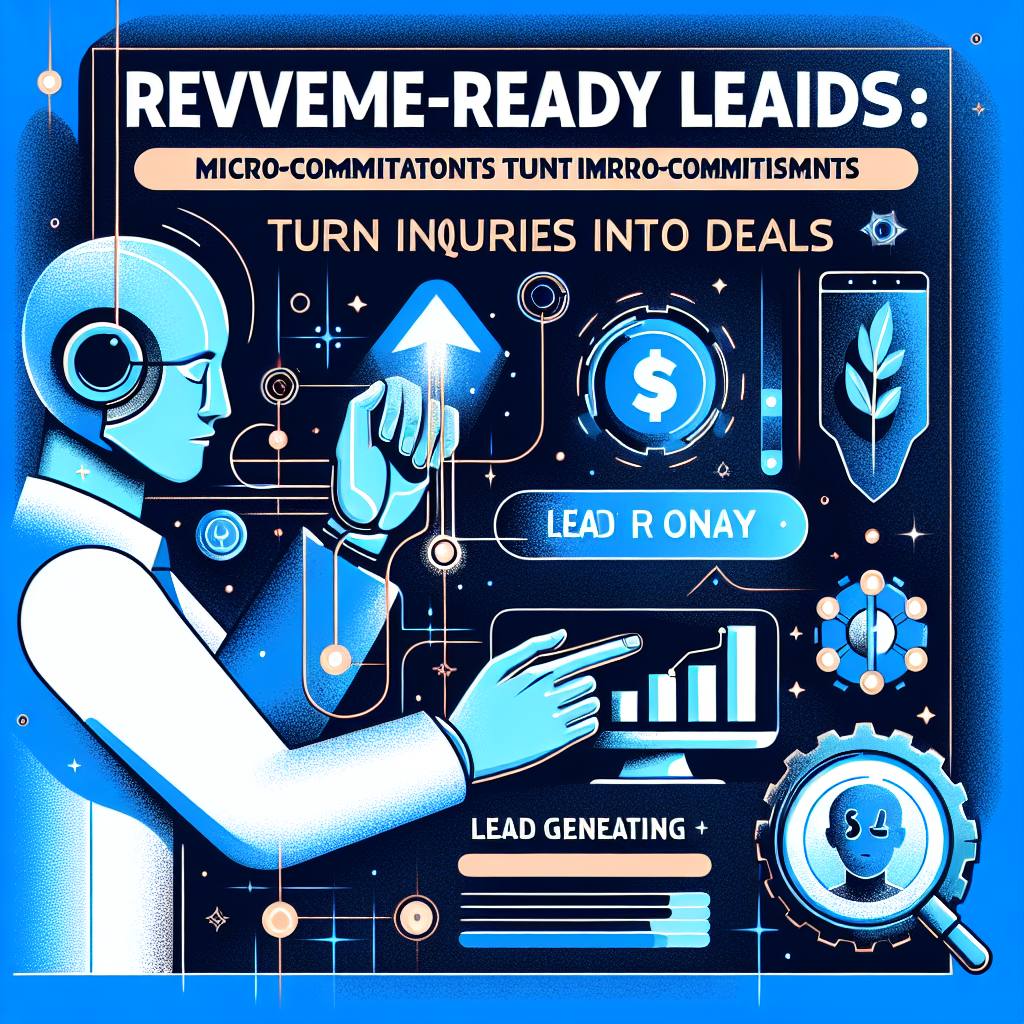


Modern lead generation is less about getting more clicks and more about orchestrating faster conversations across the channels prospects already use. This guide shows how to capture intent, qualify efficiently, and convert leads into revenue with practical tactics, examples, and automation ideas.
Lead generation and sales have changed in a subtle but important way: prospects rarely follow a neat, linear funnel. They discover you on Instagram, ask a quick question on WhatsApp, compare alternatives in Telegram groups, then finally book a call from your website chat. If your capture and qualification system only works for forms and email, you lose high-intent leads simply because they chose a different channel.
The goal is not to “do more marketing.” The goal is lead-to-revenue orchestration: a repeatable system that captures intent wherever it appears, qualifies it quickly, and routes it to the right next step so revenue can happen while the prospect is still engaged.
Traffic is a vanity metric if it does not turn into conversations and decisions. Intent is observable behavior that signals someone is close to buying. Your first job is to define what intent looks like for your business and then make it easy to capture.
Once you know your intent signals, design capture points that create a smooth transition from interest to action. The best capture points are not only “forms,” they are conversational triggers.
Many businesses still force prospects into a single channel, usually email or a website form. But prospects are already in messaging apps. Capturing leads across WhatsApp, Instagram DMs, Telegram, Facebook Messenger, and web chat removes friction and increases response speed.
Staffono.ai (https://staffono.ai) is built for this multi-channel reality. Its AI employees can respond 24/7 across WhatsApp, Instagram, Telegram, Facebook Messenger, and web chat, which means you can capture leads at the moment intent appears, not the next business day.
Qualification fails when it becomes an interrogation. Your job is to learn just enough to decide the next best action: book a meeting, send a quote, provide a self-serve option, or nurture for later.
In practice, you do not ask all five every time. You ask the fewest questions needed to route them correctly. A simple rule: if your next step is a human call, ask questions that make the call productive. If your next step is a quote, ask the inputs required to price accurately.
Imagine a home renovation company. A lead messages, “How much does a bathroom remodel cost?” A strong qualification flow might look like this:
This is short, respectful, and moves toward a revenue event (an estimate appointment). An AI employee from Staffono can run this flow consistently, capture the answers, and book the estimate automatically, while your team focuses on delivering the service.
Even great leads go cold if response times are slow or if they get bounced between people. Routing is the behind-the-scenes rule set that sends each lead to the right next step.
Staffono.ai helps operationalize these rules across channels so the system behaves the same whether the lead comes from Instagram at 11 pm or web chat at 9 am. Consistency is a conversion advantage.
Most “sales objections” are actually clarity issues. The prospect does not understand what happens next, what they get, or how to decide. Your conversion job is to make the decision feel safe and simple.
If a prospect asks, “Do you offer automation for customer inquiries?” a conversion-ready response is not a generic “Yes.” It is a guided step:
This structure works because it answers, frames value, and asks for a small commitment that moves the deal forward.
Many leads are not “no,” they are “not yet.” The revenue difference comes from smart follow-up that continues the conversation rather than blasting reminders.
Automation makes this reliable. Staffono.ai can run follow-up sequences across the same messaging channels the lead used originally, keeping context, timing, and tone consistent while your team stays focused on high-value conversations.
To improve lead generation and sales, track metrics that reflect speed, quality, and conversion, not just volume.
When you see drop-offs, fix the step, not the person. If Instagram leads qualify but do not book, your booking prompt is the issue. If web chat books but no-shows, your confirmation and reminder flow needs work.
If you want a practical starting point, implement this sequence over the next two weeks:
The biggest advantage is speed with consistency. When every lead gets a helpful response, a clear next step, and a smooth booking path, revenue becomes more predictable.
If you want to orchestrate capture, qualification, and conversion across WhatsApp, Instagram, Telegram, Facebook Messenger, and web chat without adding headcount, Staffono.ai (https://staffono.ai) can act as your always-on front line. You can start with one channel and one flow, then expand as results compound, turning everyday messages into booked meetings and closed deals.