
x
New members: get your first week of STAFFONO.AI "Starter" plan for free! Unlock discount now!
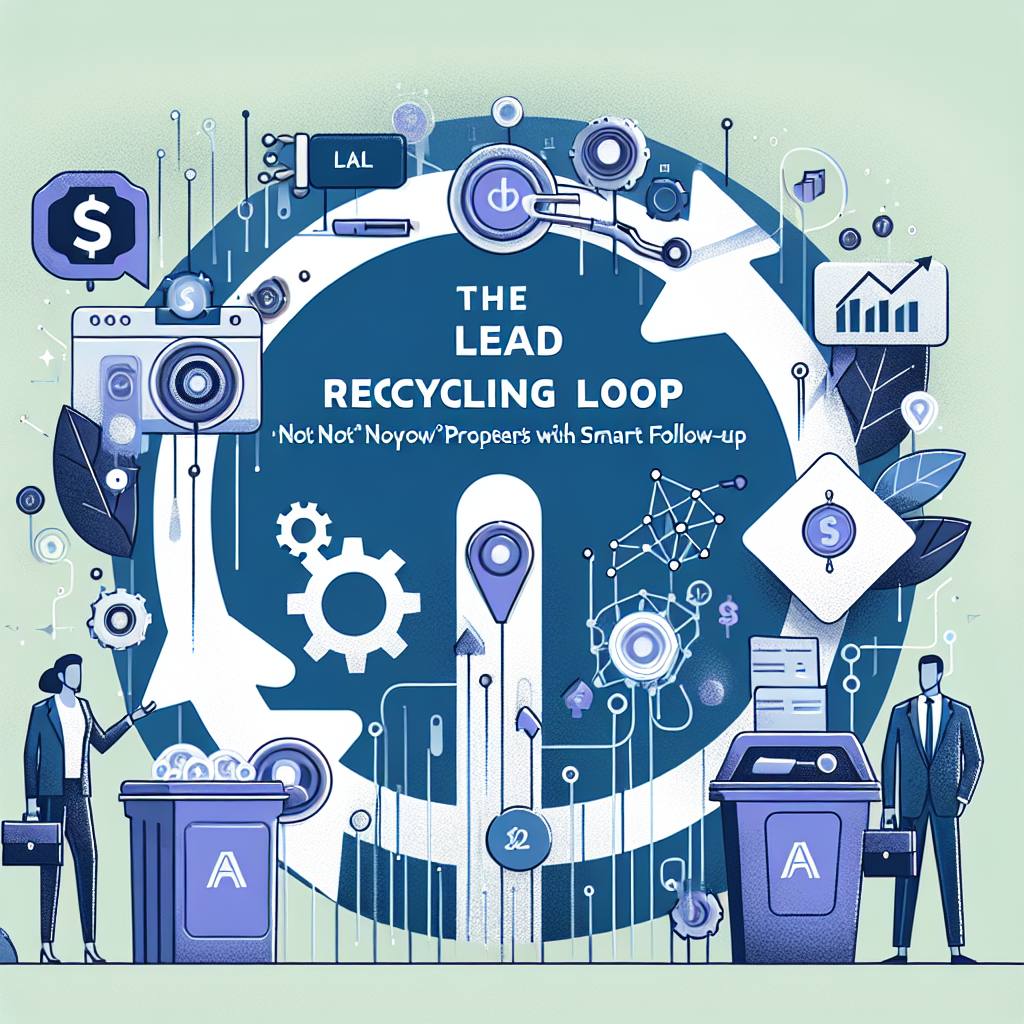
The Lead Recycling Loop: Turning “Not Now” Prospects Into Revenue With Smart Follow-Up

The Lead Recycling Loop: Turning “Not Now” Prospects Into Revenue With Smart Follow-Up

Most pipelines leak money after the first conversation, not because leads are bad, but because timing is. This article shows how to capture leads across channels, qualify them quickly, and then recycle “not now” prospects with structured follow-up that converts weeks or months later.

In lead generation and sales, the biggest missed opportunity is rarely top-of-funnel traffic. It is the quiet middle where prospects say: “Interesting, but not now.” Those leads are not dead, they are delayed. If your team treats every non-immediate buyer as a loss, you will keep paying for the same audience again and again.

A better approach is a lead recycling loop: capture demand wherever it shows up, qualify it fast, route it correctly, and then run consistent, personalized follow-up until the prospect is ready. This is how you turn “not now” into revenue without bloating your ad budget or burning out your reps.

Why most lead systems fail after the first touch

Many teams focus on getting leads into a CRM, then wonder why conversions stay flat. The issue is usually one of these:

  • Speed gaps: Leads wait hours or days for a response, and intent cools.
  • Weak qualification: Reps spend time on poor-fit inquiries and ignore high-fit ones.
  • Single-threaded communication: A lead messages on Instagram, but follow-up happens by email, and the conversation dies.
  • No reactivation: Once a lead goes cold, it is never systematically warmed back up.

Fixing this is less about one magic tactic and more about designing a reliable loop that keeps value moving forward.

Capture: create more “entry doors” without creating more chaos

Lead capture works best when it is frictionless for the buyer and structured for your team. Today, prospects often prefer messaging over forms, especially for quick questions about pricing, availability, and fit. Your job is to let them enter from anywhere while keeping data consistent.

Capture tactics that increase volume and quality

  • Message-first CTAs: Replace “Book a demo” with “Ask for pricing on WhatsApp” or “Message us to check availability.” This attracts serious buyers who want an immediate answer.
  • Fast-response landing pages: Add web chat alongside forms. Many prospects abandon forms but will chat for 60 seconds.
  • Channel-specific offers: For Instagram, offer a quick estimate. For WhatsApp, offer a scheduling link. For web chat, offer a product-fit quiz.
  • Lead magnets that do not feel like homework: A short calculator, checklist, or “2 questions to get a quote” performs better than long PDFs for many SMB audiences.

This is where an automation layer matters. Staffono.ai (https://staffono.ai) helps businesses capture and respond across WhatsApp, Instagram, Telegram, Facebook Messenger, and web chat with 24/7 AI employees. Instead of scattering conversations across inboxes, you can centralize the intake and keep the buyer in their preferred channel.

Qualify: decide what to do with the lead in under two minutes

Qualification is not about interrogating the prospect. It is about making a quick, respectful decision: route to sales now, nurture, or disqualify politely. The faster you make that decision, the more pipeline you protect.

Use a “minimum viable qualification” framework

Ask only what you need to route correctly. For many businesses, these four signals are enough:

  • Need: What problem are they solving?
  • Timeline: Are they buying this week, this quarter, or “someday”?
  • Fit constraints: Location, size, budget range, platform compatibility, or service scope.
  • Next action: Quote, demo, consultation, booking, or callback.

Practical example: a home services company can qualify in four messages.

  • “What service do you need?”
  • “What is your address or neighborhood?”
  • “When do you want it done?”
  • “Would you like the earliest slot or a specific day?”

That is enough to route to scheduling or a human rep, and it avoids long back-and-forth.

Build a simple qualification rubric

Create three buckets:

  • Ready now: clear need and near-term timeline. Route to a rep or instant booking.
  • Warm: clear need but future timeline or missing info. Put into nurture with a defined follow-up cadence.
  • Low fit: wrong geography, wrong use case, unrealistic budget. Provide a helpful alternative and close the loop.

With Staffono.ai, you can automate these first questions in the same messaging thread, tag the lead based on answers, and hand off to a human when the lead hits your “ready now” threshold. That means qualification happens consistently even at night or on weekends.

Convert: make the next step smaller than the decision

Many deals stall because you ask for a big commitment too early. Instead of pushing immediately for “sign the contract,” guide the prospect into a low-friction next step that still advances the sale.

High-converting next steps by business type

  • B2B services: “Want a 10-minute fit check call or should I send 2 package options first?”
  • SaaS: “Do you want a short walkthrough on your use case, or a pricing breakdown for your team size?”
  • Clinics and salons: “Do you want the earliest appointment, or a time after 6pm?”
  • Local retail: “Should I reserve it for pickup today, or deliver tomorrow?”

Notice the pattern: the buyer is not deciding whether to buy, they are deciding how to proceed. Your conversion rate rises because the interaction feels helpful, not pushy.

Reduce drop-off with instant value

Before asking for anything, give something useful. Examples:

  • A price range with the assumptions stated.
  • A short “what to expect” timeline.
  • A comparison of two options.
  • A checklist of what the buyer should prepare.

When you provide clarity quickly, you earn the right to ask for the next step.

Recycle: the system that turns “not now” into booked calls and purchases

The recycling loop is where revenue compounding happens. A prospect who is not ready today may be ready in 30, 60, or 120 days. If you disappear, a competitor will be there when the moment arrives.

Design a reactivation cadence that feels human

A simple approach is to mix value, timing checks, and social proof. For example:

  • Day 2: answer any open question and offer one clear next step.
  • Day 7: send a short tip or resource related to their use case.
  • Day 21: share a relevant case study or result.
  • Day 45: ask a timing question: “Still aiming for March, or has the plan changed?”
  • Day 90: offer an update: new availability, seasonal promo, or improved package.

This works because it respects the buyer’s pace while staying present.

Use “reason-based follow-up” instead of generic check-ins

Generic messages like “just following up” train buyers to ignore you. Better reasons include:

  • “We opened two new slots next week.”
  • “Prices change next month, want me to hold the current quote?”
  • “We added a feature that solves the exact issue you mentioned.”
  • “You asked about X, here is a 60-second explanation.”

Staffono.ai can run these follow-ups automatically inside the same messaging channel where the lead first contacted you, while letting prospects reply naturally and get immediate answers. This is especially effective for recycling because the conversation thread is already familiar to the buyer.

Practical mini case study: turning abandoned inquiries into revenue

Imagine a training provider that sells corporate workshops. They get many inquiries from Instagram and web chat, but most prospects say, “We are planning for next quarter.” Previously, those leads were exported into a spreadsheet and forgotten.

With a lead recycling loop, they implement:

  • Message-first capture on Instagram and web chat with instant answers about formats, pricing ranges, and available dates.
  • Two-minute qualification: team size, target skill, timeline, and decision maker involvement.
  • Conversion step: offer a choice between a 15-minute scoping call or a tailored outline sent by message.
  • Reactivation: automated follow-ups at 7, 21, and 45 days with a relevant example agenda, a short client result, and a timing check.

The result is not just more deals. It is smoother forecasting because pipeline does not vanish, it recycles.

Metrics that tell you if your system is working

You do not need dozens of dashboards. Track a few metrics that reveal where the loop breaks:

  • First-response time by channel: aim for minutes, not hours.
  • Qualified rate: percentage of captured leads that land in “ready now” or “warm.”
  • Next-step rate: how often a conversation results in booking, quote request, or call.
  • Reactivation conversion: deals that come from recycled leads over 30 to 120 days.
  • Rep time per opportunity: should decrease as automation handles repetitive steps.

Putting it together: your next 7 days

  • Audit your entry doors: list every place a lead can message you, and ensure each one gets a fast response.
  • Write your minimum qualification questions: keep it to four or five.
  • Define three routing buckets: ready now, warm, low fit.
  • Create a 90-day recycle cadence: pick five touchpoints with reason-based messages.
  • Automate the repeatable parts: response, qualification, routing, and follow-up.

If you want to build this loop without hiring more coordinators or asking reps to babysit inboxes, Staffono.ai (https://staffono.ai) is designed for exactly that. Its 24/7 AI employees can capture leads across messaging apps, qualify them with consistent questions, and keep warm prospects engaged until they are ready to buy, while handing off high-intent conversations to your team at the right moment.

The goal is not to spam more. It is to stay helpful, timely, and organized long enough for timing to flip in your favor, and for “not now” to become your most profitable segment.