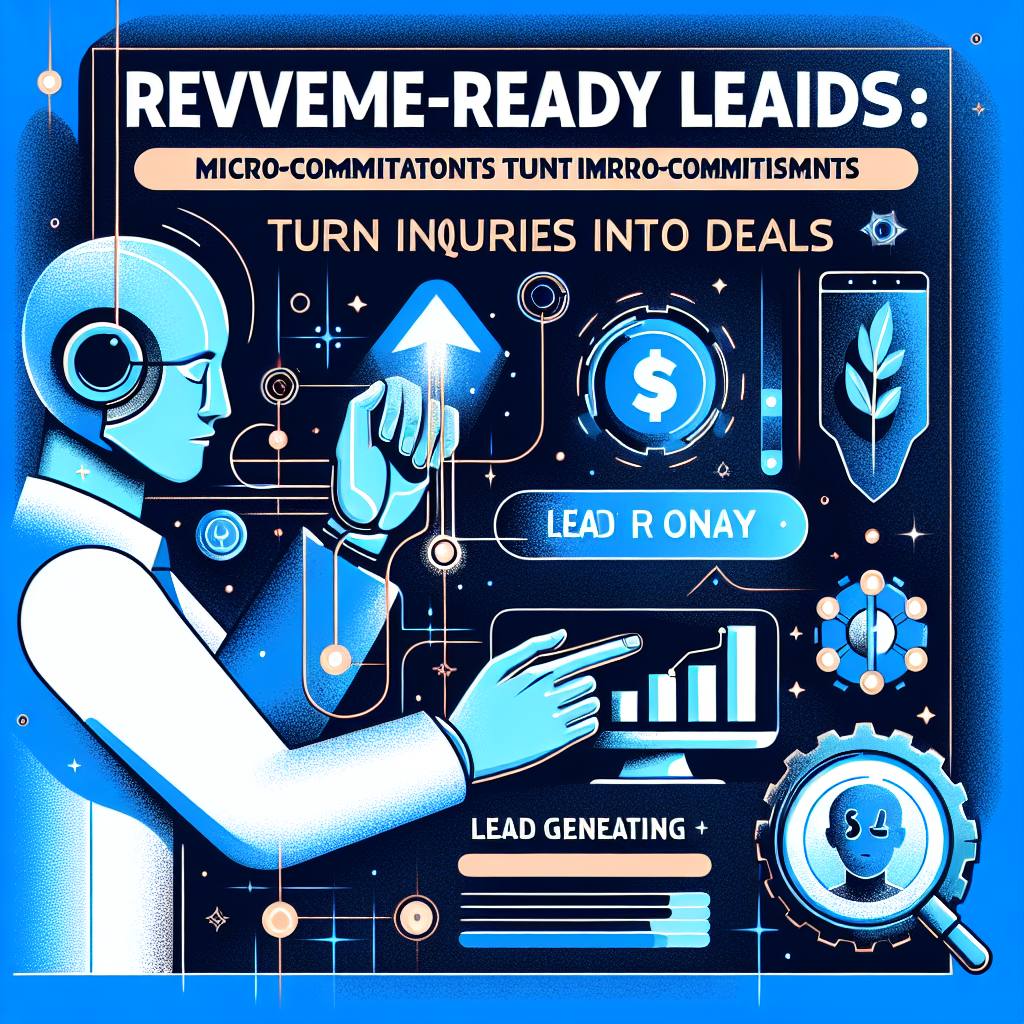


Lead generation is not a campaign, it is an operating system that connects attention to revenue with speed and consistency. This guide shows practical tactics to capture leads across channels, qualify them without friction, and convert them into predictable sales outcomes, even with a small team.
Most businesses do not have a lead generation problem. They have a lead handling problem. Marketing creates interest, but revenue only happens when interest is captured, routed, qualified, and followed up with discipline. If any step breaks, you get the familiar symptoms: “We get messages, but they do not convert,” “Leads ghost us,” and “Sales says the leads are bad.”
Think of lead generation and sales as an operating system, not a funnel diagram. An operating system defines inputs (traffic and inquiries), processing rules (qualification and routing), and outputs (booked calls, purchases, and renewals). When it is designed well, you can scale without burning out your team. When it is not, growth feels like chaos.
Capture is the moment a potential buyer raises their hand. In 2025, that hand is raised everywhere: Instagram DMs, WhatsApp, web chat, Telegram, Facebook Messenger, and even replies to stories and comments. The mistake is treating each channel like a separate world. Buyers expect continuity. You need one consistent way to turn “Hey, how much is this?” into an identifiable lead record with context.
This is where an AI communication layer becomes a revenue tool, not just a support tool. Staffono.ai (https://staffono.ai) provides 24/7 AI employees that can answer, capture details, and move the conversation forward across WhatsApp, Instagram, Telegram, Facebook Messenger, and web chat. The goal is not to “automate talking,” it is to prevent lead leakage and preserve intent while it is hot.
Qualification is often misunderstood as gatekeeping. In reality, it is buyer assistance. You are helping the prospect find the right path: a quick purchase, a consultation, a trial, or a polite disqualification. If your qualification feels like a form, people leave. If it feels like guidance, they continue.
Instead of complex scoring models that require perfect data, use three layers that work in messaging and phone sales alike:
You do not need to ask all of this in one go. Spread it across the conversation naturally. Example: after answering pricing, ask about timeline. After timeline, ask what outcome they care about. After outcome, ask who else needs to be involved.
Notice these are not “BANT” style interrogations. They are outcome-driven and easy to answer quickly. In Staffono, AI employees can be configured to ask these questions in your brand voice, store the answers, and route the lead based on rules you define, for example: send high-intent leads to a sales rep immediately and place lower-intent leads into a nurture track.
Most deals are not lost to competitors. They are lost to silence and inconsistency. Buyers get busy. Internal priorities change. Someone needs to remind them, clarify, and make the next step obvious. Follow-up is where revenue is earned, but it is also where human teams struggle because it is repetitive and time-consuming.
Not all leads deserve the same intensity. Use intent signals to set cadence:
Each follow-up should add value. Not “Just checking in,” but “Here is the 2-minute overview,” “Here is a price range based on what you said,” or “Here is a similar customer story.”
Ghosting is often uncertainty. The buyer is not saying no, they are avoiding a decision. Your job is to make the decision easy. Use “decision framing” messages like:
These prompts respect the buyer and move the conversation forward. With Staffono.ai, you can automate parts of this follow-up across messaging channels while keeping escalation to humans for negotiation or complex questions. That combination often increases conversion because prospects feel supported without delays.
Conversion is not only persuasion. It is also logistics. Many leads die because the next step is unclear: too many options, too many meetings, or too much paperwork. Reduce the cognitive load.
In messaging, clarity wins. If the buyer asks “How does this work?” respond with a simple sequence: “Step 1, quick chat. Step 2, we set it up. Step 3, you start seeing results.” Your sales team can then focus on objections that matter, not repeating process explanations.
A home services company gets most leads from Instagram and WhatsApp. People ask about pricing and availability. The winning system is:
Staffono.ai can handle the initial intake and booking flow 24/7 so the business does not miss evening and weekend demand, which is often when homeowners finally have time to reach out.
A B2B SaaS company gets demo requests and “Can you integrate with X?” questions via web chat and Messenger. The system is:
When AI handles the repetitive qualification and scheduling, humans spend more time on discovery and solution design. That is where deal size grows.
If you only track “leads” and “sales,” you will not know where the system is failing. Track a few operational metrics:
Improving any one of these usually lifts revenue without increasing ad spend. For many businesses, the biggest immediate win is response time and capture rate, which is exactly where always-on messaging automation tends to have the highest ROI.
A strong lead generation and sales engine is not built by adding more tools. It is built by defining a repeatable conversation path, then enforcing it across channels. Document your ideal first reply, your qualification questions, your routing rules, and your follow-up cadence. Then make it easy to execute every time.
If you want to run that operating system around the clock, Staffono.ai (https://staffono.ai) is designed to help. Staffono’s AI employees can capture leads on your busiest messaging channels, qualify them with your rules, book meetings, and keep follow-ups consistent so your team can focus on closing and delivery. When you are ready to stop losing revenue to missed messages and inconsistent follow-up, exploring Staffono.ai is a practical next step.