
Most businesses do not need a massive automation overhaul to see results, they need a few high-impact workflows that remove bottlenecks in messaging. This guide walks through practical scenarios you can implement step by step across WhatsApp, Instagram, Telegram, Messenger, and web chat, with clear triggers, data fields, and handoff rules.
Automation projects often fail for one simple reason: they start too big. Teams try to redesign the entire customer journey, migrate tools, and rewrite every script at once. Meanwhile, the real pain sits in the same places every day, slow replies, missed follow-ups, messy lead details, and repetitive questions that drain your best people.
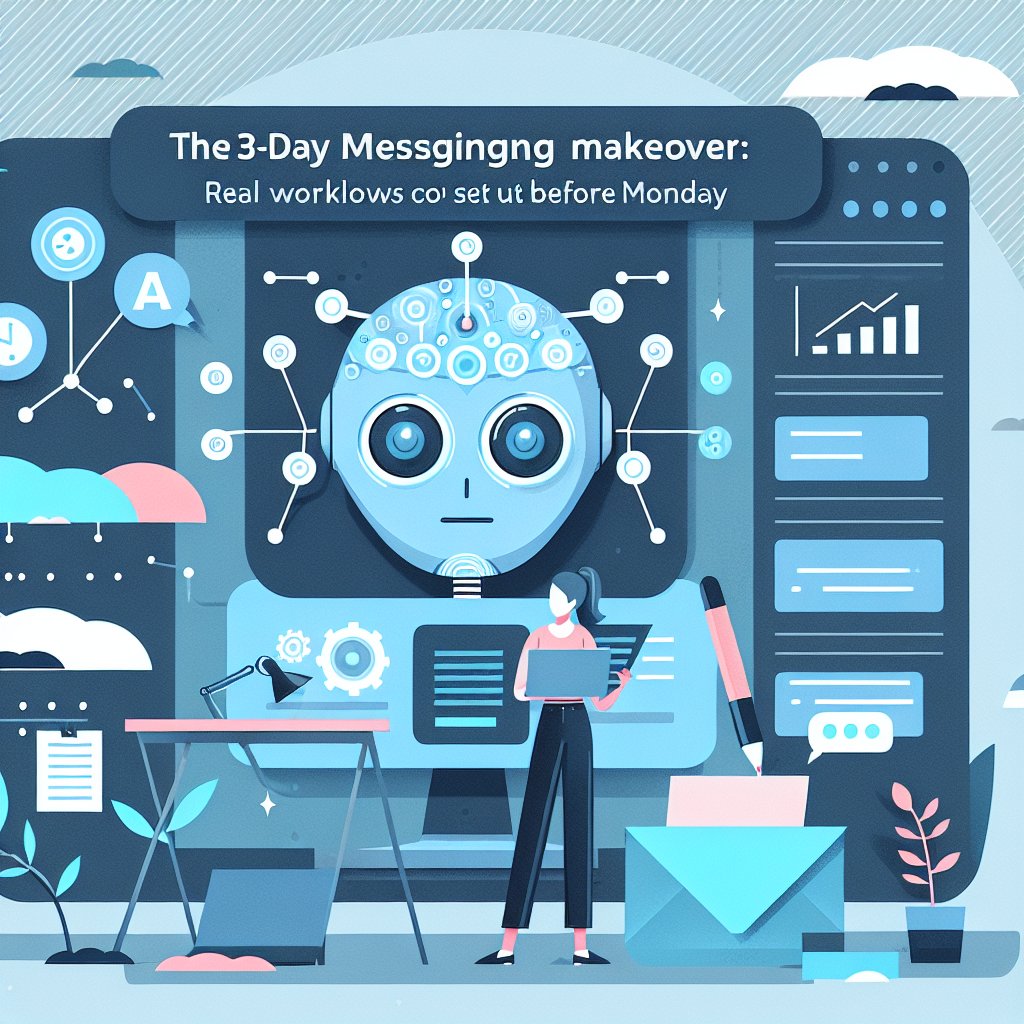
This post focuses on a different approach: a three-day messaging makeover. You will implement a small set of workflows that reduce response time, improve lead quality, and keep sales moving even when your team is offline. The examples work across WhatsApp, Instagram, Telegram, Facebook Messenger, and web chat, and they fit naturally with an AI employee model like Staffono.ai (https://staffono.ai), where automated conversations can qualify, route, and book 24/7.
Before building anything, choose workflows with three traits: frequent, time-sensitive, and structured enough to standardize. If the conversation repeats daily, has a clear next step, and depends on a few key data points, it is a strong candidate.
Staffono.ai is designed around these patterns: AI employees handle repetitive messaging, collect structured details, and trigger actions like bookings and CRM updates while maintaining a consistent tone across channels.
Your first win should be lead intake, because it is where delays and missing details create the most downstream chaos. The goal is to capture what matters in under two minutes and route it correctly.
Scenario: A prospect DMs “How much?” on Instagram or WhatsApp. Your team replies later, asks basic questions, and the lead disappears.
Outcome: Collect essentials, segment the lead, and assign the right next step automatically.
Step by step:
How Staffono.ai helps: With Staffono.ai, an AI employee can run this intake 24/7 across WhatsApp, Instagram, Telegram, Messenger, and web chat, ensuring every lead is captured in a consistent structure and routed without waiting for business hours.
Scenario: A lead stops replying after you ask for details. You forget to follow up, or you follow up too late.
Outcome: Re-open the conversation politely and give an easy next step.
Step by step:
This workflow is especially effective when paired with Staffono.ai because the AI employee can keep the tone consistent and the timing precise, without your team feeling like they are “chasing” leads manually.
Once intake is clean, the next bottleneck is scheduling. People want to book without back-and-forth. Your goal is to offer options, confirm, and reduce no-shows.
Scenario: Service businesses spend hours coordinating times across messaging, then deal with no-shows.
Outcome: Let prospects choose a slot, confirm details, and send reminders automatically.
Step by step:
How Staffono.ai helps: Staffono.ai can manage the full booking conversation on every channel, confirm details reliably, and keep reminders consistent. This is where 24/7 coverage matters, because many bookings happen after hours.
Scenario: Your calendar fills with unqualified calls, and reps spend time on prospects who are not a fit.
Outcome: Only qualified meetings get booked, and reps see context before the call.
Step by step:
With Staffono.ai, you can run this pre-qualification in messaging where buyers already are, rather than forcing everyone into email forms.
Support is where automation can either shine or backfire. The key is to automate the repeatable parts while making escalation feel seamless.
Scenario: Customers ask “Where is my order?” repeatedly. Agents copy-paste responses, and the queue grows.
Outcome: Customers get instant answers, and complex cases go to humans with context.
Step by step:
Staffono.ai can handle these status conversations across WhatsApp and web chat particularly well, where customers expect fast answers and do not want to wait on email.
Scenario: Returns policies are clear, but customers still ask the same questions, and agents manually gather photos and reasons.
Outcome: Collect required info upfront, then route to the right policy path.
Step by step:
Most teams can implement a strong first version with simple building blocks: triggers, saved fields, templates, routing rules, and integrations to calendars, CRMs, and ticketing tools.
If you want these workflows to run reliably across multiple messaging channels with consistent tone, structured lead capture, and 24/7 coverage, Staffono.ai (https://staffono.ai) is built for exactly that. Many teams start with one channel like WhatsApp or Instagram, validate outcomes in a week, then expand to additional channels without rewriting the logic from scratch.
Pick two workflows from this post and implement them in three days: intake plus booking for revenue, or order status plus returns for support relief. Once you see the impact, add one workflow per week and document the rules as you go. If you want an AI employee to handle these conversations end-to-end, from capturing details to booking and escalation, explore Staffono.ai and map your first channel in a short setup cycle so you can start seeing measurable results before your next busy week begins.