
Great customer messaging is not about saying more, it is about moving the conversation forward with clarity, timing, and the right next step. This guide gives you practical strategies, ready-to-use templates, and best practices you can apply across WhatsApp, Instagram, Telegram, Messenger, and web chat.
Customer messaging has quietly become the most important interface in modern business. People do not “contact support” or “request a quote” the way they used to. They send a quick WhatsApp, reply to an Instagram story, or open a web chat and expect momentum: a clear answer, a simple next step, and a sense that someone is paying attention.
The problem is that most teams treat messaging as a pile of tickets instead of a sequence of micro-decisions. A customer message is rarely just a question. It is usually a bundle of intent (what they want), context (what happened), and risk (what might go wrong next). If your reply does not acknowledge all three, the conversation stalls, customers follow up, and revenue leaks.
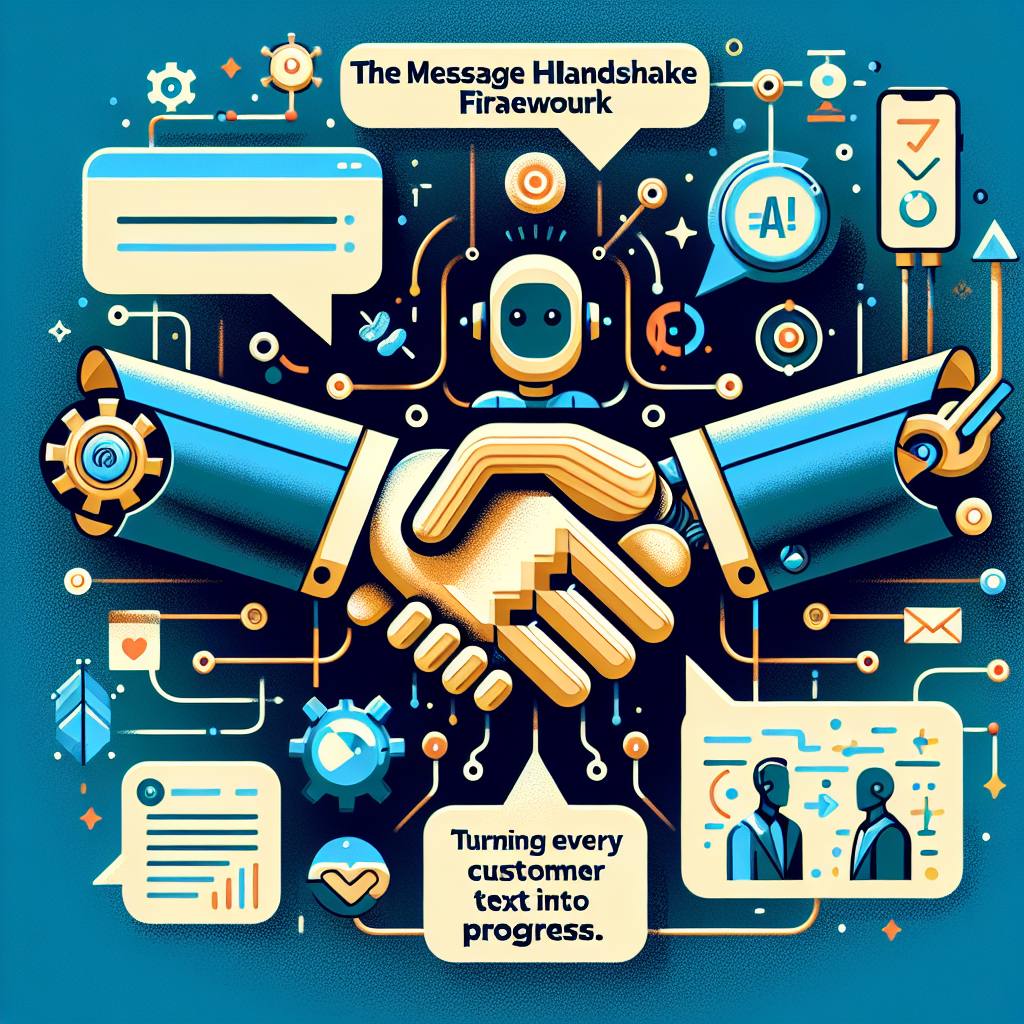
This is where a simple mental model helps: the Message Handshake Framework. Think of every reply as a handshake that creates mutual understanding and sets the next move. When you build your messaging around this handshake, you reduce back-and-forth, increase conversion, and protect the relationship even when something goes wrong.
A strong reply completes four jobs in a tight sequence. You can use these as a checklist for any channel and any team member.
Confirm you understood the message and that you are taking responsibility for the next step. This is not fluff, it prevents repeat messages and lowers anxiety.
Ask only what is necessary to proceed. Avoid interrogations. If you need multiple details, offer quick options (buttons, numbered choices, or short prompts).
State what you will do next and when. The “when” is critical. Vague replies create follow-ups.
End with a small, easy action the customer can take. The goal is to keep the conversation moving, not to “close” in one message.
Many businesses write separate scripts for WhatsApp vs Instagram vs web chat. That helps with tone, but it misses the bigger point: what matters most is the customer’s stage.
Build your messaging around these common stages:
When your team aligns on the stage, the reply becomes obvious. A first-contact message needs speed and direction. A support message needs ownership and transparency. A retention message needs relevance and timing.
Customers skim. Put the answer first, then the why. Example: “Yes, we can deliver tomorrow. The earliest window is 2-4 PM.”
If you ask three questions, you will often get one answer. Start with the single most important detail, then branch.
When possible, turn long explanations into options. Example: “Which works best: A) pick-up, B) delivery, C) schedule a call?”
Micro-deadlines prevent limbo: “If you confirm by 6 PM, we can reserve the slot.”
Personalization is not only first names. Reference the context: “I see you messaged from Instagram about the 3-month plan.”
Assume typos, voice notes, partial info, and mixed languages. Your system should handle messiness without making the customer repeat themselves.
Use these templates as starting points. The brackets indicate fields you can fill dynamically. Keep them short and human. Do not copy-paste blindly, adapt to your brand voice.
Template: “Thanks for reaching out about [topic]. I can help with that. Are you looking to [option 1] or [option 2]?”
Example: “Thanks for reaching out about website chat support. I can help with that. Are you trying to reduce response time or qualify more leads?”
Template: “Quick question so I can point you to the right option: [single question].”
Example: “Quick question so I can check availability: which day do you want to book?”
Template: “Pricing depends on [variable]. Most customers choose [plan] because it includes [benefit]. If you tell me [one detail], I will share the exact cost.”
Example: “Pricing depends on the channels and volume. Most customers choose a multi-channel setup because it covers WhatsApp, Instagram, and web chat in one flow. If you tell me your main channel, I will share the best-fit plan.”
Template: “Totally fair. What is the main thing you want to be confident about: [A], [B], or [C]? I can send the exact details.”
Template: “You are right to flag this. Here is what happened: [short]. Here is what we are doing now: [action]. You will have an update by [time].”
Template: “Checking in, do you want to [next step] or should I close this for now? Either is fine.”
Customer: “How much for a consultation?”
High-performing reply: “Consultations start at [price] and the final cost depends on the scope. What are you looking for help with: A) strategy, B) setup, or C) ongoing management? If you pick one, I can suggest the right option and share the exact price.”
This reply answers, clarifies, and creates a next step. It also prevents the endless “how much” loop.
Customer: “My order is late again.”
High-performing reply: “I understand, and I am sorry for the delay. I am checking your tracking now. Can you confirm the order number or the phone used at checkout? I will update you within 10 minutes.”
Notice the commitment with a time window. That single detail reduces repeat pings.
Templates only work when they are part of a system. Here is a practical way to make messaging consistent while keeping it human.
Create categories like pricing, availability, rescheduling, refunds, onboarding steps, and troubleshooting. Under each category, store 3-5 variants: short, standard, and detailed. This lets your team match the customer’s energy and urgency.
Not every conversation should be automated or handled by the same person. Decide when to escalate, for example:
Most messaging breakdowns happen at the edges: nights, weekends, sudden spikes, or when a team member is overwhelmed. This is exactly where AI can create a better customer experience, not by replacing humans, but by ensuring the handshake happens every time.
Staffono.ai (https://staffono.ai) is designed for multi-channel customer messaging, handling WhatsApp, Instagram, Telegram, Facebook Messenger, and web chat with 24/7 AI employees. Instead of leaving customers waiting, Staffono can acknowledge instantly, ask the right clarifying question, and either complete the task (like bookings and lead qualification) or route the conversation to your team with clean context.
For example, you can configure Staffono.ai to:
That means your best practices and templates do not live in a document that nobody opens. They become the default behavior across every channel, even during peak demand.
Customer messaging is not a writing exercise, it is a progress engine. When your replies acknowledge, clarify, commit, and confirm the next step, conversations stop looping and start moving. Templates and best practices give you consistency, but the real win comes from operationalizing them so they work on every channel, at every hour.
If you want a practical way to deliver fast, consistent conversations across WhatsApp, Instagram, Telegram, Messenger, and web chat, Staffono.ai (https://staffono.ai) can act as a 24/7 AI teammate that applies your messaging standards automatically, qualifies leads, and handles bookings while your human team focuses on the moments that truly need a person.