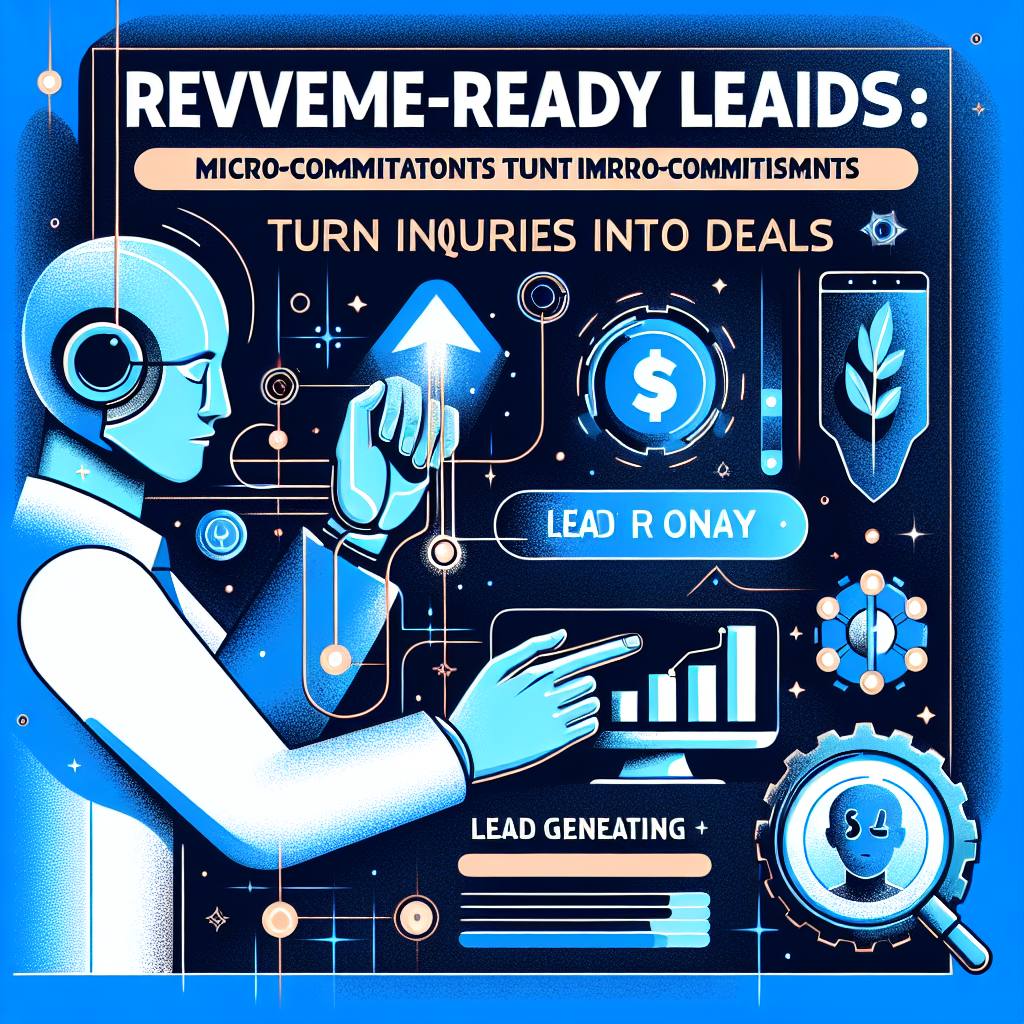


Most lead generation advice focuses on getting more inquiries, not on building a system that reliably turns interest into revenue. This guide shows how to capture leads across messaging channels, qualify them quickly, and convert them using controlled experiments, clear routing rules, and offer design that reduces friction.
Lead generation and sales are often treated like two separate worlds: marketing “creates demand,” sales “closes deals.” In reality, revenue is created in the handoff, the follow-up, and the speed and relevance of your next message. If your pipeline feels unpredictable, it usually is not because you need more leads. It is because your lead-to-sale system is not engineered, measured, and iterated like a product.
Think of your funnel as a lab. Every message, form, and follow-up is a hypothesis. Every lead is data. Your job is to reduce uncertainty by testing three levers that matter most: hooks (how you capture attention and contact), routing (how leads are qualified and assigned), and offers (how you convert intent into a decision).
Many teams count leads as “anyone who filled a form.” That inflates volume and hides quality issues. A revenue-minded lead definition includes intent and contactability. Before you optimize tactics, align on what you will count and what you will ignore.
A practical lead definition for messaging-first businesses is: a person who has shared a reachable channel (WhatsApp, Instagram, phone, email, or web chat), expressed a relevant need, and engaged in at least one two-way interaction.
Then break the journey into measurable stages:
This stage clarity is where platforms like Staffono.ai become especially useful, because messaging conversations can be automatically tagged, routed, and progressed across WhatsApp, Instagram, Telegram, Facebook Messenger, and web chat without losing the thread.
High-performing lead capture is less about “traffic” and more about reducing steps. People are increasingly unwilling to fill long forms, but they will send a quick message. Build capture points that invite a reply and make it easy to start.
Instead of a generic “Contact us,” test prompts that reflect an outcome:
These work because they reduce cognitive load. They also pre-collect qualification data.
Each channel has a different behavioral norm. Treat them differently:
Staffono.ai can keep these entry points consistent while adapting the first questions per channel, so you do not have to manually rebuild scripts for every inbox.
Imagine a dental clinic running ads. Their old landing page asked for full name, email, phone, insurance provider, preferred dentist, and a long message. Conversion rate was low. They replaced it with a single “Message us on WhatsApp to check next available slots” button and a web chat widget that asks two questions: “What service do you need?” and “When do you want to come in?” Captured leads rose because the first step became a conversation, not a form.
Qualification fails when teams either interrogate prospects or collect nothing and hope sales can sort it later. The sweet spot is 3 to 6 questions that separate good-fit from poor-fit and identify the best next action.
FAST keeps qualification quick and consistent:
You do not need all details at once. Collect what determines the next step. For many businesses, timing and scope matter more than budget early on.
Progressive disclosure means you ask one question at a time, only as needed. Example flow:
This keeps prospects engaged and reduces drop-offs.
Speed is a qualification advantage. If a lead writes at 11:30 pm, waiting until morning costs momentum. With Staffono.ai, an AI employee can respond instantly, ask the FAST questions, tag the lead (for example “high intent,” “pricing only,” “wrong region”), and route to the right human when needed. That preserves the feel of a real conversation while making qualification consistent.
Routing is where many pipelines silently leak. Leads are captured, then sit unassigned, or bounce between teammates, or get answered by someone who cannot close. Good routing rules are simple, visible, and enforced.
Round-robin assignment is fair, but not always profitable. Consider routing based on:
Routing is not complete until someone takes ownership. Add escalation:
Staffono.ai can support these workflows across messaging channels, so you do not depend on someone watching every inbox all day.
Conversion is often framed as persuasion. In practice, most deals are lost due to friction: unclear next steps, too many options, slow quotes, and vague outcomes.
Instead of presenting 10 packages, create three lanes:
Then anchor with outcomes and time-to-value, not features.
Many leads are not ready to buy today. Your job is to secure a smaller yes that advances the sale:
Each yes should feel easy and logical.
A B2B IT services company receives inquiries via web chat and Facebook Messenger. Instead of sending a generic brochure, they use a two-step conversion path: first, the AI assistant collects scope and timing; second, it offers two next steps: “Get a ballpark estimate today” or “Book a 15-minute discovery call.” People who choose the estimate receive a range within hours, plus a link to schedule if they want a precise quote. This shortens the cycle because prospects self-select their preferred pace.
Vanity metrics (impressions, clicks) do not tell you why revenue is stuck. Track metrics that point to a specific fix:
If capture is high but qualification is low, your hook is attracting the wrong people or your questions are too strict. If qualification is high but next-step is low, your offer and routing need work.
Repeatable growth comes from controlled iteration. Pick one bottleneck and test one change at a time for a week. Examples:
Document the result, keep what wins, and move to the next bottleneck.
A strong system captures leads where they already communicate, qualifies them quickly with the few questions that matter, routes them based on intent and segment, and converts them with offers designed to remove friction. The best part is that you do not need a bigger team to do this consistently, you need better automation and clearer rules.
If you want to operationalize these tactics across WhatsApp, Instagram, Telegram, Facebook Messenger, and web chat, Staffono.ai can act as a 24/7 AI employee that responds instantly, gathers qualification data, books meetings, and hands off high-intent leads to your sales team with context. When you treat lead generation like a lab and let Staffono handle the repetitive parts, your team can focus on what humans do best: building trust and closing the right deals.