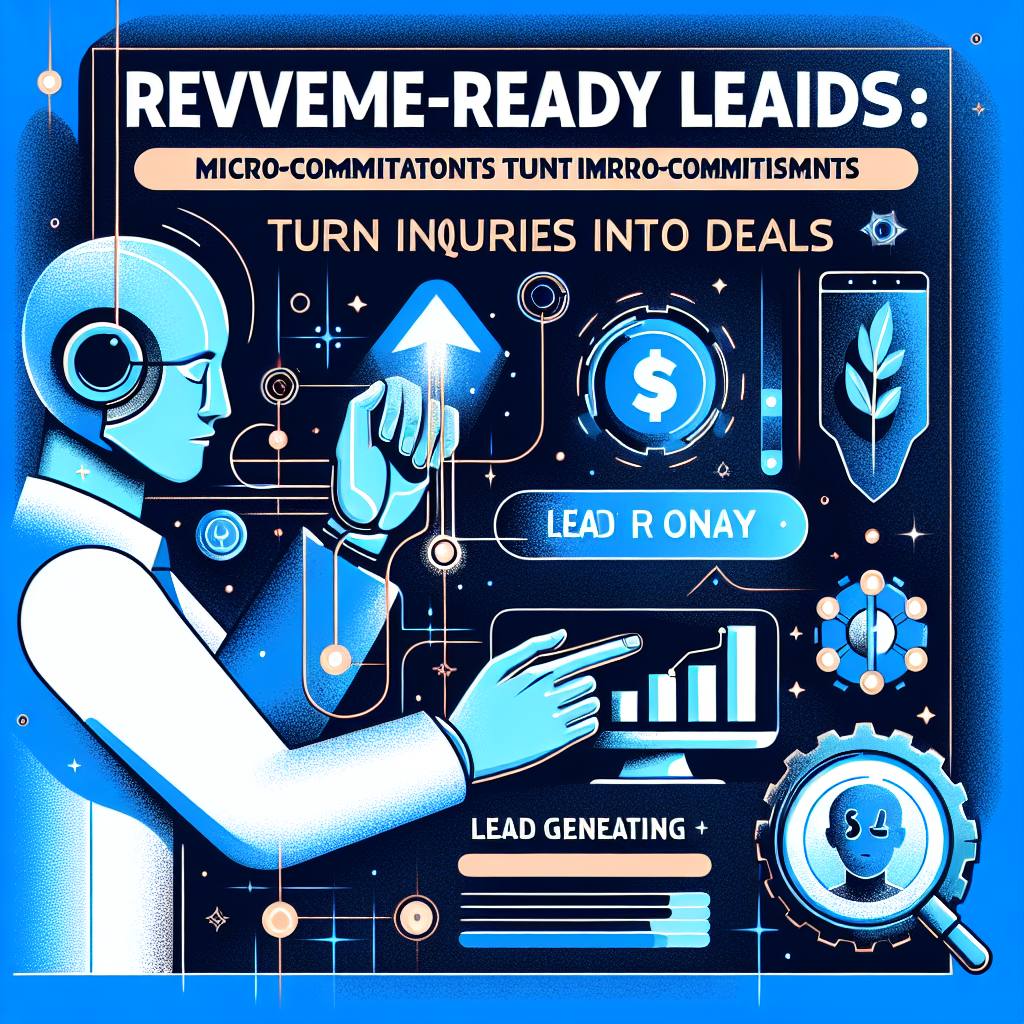


Most lead generation programs fail for a simple reason: every lead is treated the same. This playbook shows how to capture demand across channels, triage it in minutes, and route each prospect into the next best action that drives revenue.
Lead generation is not the hard part anymore. The hard part is what happens after interest shows up. Prospects arrive from ads, referrals, WhatsApp messages, Instagram DMs, website chat, marketplaces, and events, all with different intent levels and different buying timelines. When teams respond slowly or ask the wrong questions, high-intent leads go cold while low-intent leads soak up the sales calendar.
The solution is triage: a simple system that quickly sorts demand into the right path. In healthcare, triage prioritizes patients by urgency. In sales, triage prioritizes prospects by fit, intent, and readiness so your team spends time where it creates revenue. Below is a practical playbook to capture, qualify, and convert leads with clear tactics, examples, and automation ideas you can implement immediately.
Many teams say they want “more qualified leads” but never define the rule. Qualification is not a vibe, it is a set of observable signals.
Use three dimensions. Keep it lightweight so it can be used in real-time conversations.
Then define outcomes. For example:
This matrix becomes the backbone of everything else: your forms, your scripts, your automation, and your CRM stages.
Capture is not only about collecting contact details. It is about capturing context, the details that allow you to personalize the next step.
Long forms reduce submissions. Short forms produce low context. The best pattern is two-step capture:
Example: A B2B service firm can capture name and “Which service are you interested in?” then ask budget range and timeline in chat. A local business can capture “What day are you looking to book?” then ask party size and preferences.
Prospects want to respond where they already are. If your only capture point is an email form, you will lose people who prefer messaging.
Platforms like Staffono.ai are built for this reality, letting businesses handle lead capture and qualification across WhatsApp, Instagram, Telegram, Facebook Messenger, and web chat with 24/7 AI employees. That matters because the best lead is often the one you respond to first, on their preferred channel, with the right next question.
Qualification fails when it feels like a checklist. It succeeds when it feels like assistance. The difference is how you frame the questions.
Replace “How many employees do you have?” with “To recommend the right package, roughly how big is your team?” Replace “What is your budget?” with “Do you have a budget range in mind, or should I suggest options?”
Here are high-performing qualification questions that work across industries:
Intent signals are not mysterious. They are phrases like “pricing,” “available this week,” “can you integrate with,” “we need to switch,” “we have a problem with,” “send a proposal,” and “book a demo.” When these appear, do not keep asking generic questions. Move to scheduling, quoting, or a clear next step.
With Staffono.ai, AI employees can be trained to recognize these signals in real-time and automatically route the lead into the right action, like offering time slots, collecting required details, or handing off to a human closer when the lead hits your fast-lane criteria.
Most sales teams are not slow because they do not work hard. They are slow because leads bounce around. Routing should be an explicit system.
Routing by source (Facebook lead form to SDR A, website form to SDR B) is convenient but often wrong. Route by what the prospect needs:
When routing matches the buyer’s question, conversion improves because the first human they meet can actually solve the problem.
Every route must end with a next step. If a lead is not qualified, they still get something valuable: a self-serve guide, a waitlist, a lower-tier offer, or a partner referral. Dead ends create negative word-of-mouth and waste the acquisition cost you already paid.
Once a lead is qualified, the job becomes reducing friction and increasing confidence.
Not every lead should be pushed into a full sales call. Offer the smallest next step that still advances the deal:
Example: A marketing agency can offer a “quick audit” request. A clinic can offer “check availability and pricing.” A SaaS can offer “answer two questions and get a recommended plan.”
Social proof works best when it addresses the specific objection currently present. If the lead asks about speed, show turnaround testimonials. If they ask about trust, show security notes and customer logos. If they ask about results, show outcomes and relevant case studies.
In messaging channels, keep proof short and specific. One relevant example beats five generic ones.
Most revenue is lost in follow-up, not in the initial pitch. A good follow-up sequence is helpful, timed, and contextual.
Automation helps here, but only if it remains conversational. Staffono.ai can handle this type of follow-up across messaging channels, keeping the thread alive, answering common questions instantly, and escalating to your team when a prospect signals readiness to commit.
A home services company gets 80 inbound messages per day. Many are price shoppers, but some are urgent repairs. Triage rules:
Result: fewer missed urgent jobs, more booked slots, less manual back-and-forth.
A SaaS company gets leads from content and referrals. Triage rules:
Result: sales time is protected, and high-fit leads get faster access to the right person.
If you only track lead volume, you will optimize the wrong thing. Track the health of capture, qualification, and conversion.
When you improve these metrics, revenue usually follows without increasing ad spend.
Lead generation and sales conversion become predictable when you treat inbound demand as something to be sorted, not something to be “handled.” Define qualification clearly, capture context in a low-friction way, ask progress questions, route by need, and follow up like a service team.
If you want to implement triage across all your messaging channels without hiring night shifts or adding more manual work, Staffono.ai can help you deploy 24/7 AI employees that capture leads, qualify them in real time, book meetings, and escalate high-intent prospects to your team. When your pipeline starts with fast sorting and clear next steps, your sales team spends less time chasing and more time closing.