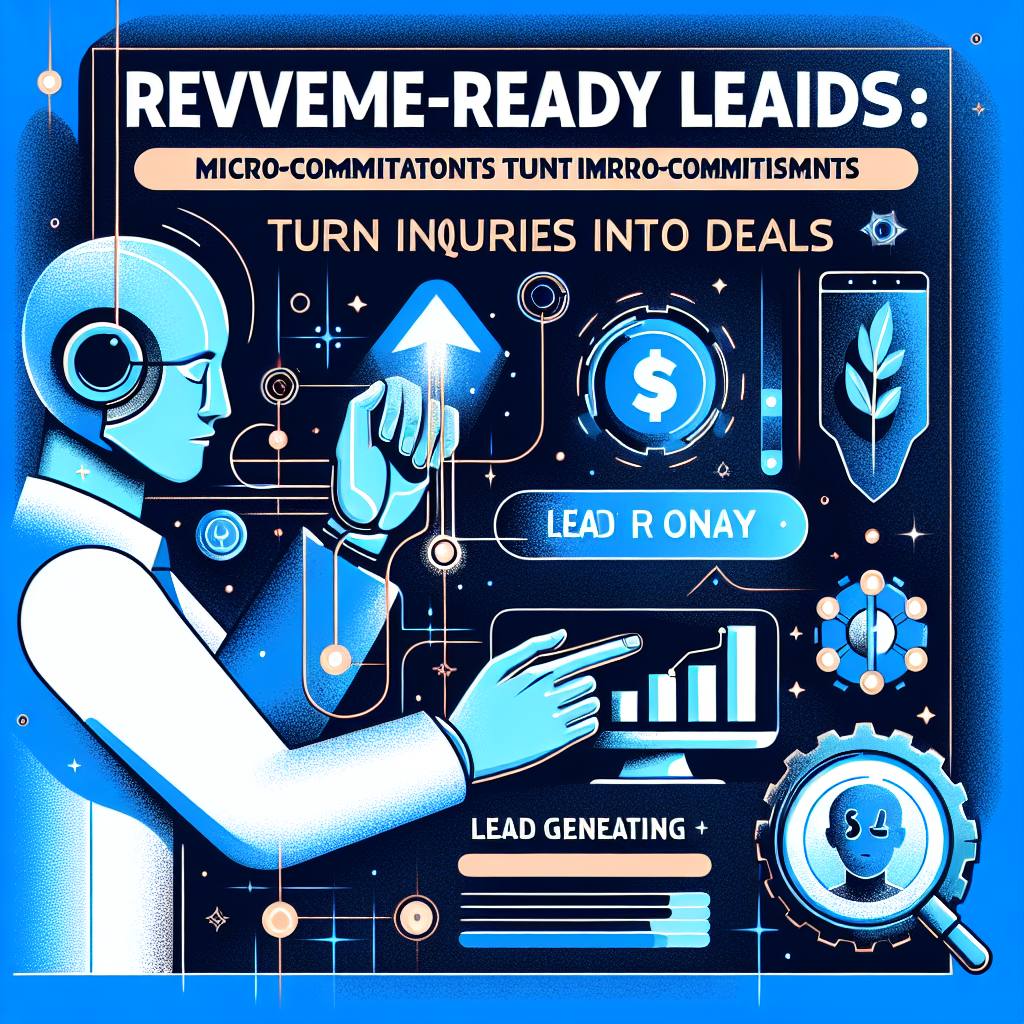


Lead generation is not a volume game, it is an intent game. This blueprint shows how to capture leads across channels, qualify them with consistent criteria, and convert them with fast, helpful conversations that move buyers toward a decision.
Most teams think their lead generation problem is “not enough leads.” In reality, many businesses already have enough demand, it just arrives in messy shapes: a WhatsApp message at midnight, an Instagram DM asking “price?”, a web chat with half a phone number, a missed call, a form fill with no context. Revenue is not lost because interest is missing. It is lost because intent is not captured, clarified, and acted on fast enough.
This article is a practical blueprint for turning scattered inquiries into predictable revenue. You will learn how to capture leads where they actually show up, qualify them in a consistent way, and convert them using simple conversation design and automation. Along the way, you will see how Staffono.ai (https://staffono.ai) can run key pieces of this workflow 24/7 across WhatsApp, Instagram, Telegram, Facebook Messenger, and web chat, so your reps spend time closing, not sorting.
Personas can be useful, but they often fail in day-to-day selling because they do not tell you what to do next in a live conversation. Intent does. Intent is the combination of: what the buyer wants, how soon they need it, and what friction might block the purchase.
Instead of asking “Is this a good fit persona?”, ask “What intent level is this lead showing right now?” A simple three-tier model works for most businesses:
Your job is to design capture, qualification, and follow-up that quickly moves the lead to the next intent tier. That is how you shorten cycles without pushing too hard.
Modern lead capture is less about forms and more about messaging. Buyers prefer low-effort entry points: “How much?”, “Do you deliver?”, “Can you do this by Friday?”, “Can I see examples?” These questions arrive across multiple channels, and every channel adds friction if it is not monitored.
Create an inventory of every place a lead can appear:
Then decide how each channel routes into one shared system. If your team relies on “checking DMs when we can,” you are effectively choosing to lose the fastest buyers.
Lead capture improves when your first message reduces uncertainty. Replace vague prompts like “Contact us” with specific options that match buyer intent. For example:
On messaging channels, use quick replies or menu buttons where possible. The goal is not to force a bot-like experience. The goal is to help the buyer express intent with minimal typing.
Staffono.ai supports multi-channel messaging and can greet, capture contact details, and ask intent-focused questions instantly, even outside business hours. That alone often increases qualified conversations because leads are not left waiting.
Qualification fails when it is treated like a checklist. It succeeds when it feels like guidance. The difference is in sequencing and tone: ask only what you need to recommend the next step.
Most businesses can qualify effectively by collecting three things:
Here is what that looks like in a conversation:
Notice the wording: it gives the buyer an easy answer and normalizes the buying process.
Once you collect the 3D data, route the lead to the right next step:
This is where automation pays off. Staffono.ai can ask these questions conversationally, tag the lead by intent, and send it to the right pipeline stage, while your team receives a clean summary instead of raw chat logs.
To convert more leads, you do not need “better closers” as much as you need fewer delays and fewer vague answers. Buyers move when the next step is clear and low-friction.
Every lead should receive a recommended next step that matches their intent. Examples:
The key is to remove cognitive load. If the buyer has to ask “What happens next?”, you have already added friction.
Replace abstract reassurance with specifics:
Specificity builds trust faster than enthusiasm.
Scenario: You get dozens of DMs that only say “price?” The mistake is replying with a single number or asking five questions at once.
Better flow:
Staffono.ai can run this flow automatically, collect the inputs, and hand off only the leads that match your minimum requirements, with the context captured cleanly.
Scenario: Some leads are ready now. They ask about availability, delivery dates, or “Can I come today?” Your job is to book before competitors reply.
With Staffono.ai, you can automate scheduling and confirmations across messaging channels, so bookings happen even when your team is busy or offline.
Scenario: The lead is interested but not ready. If you rely on a rep to remember follow-ups, conversion drops.
Set a simple nurture loop:
This is not spam. It is structured helpfulness. Automation ensures consistency, and the best systems pause or change the flow the moment the buyer replies.
Track fewer metrics, but track the right ones:
If you improve speed and next-step acceptance, revenue usually follows.
A well-designed system prevents these issues by default. That is exactly where an AI employee can help: consistent capture, consistent qualification, consistent follow-up.
Here is the blueprint you can implement:
If you want this to run without adding headcount, Staffono.ai (https://staffono.ai) is built for exactly these messaging-first sales workflows. You can deploy AI employees that respond instantly, gather the right qualification details, route leads to the correct rep or calendar, and keep follow-ups consistent across WhatsApp, Instagram, Telegram, Facebook Messenger, and web chat. When your team starts each day with qualified conversations instead of a messy inbox, closing becomes the easiest part of the process.