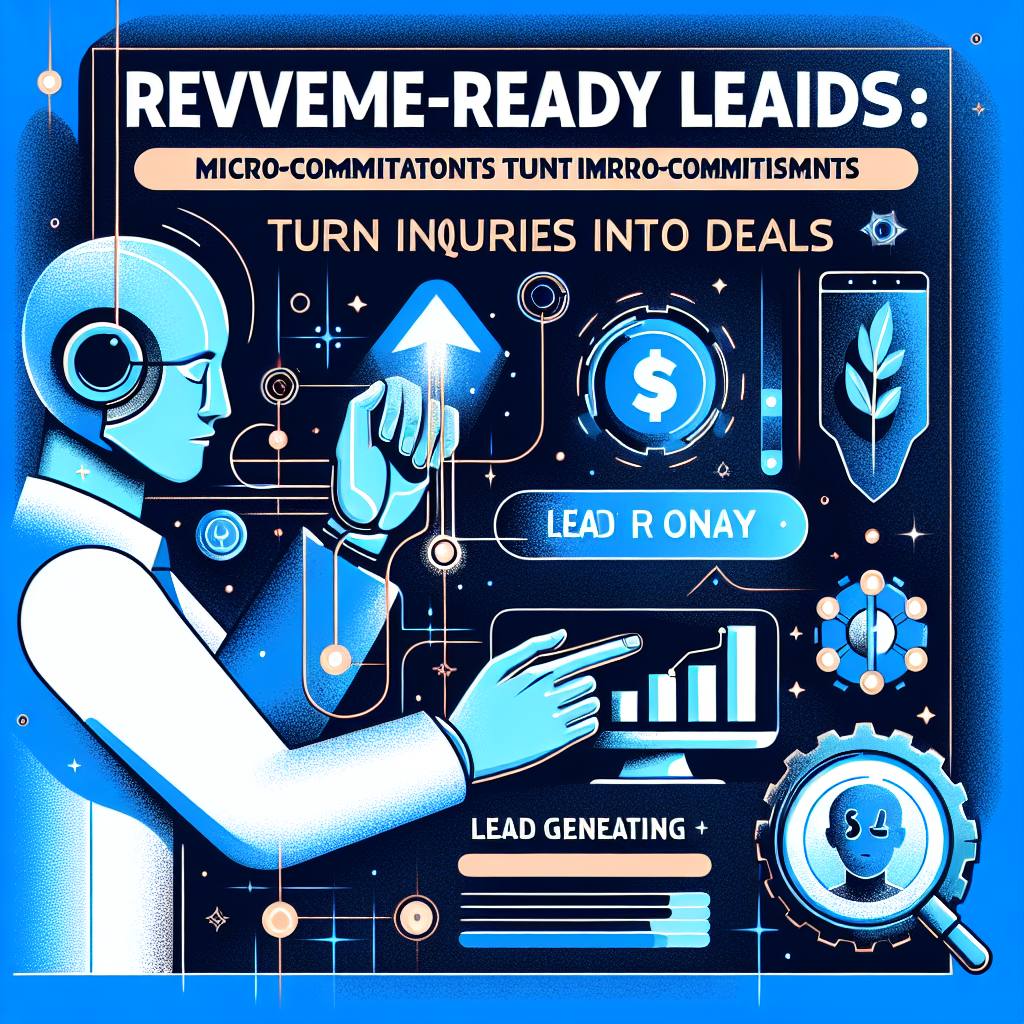


Lead generation is not a single campaign, it is a system that gets faster and smarter with every conversation. This guide shows how to capture demand across channels, qualify it without friction, and convert it into revenue using repeatable tactics and automation.
Most teams treat lead generation and sales as separate activities: marketing “creates” leads, sales “closes” them. In reality, revenue grows fastest when you design a single velocity engine: a connected set of capture points, qualification rules, and conversion motions that reduce time-to-next-step for every prospect.
This post focuses on tactics that compound. You will learn how to increase opt-ins (capture), reduce wasted cycles (qualify), and raise close rates (convert), with practical examples you can implement whether you sell services, e-commerce, SaaS, or local appointments.
If you want more revenue from the same traffic, shorten the gap between a prospect’s signal and your next meaningful action. That action is rarely “close the deal.” It is usually one of these: confirm intent, collect a key detail, schedule a call, send a quote, or take a deposit.
Track three simple speed metrics:
Improving these metrics often creates more lift than adding new ad spend, because it reduces leakage across your entire funnel.
Leads drop when the first ask is too big. Replace “Book a demo” with smaller commitments that still move the deal forward:
Micro-commitments work because they feel reversible. Once a prospect engages, you can progressively collect details.
People respond where they already spend time. Treat messaging channels as first-class entry points, not just support tools.
Platforms like Staffono.ai help by keeping capture consistent across WhatsApp, Instagram, Telegram, Facebook Messenger, and web chat. Instead of losing leads due to missed messages or slow replies, an AI employee can respond instantly, collect details, and route the conversation to the right next step.
“Contact us” is not an offer. Create one tangible reason to engage now:
Example: a home services business can offer “Get an installation range in 2 minutes.” The chat asks for property type, city, and preferred timeline, then provides a range and invites the lead to schedule an inspection.
Qualification is not gatekeeping. It is a way to match the right level of attention to the right opportunity, while still giving every lead a helpful experience.
Many teams try to collect everything. Instead, define the smallest set of answers that lets you take the next step confidently.
Once you have these, you can either move to an offer (booking, quote) or place the lead into a nurture path.
Lead scoring fails when it is opaque. Keep it interpretable:
Add up the scores and define actions: fast-track to sales, send self-serve offer, or nurture.
This is an area where Staffono.ai can be especially useful: your AI employee can ask the same qualification questions every time, tag the lead with structured fields, and push it to your CRM or team inbox with context so humans do not have to re-interview the prospect.
Open-ended questions slow down messaging. Use choices to reduce effort:
Choices increase completion rates and make it easier to route leads correctly.
Most leads do not need more information, they need a clear path. Every conversation should end with a specific next action:
Reduce risk with language like “no obligation,” “refundable deposit,” or “we will confirm pricing after the quick check.”
Not everyone is ready to talk to sales. Provide two paths:
This prevents drop-off from leads who hate calls, while still capturing those who want a human quickly.
Most revenue is lost in the follow-up gap. Create a consistent sequence that is helpful, not spammy. A simple structure:
With Staffono.ai, these follow-ups can run automatically across messaging channels while still feeling conversational. The AI employee can reference the lead’s earlier answers, send the right resource, and escalate to a human when the lead signals readiness.
Capture: Instagram bio link says “Get a growth audit by DM.” The first DM triggers a short sequence: niche, monthly ad spend range, and primary goal.
Qualify: If spend and timeline meet criteria, the lead receives two time slots for a 15-minute call. If not, they receive a free checklist and an option for a paid consult.
Convert: After the call is booked, the prospect gets a pre-call form with two questions, so the call starts with context and ends with a proposal faster.
Capture: Click-to-WhatsApp ads offer “Check appointment availability now.”
Qualify: The chat asks for service type, preferred day, insurance or self-pay, then offers available slots.
Convert: The system confirms the booking, sends preparation instructions, and follows up 24 hours before the appointment to reduce no-shows.
Capture: Web chat prompts “Want a recommendation on the right plan?”
Qualify: Role, team size, and must-have integrations. The chat then suggests a plan and offers either a self-serve trial or a guided demo.
Convert: If the lead chooses demo, the booking link appears instantly. If trial, the system sends setup steps and checks in after day 2 and day 5 based on usage.
If you want a fast implementation plan, keep it simple:
When you are ready to run this engine 24/7 across WhatsApp, Instagram, Telegram, Facebook Messenger, and web chat, Staffono.ai can act as the always-on layer that captures every inquiry, qualifies consistently, and pushes qualified leads into bookings and sales workflows. If you want to see how an AI employee would handle your real inbound messages and convert them into next steps, explore Staffono.ai and map one channel first, then scale.